de Oliveira Suellen, Villela Daniel Antunes Maciel, Dias Fernando Braga Stehling, Moreira Luciano Andrade, Maciel de Freitas Rafael
Fundação Oswaldo Cruz, Fiocruz-RJ, Instituto Oswaldo Cruz, Laboratório de Mosquitos Transmissores de Hematozoários, Rio de Janeiro, Brazil.
Fundação Oswaldo Cruz, Fiocruz-RJ, Programa de Computação Científica, Rio de Janeiro, Brazil.
PLoS Negl Trop Dis. 2017 Oct 9;11(10):e0005947. doi: 10.1371/journal.pntd.0005947. eCollection 2017 Oct.
Wolbachia has been deployed in several countries to reduce transmission of dengue, Zika and chikungunya viruses. During releases, Wolbachia-infected females are likely to lay their eggs in local available breeding sites, which might already be colonized by local Aedes sp. mosquitoes. Therefore, there is an urgent need to estimate the deleterious effects of intra and interspecific larval competition on mosquito life history traits, especially on the duration of larval development time, larval mortality and adult size.
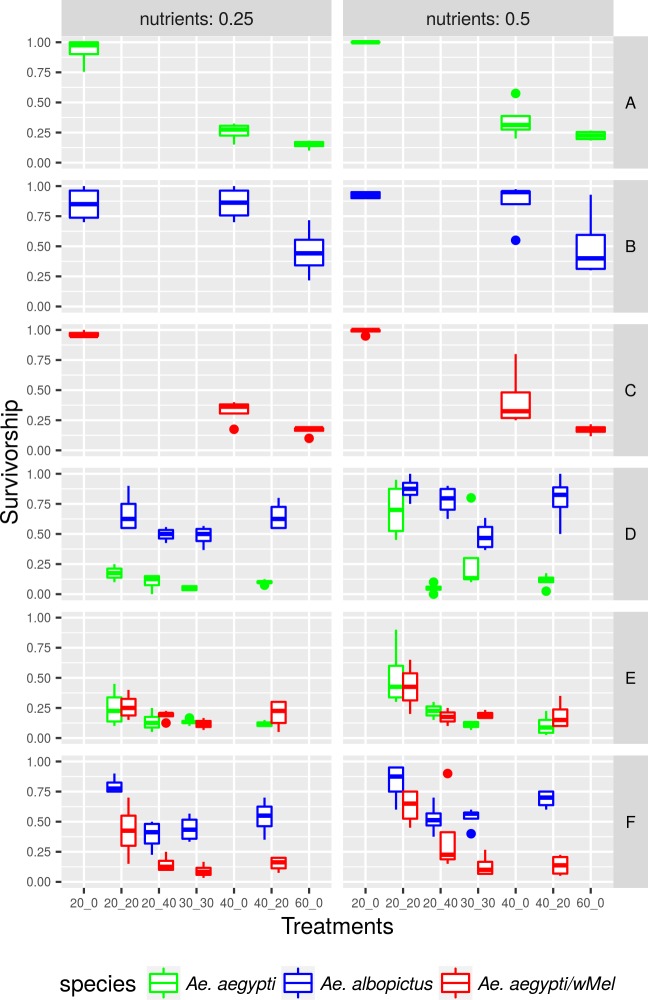
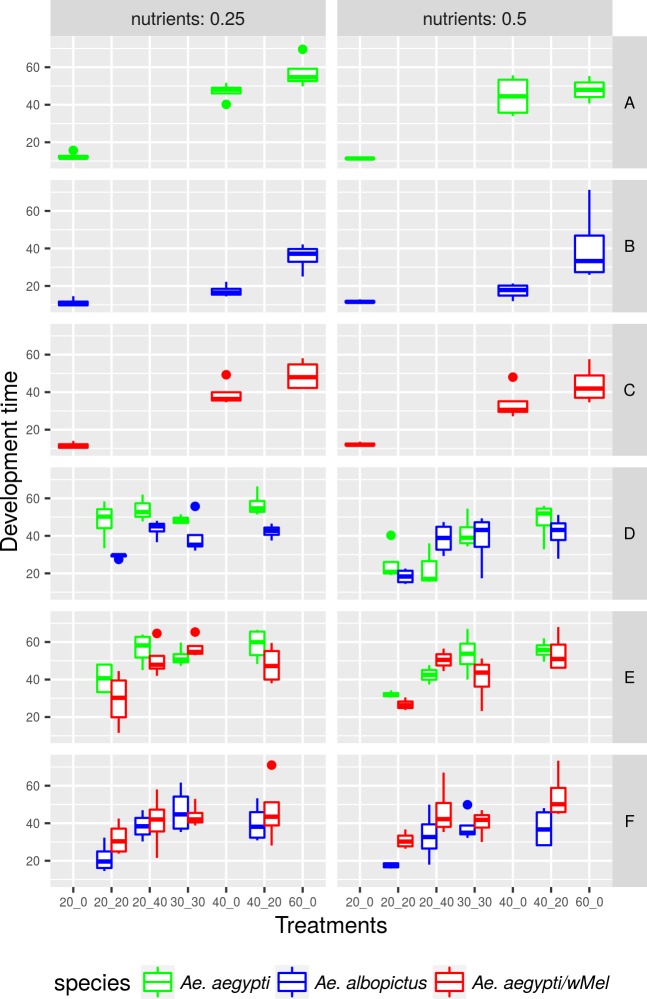
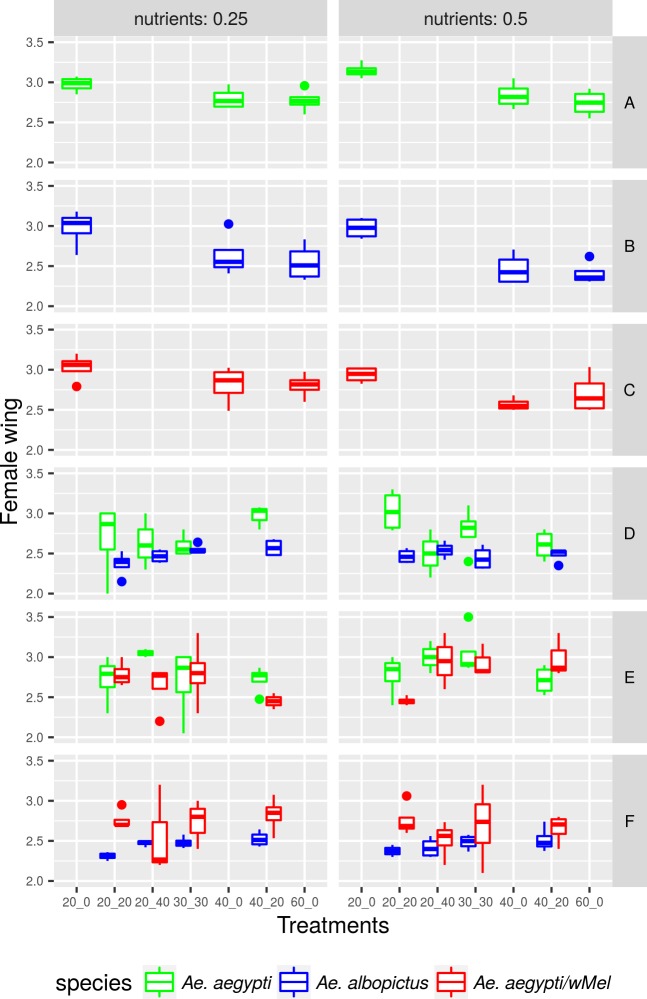
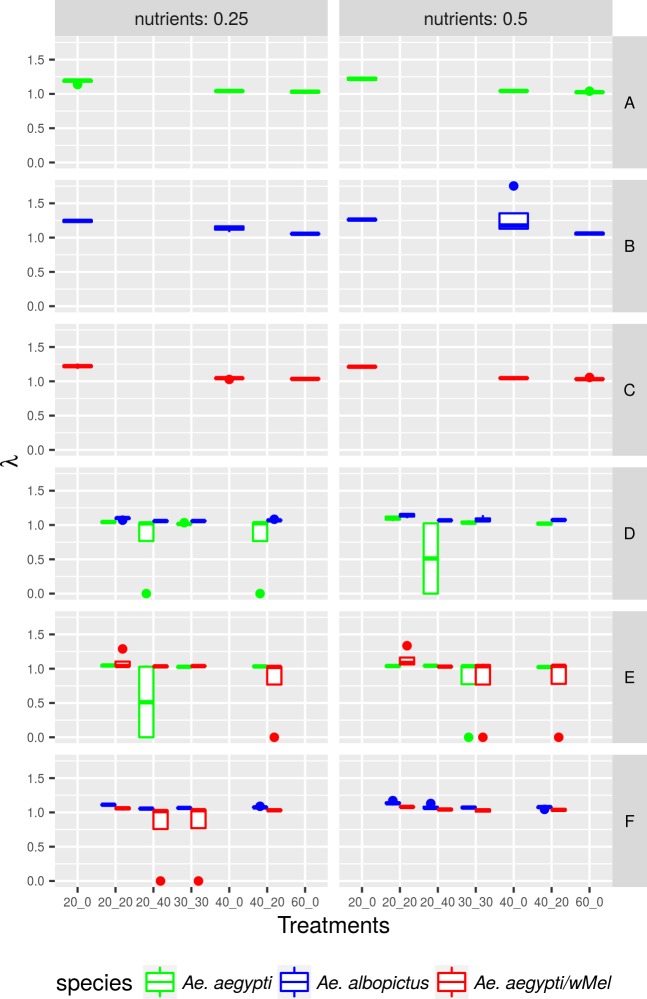
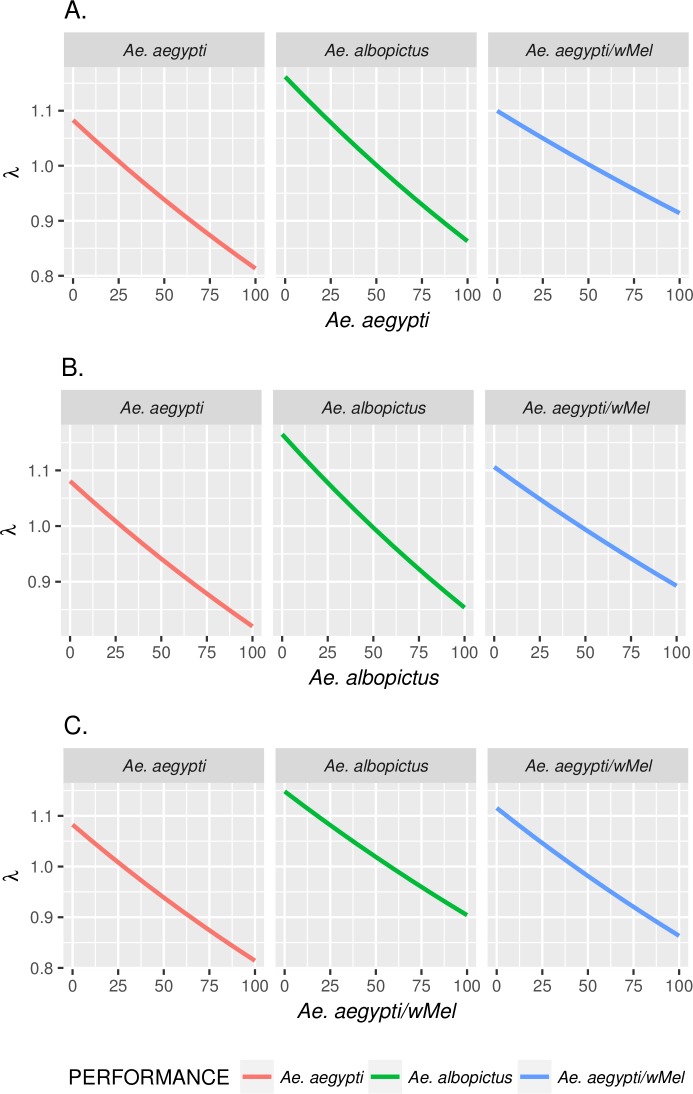
METHODOLOGY/PRINCIPAL FINDINGS: Three different mosquito populations were used: Ae. aegypti infected with Wolbachia (wMelBr strain), wild Ae. aegypti and wild Ae. albopictus. A total of 21 treatments explored intra and interspecific larval competition with varying larval densities, species proportions and food levels. Each treatment had eight replicates with two distinct food levels: 0.25 or 0.50 g of Chitosan and fallen avocado leaves. Overall, overcrowding reduced fitness correlates of the three populations. Ae. albopictus larvae presented lower larval mortality, shorter development time to adult and smaller wing sizes than Ae. aegypti. The presence of Wolbachia had a slight positive effect on larval biology, since infected individuals had higher survivorship than uninfected Ae. aegypti larvae.
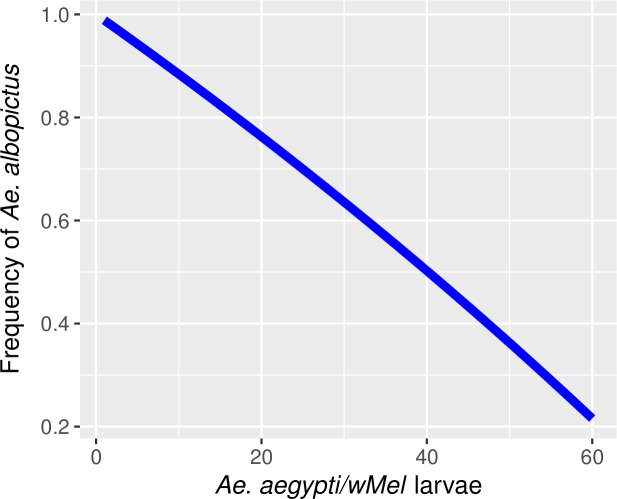
CONCLUSIONS/SIGNIFICANCE: In all treatments, Ae. albopictus outperformed both wild Ae. aegypti and the Wolbachia-infected group in larval competition, irrespective of larval density and the amount of food resources. The major force that can slow down Wolbachia invasion is the population density of wild mosquitoes. Given that Ae. aegypti currently dominates in Rio, in comparison with Ae. albopictus frequency, additional attention must be given to the population density of Ae. aegypti during releases to increase the likelihood of Wolbachia invasion.
沃尔巴克氏体已在多个国家被用于减少登革热、寨卡病毒和基孔肯雅病毒的传播。在投放过程中,感染沃尔巴克氏体的雌蚊很可能会在当地现有的繁殖地点产卵,而这些地点可能已经被当地的伊蚊属蚊子占据。因此,迫切需要评估种内和种间幼虫竞争对蚊子生活史特征的有害影响,尤其是对幼虫发育时间、幼虫死亡率和成虫大小的影响。
方法/主要发现:使用了三种不同的蚊子种群:感染沃尔巴克氏体(wMelBr株)的埃及伊蚊、野生埃及伊蚊和白纹伊蚊。总共进行了21种处理,以探究不同幼虫密度、物种比例和食物水平下的种内和种间幼虫竞争。每种处理有8个重复,有两种不同的食物水平:0.25克或0.50克壳聚糖和掉落的鳄梨叶。总体而言,过度拥挤降低了这三个种群的适合度相关指标。与埃及伊蚊相比,白纹伊蚊幼虫的死亡率更低,发育至成虫的时间更短,翅尺寸更小。沃尔巴克氏体的存在对幼虫生物学有轻微的积极影响,因为受感染个体的存活率高于未感染的埃及伊蚊幼虫。
结论/意义:在所有处理中,无论幼虫密度和食物资源量如何,白纹伊蚊在幼虫竞争中均优于野生埃及伊蚊和感染沃尔巴克氏体的群体。能够减缓沃尔巴克氏体入侵的主要因素是野生蚊子的种群密度。鉴于目前在里约热内卢埃及伊蚊占主导地位,与白纹伊蚊的频率相比,在投放过程中必须额外关注埃及伊蚊的种群密度,以增加沃尔巴克氏体入侵的可能性。