Laboratório de Mosquitos Transmissores de Hematozoários, Instituto Oswaldo Cruz, Fiocruz, Rio de Janeiro, Brazil.
Serviço de Jornalismo e Comunicação, Instituto Oswaldo Cruz, Fiocruz, Rio de Janeiro, Brazil.
PLoS Negl Trop Dis. 2019 Jan 8;13(1):e0007023. doi: 10.1371/journal.pntd.0007023. eCollection 2019 Jan.
Traditional vector control approaches such as source reduction and insecticide spraying have limited effect on reducing Aedes aegypti population. The endosymbiont Wolbachia is pointed as a promising tool to mitigate arbovirus transmission and has been deployed worldwide. Models predict a rapid increase on the frequency of Wolbachia-positive Ae. aegypti mosquitoes in local settings, supported by cytoplasmic incompatibility (CI) and high maternal transmission rate associated with the wMelBr strain.
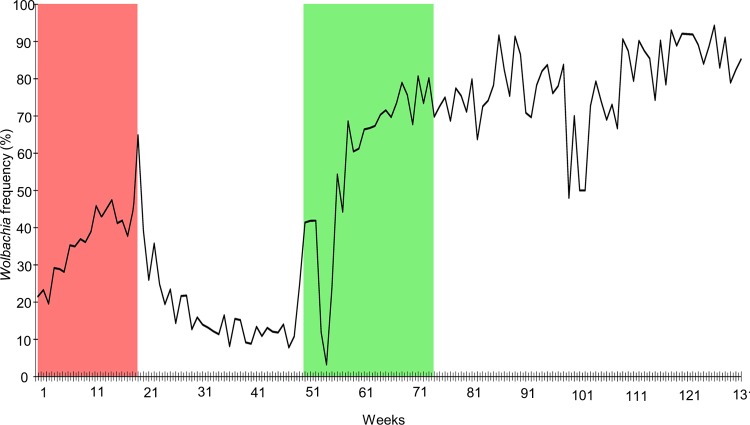
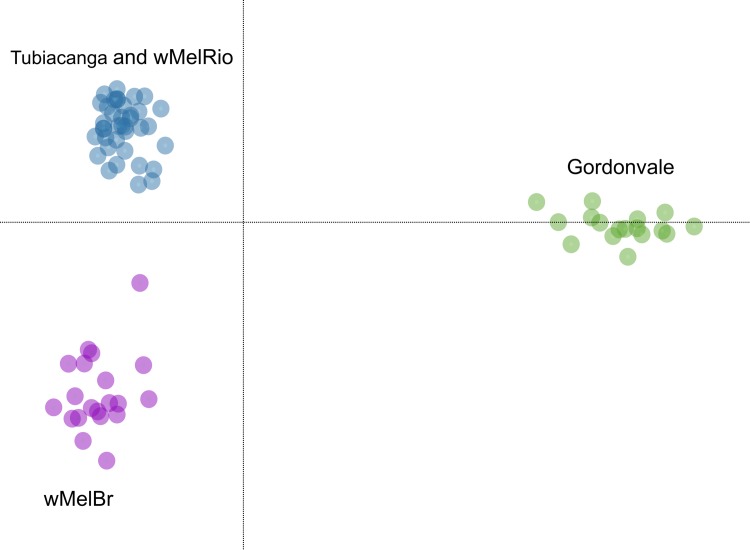
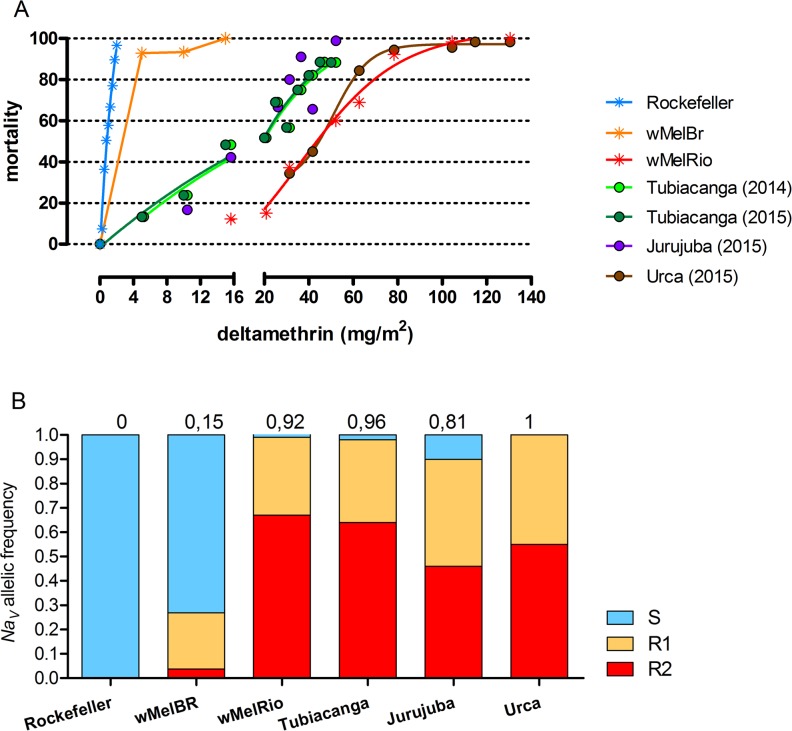
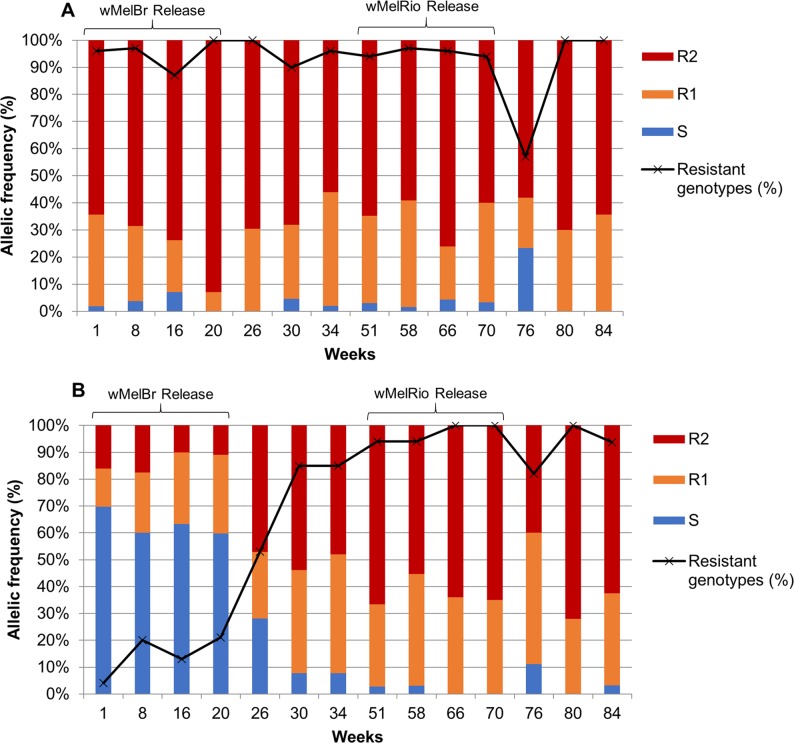
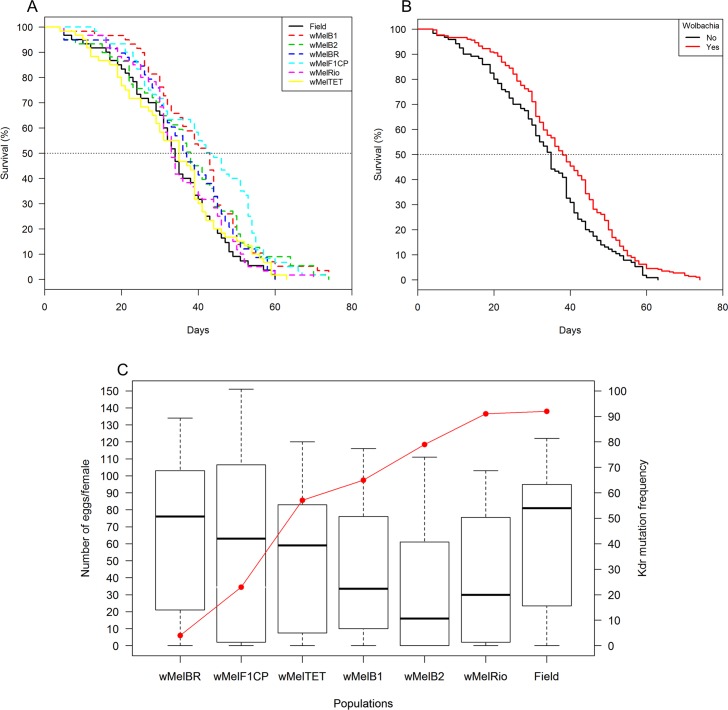
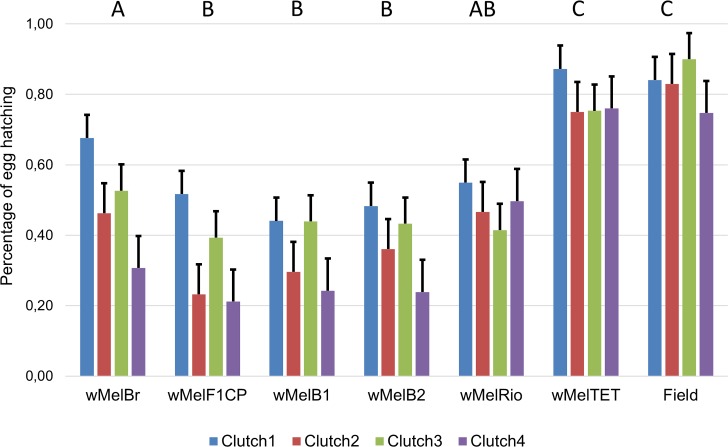
METHODOLOGY/PRINCIPLE FINDINGS: Wolbachia wMelBr strain was released for 20 consecutive weeks after receiving >87% approval of householders of the isolated community of Tubiacanga, Rio de Janeiro. wMelBr frequency plateued~40% during weeks 7-19, peaked 65% but dropped as releases stopped. A high (97.56%) maternal transmission was observed. Doubling releases and deploying mosquitoes with large wing length and low laboratory mortality produced no detectable effects on invasion trend. By investigating the lab colony maintenance procedures backwardly, pyrethroid resistant genotypes in wMelBr decreased from 68% to 3.5% after 17 generations. Therefore, we initially released susceptible mosquitoes in a local population highly resistant to pyrethroids which, associated with the over use of insecticides by householders, ended jeopardizing Wolbachia invasion. A new strain (wMelRio) was produced after backcrossing wMelBr females with males from field to introduce mostly pyrethroid resistance alleles. The new strain increased mosquito survival but produced relevant negative effects on Ae. aegypti fecundity traits, reducing egg clutche size and egg hatch. Despite the cost on fitness, wMelRio successful established where wMelBr failed, revealing that matching the local population genetics, especially insecticide resistance background, is critical to achieve invasion.
CONCLUSIONS/SIGNIFICANCE: Local householders support was constantly high, reaching 90% backing on the second release (wMelRio strain). Notwithstanding the drought summer, the harsh temperature recorded (daily average above 30°C) did not seem to affect the expression of maternal transmission of wMel on a Brazilian background. Wolbachia deployment should match the insecticide resistance profile of the wild population to achieve invasion. Considering pyrethroid-resistance is a widely distributed phenotype in natural Ae. aegypti populations, future Wolbachia deployments must pay special attention in maintaining insecticide resistance in lab colonies for releases.
传统的病媒控制方法,如源头减少和杀虫剂喷洒,对降低埃及伊蚊种群数量的效果有限。共生菌沃尔巴克氏体被认为是减轻虫媒病毒传播的有前途的工具,并已在全球范围内部署。模型预测,在细胞质不亲和(CI)和与 wMelBr 株相关的高母体传播率的支持下,当地环境中携带沃尔巴克氏体的埃及伊蚊的频率将迅速增加。
方法/原理发现:在里约热内卢图比亚坎加隔离社区获得超过 87%的户主批准后,wMelBr 菌株连续释放了 20 周。在第 7-19 周期间,wMelBr 的频率稳定在 40%左右,最高达到 65%,但随着释放的停止而下降。观察到母体传播率很高(97.56%)。增加释放次数并部署具有较大翅长和低实验室死亡率的蚊子,对入侵趋势没有明显影响。通过向后调查实验室种群维持程序,在 17 代后,wMelBr 中的拟除虫菊酯抗性基因型从 68%降低到 3.5%。因此,我们最初在当地种群中释放对拟除虫菊酯高度耐药的敏感蚊子,这与户主过度使用杀虫剂有关,最终危及沃尔巴克氏体的入侵。在雌性 wMelBr 与来自田间的雄性进行回交后,产生了一种新菌株(wMelRio),以引入主要的拟除虫菊酯抗性等位基因。新菌株增加了蚊子的存活率,但对埃及伊蚊生育力特征产生了相关的负面影响,降低了卵的产卵量和孵化率。尽管对适应性有影响,但 wMelRio 在 wMelBr 失败的地方成功建立,这表明匹配当地种群遗传学,特别是杀虫剂抗性背景,对于实现入侵至关重要。
结论/意义:当地户主的支持率一直很高,第二次释放(wMelRio 菌株)达到 90%。尽管经历了干旱的夏季,记录到的高温(平均每天超过 30°C)似乎并没有影响巴西背景下 wMel 母体传播的表达。沃尔巴克氏体的部署应与野生种群的杀虫剂抗性特征相匹配,以实现入侵。考虑到拟除虫菊酯抗性是埃及伊蚊自然种群中广泛分布的表型,未来的沃尔巴克氏体部署必须特别注意在实验室种群中维持杀虫剂抗性,以进行释放。