Department of Genetics, University of Cambridge, Downing Street, Cambridge, CB2 3EH, UK.
Institute of Neurology, UCL, London, WC1N 3BG, UK.
Dis Model Mech. 2017 Oct 1;10(10):1187-1199. doi: 10.1242/dmm.030627.
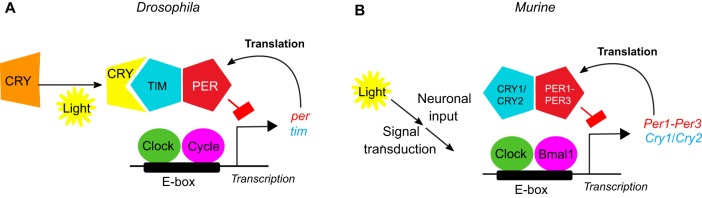
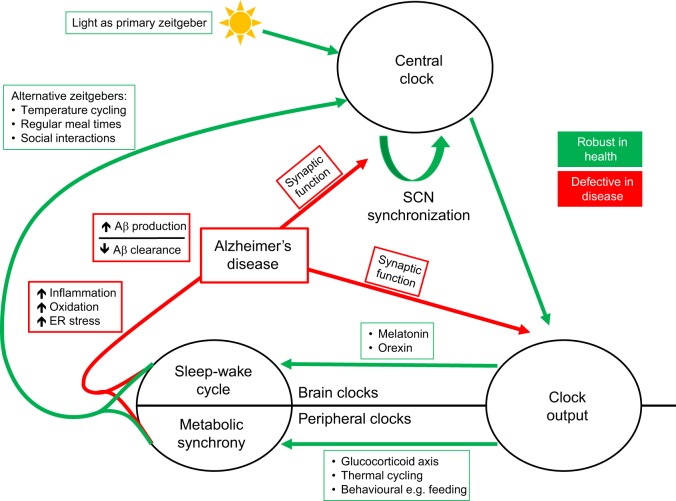
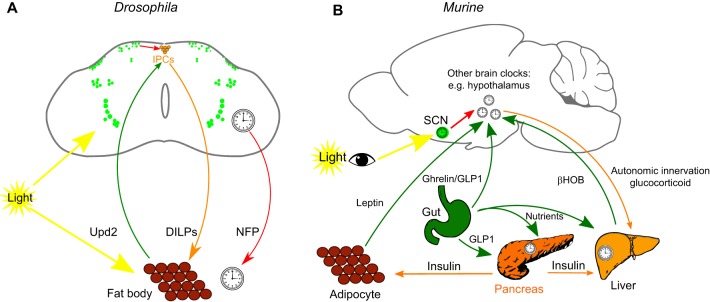
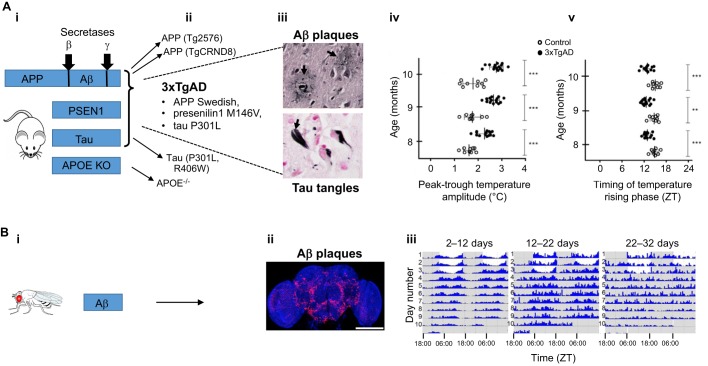
Molecular and cellular oscillations constitute an internal clock that tracks the time of day and permits organisms to optimize their behaviour and metabolism to suit the daily demands they face. The workings of this internal clock become impaired with age. In this review, we discuss whether such age-related impairments in the circadian clock interact with age-related neurodegenerative disorders, such as Alzheimer's disease. Findings from mouse and fly models of Alzheimer's disease have accelerated our understanding of the interaction between neurodegeneration and circadian biology. These models show that neurodegeneration likely impairs circadian rhythms either by damaging the central clock or by blocking its communication with other brain areas and with peripheral tissues. The consequent sleep and metabolic deficits could enhance the susceptibility of the brain to further degenerative processes. Thus, circadian dysfunction might be both a cause and an effect of neurodegeneration. We also discuss the primary role of light in the entrainment of the central clock and describe important, alternative time signals, such as food, that play a role in entraining central and peripheral circadian clocks. Finally, we propose how these recent insights could inform efforts to develop novel therapeutic approaches to re-entrain arrhythmic individuals with neurodegenerative disease.
分子和细胞的振荡构成了一个内部时钟,它可以跟踪时间,并使生物体能够优化其行为和新陈代谢,以适应它们所面临的日常需求。随着年龄的增长,这种内部时钟的功能会受损。在这篇综述中,我们讨论了这种与年龄相关的生物钟功能障碍是否与阿尔茨海默病等与年龄相关的神经退行性疾病相互作用。来自阿尔茨海默病的小鼠和果蝇模型的研究结果加速了我们对神经退行性变和生物钟生物学之间相互作用的理解。这些模型表明,神经退行性变可能通过破坏中央时钟或阻断其与其他大脑区域和外周组织的通信来损害生物钟节律。由此产生的睡眠和代谢缺陷可能会增强大脑对进一步退化过程的易感性。因此,生物钟功能障碍可能既是神经退行性变的原因,也是其结果。我们还讨论了光在中央时钟重新同步中的主要作用,并描述了重要的替代时间信号,如食物,它们在重新同步中央和外周生物钟方面发挥作用。最后,我们提出了这些新的见解如何为重新同步患有神经退行性疾病的节律紊乱个体提供新的治疗方法提供信息。