Hoffman Jared D, Parikh Ishita, Green Stefan J, Chlipala George, Mohney Robert P, Keaton Mignon, Bauer Bjoern, Hartz Anika M S, Lin Ai-Ling
Sanders-Brown Center on Aging, University of KentuckyLexington, KY, United States.
Depatment of Pharmacology and Nutritional Science, University of KentuckyLexington, KY, United States.
Front Aging Neurosci. 2017 Sep 25;9:298. doi: 10.3389/fnagi.2017.00298. eCollection 2017.
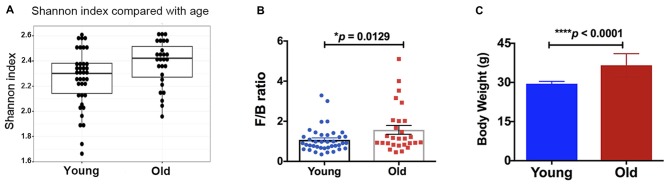
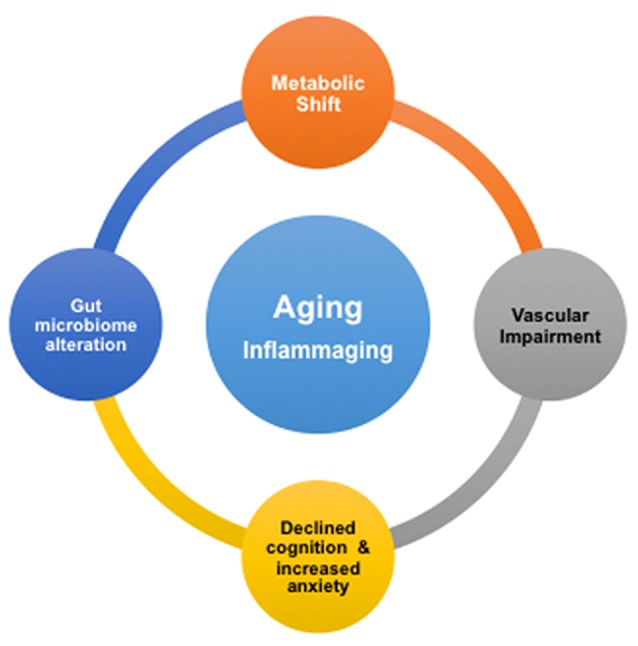
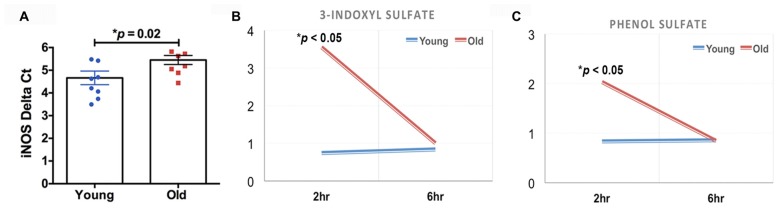
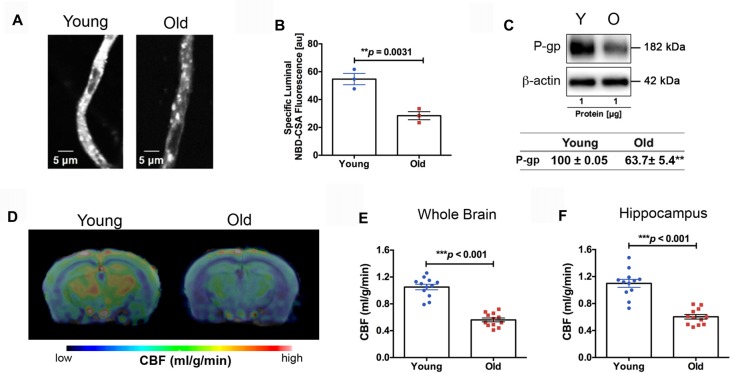
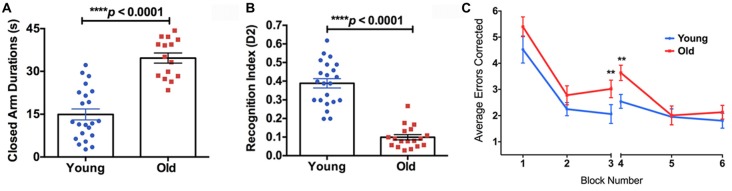
Advancing age is the top risk factor for the development of neurodegenerative disorders, including Alzheimer's disease (AD). However, the contribution of aging processes to AD etiology remains unclear. Emerging evidence shows that reduced brain metabolic and vascular functions occur decades before the onset of cognitive impairments, and these reductions are highly associated with low-grade, chronic inflammation developed in the brain over time. Interestingly, recent findings suggest that the gut microbiota may also play a critical role in modulating immune responses in the brain via the brain-gut axis. In this study, our goal was to identify associations between deleterious changes in brain metabolism, cerebral blood flow (CBF), gut microbiome and cognition in aging, and potential implications for AD development. We conducted our study with a group of young mice (5-6 months of age) and compared those to old mice (18-20 months of age) by utilizing metabolic profiling, neuroimaging, gut microbiome analysis, behavioral assessments and biochemical assays. We found that compared to young mice, old mice had significantly increased levels of numerous amino acids and fatty acids that are highly associated with inflammation and AD biomarkers. In the gut microbiome analyses, we found that old mice had increased / ratio and alpha diversity. We also found impaired blood-brain barrier (BBB) function and reduced CBF as well as compromised learning and memory and increased anxiety, clinical symptoms often seen in AD patients, in old mice. Our study suggests that the aging process involves deleterious changes in brain metabolic, vascular and cognitive functions, and gut microbiome structure and diversity, all which may lead to inflammation and thus increase the risk for AD. Future studies conducting comprehensive and integrative characterization of brain aging, including crosstalk with peripheral systems and factors, will be necessary to define the mechanisms underlying the shift from normal aging to pathological processes in the etiology of AD.
年龄增长是神经退行性疾病(包括阿尔茨海默病(AD))发生的首要风险因素。然而,衰老过程对AD病因的贡献仍不清楚。新出现的证据表明,大脑代谢和血管功能的下降在认知障碍出现前几十年就已发生,且这些下降与大脑中随时间发展的低度慢性炎症高度相关。有趣的是,最近的研究结果表明,肠道微生物群可能也通过脑-肠轴在调节大脑免疫反应中起关键作用。在本研究中,我们的目标是确定大脑代谢、脑血流量(CBF)、肠道微生物群的有害变化与衰老过程中认知之间的关联,以及对AD发展的潜在影响。我们对一组年轻小鼠(5-6月龄)进行了研究,并通过代谢谱分析、神经影像学、肠道微生物群分析、行为评估和生化检测将其与老年小鼠(18-20月龄)进行比较。我们发现,与年轻小鼠相比,老年小鼠体内与炎症和AD生物标志物高度相关的多种氨基酸和脂肪酸水平显著升高。在肠道微生物群分析中,我们发现老年小鼠的/比值和α多样性增加。我们还发现老年小鼠的血脑屏障(BBB)功能受损、CBF降低,以及学习和记忆受损、焦虑增加,这些都是AD患者常见的临床症状。我们的研究表明,衰老过程涉及大脑代谢、血管和认知功能以及肠道微生物群结构和多样性的有害变化,所有这些都可能导致炎症,从而增加患AD的风险。未来有必要开展全面综合的大脑衰老特征研究,包括与外周系统和因素的相互作用,以确定AD病因中从正常衰老向病理过程转变的潜在机制。