Agarwal Shipra, Jain Deepali
Department of Pathology, All India Institute of Medical Sciences, New Delhi, India.
J Pathol Transl Med. 2017 Nov;51(6):533-547. doi: 10.4132/jptm.2017.08.04. Epub 2017 Oct 5.
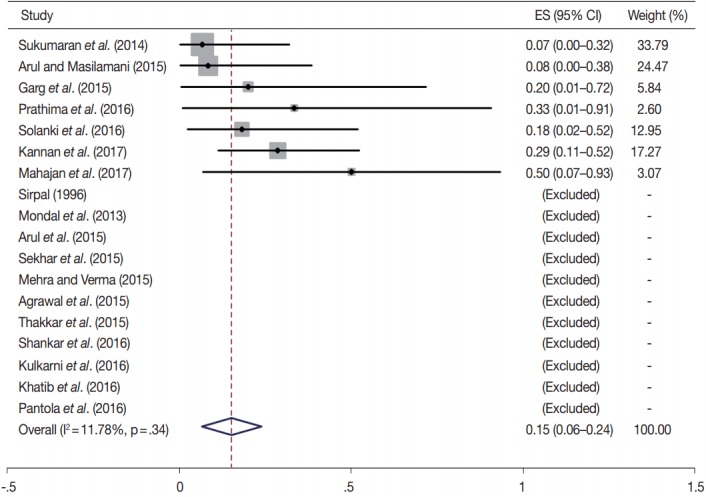
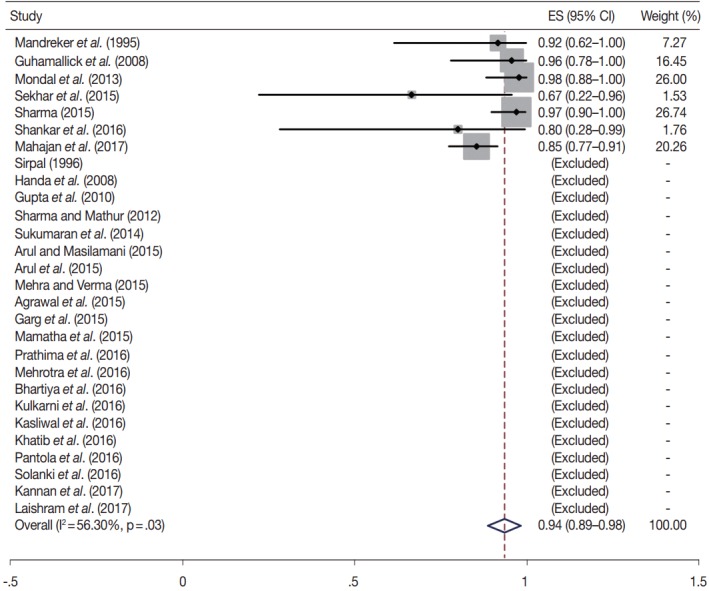
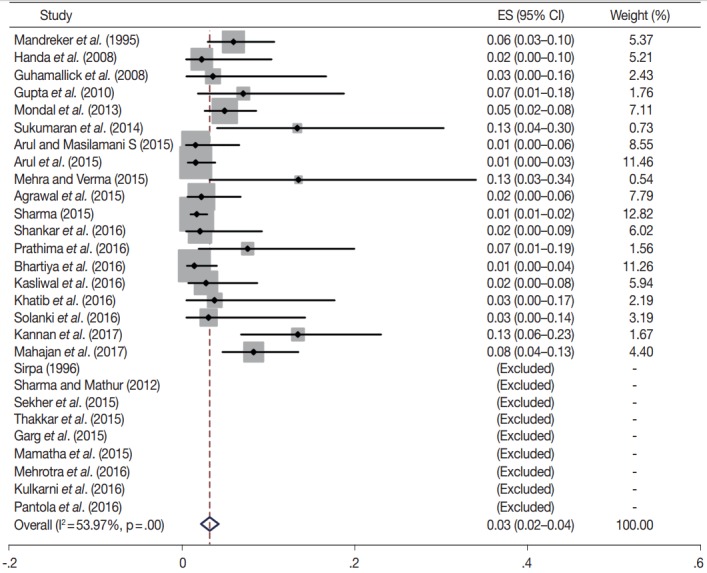
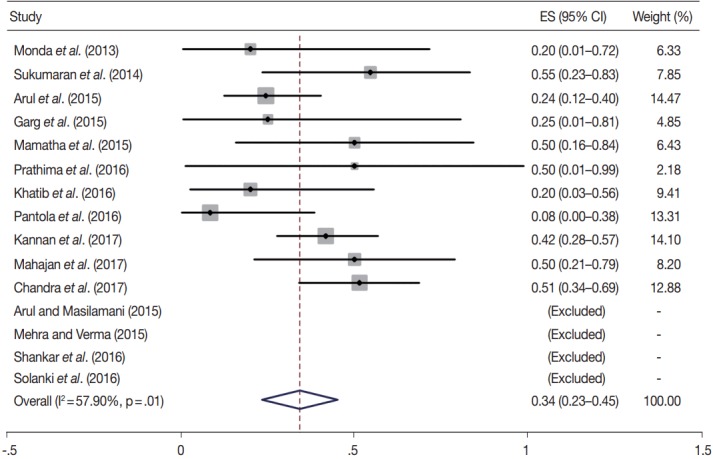
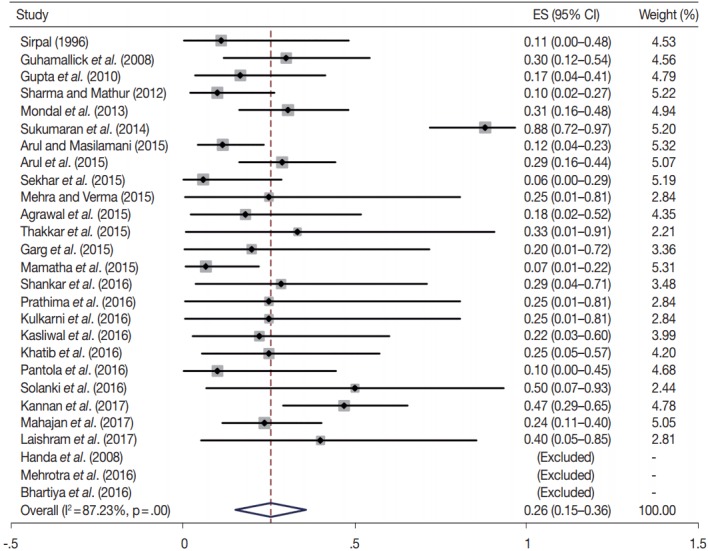
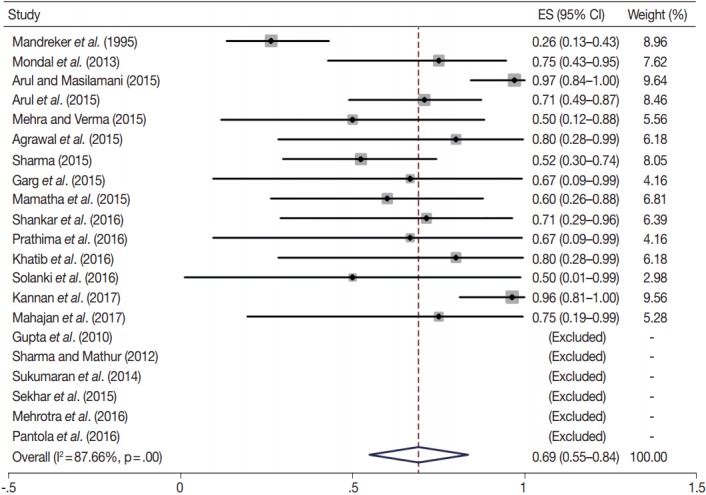
Fine-needle aspiration cytology (FNAC) is a screening test for triaging thyroid nodules, aiding in subsequent clinical management. However, the advantages have been overshadowed by the multiplicity of reporting systems and a wide range of nomenclature used. The Bethesda System for Reporting Thyroid Cytopathology (TBSRTC) was formulated in 2007, to give the world a uniform thyroid cytology reporting system, facilitating easy interpretation by the clinicians. Here, we review the status of thyroid FNAC in India in terms of various reporting systems used including a meta-analysis of the previously published data. An extensive literature search was performed using internet search engines. The reports with detailed classification system used in thyroid cytology were included. The meta-analysis of published data was compared with the implied risk of malignancy by TBSRTC. More than 50 studies were retrieved and evaluated. TBSRTC is currently the most widely used reporting system with different studies showing good efficacy and interobserver concordance. Ancillary techniques have, as of now, limited applicability and acceptability in thyroid cytology in India. Twenty-eight published articles met the criteria for inclusion in the meta-analysis. When compared with TBSRTC recommendations, the meta-analysis showed a higher risk of malignancy for categories I and III. Thyroid FNAC is practiced all over India. TBSRTC has found widespread acceptance, with most institutions using this system for routine thyroid cytology reporting. However, reasons for a high malignancy risk for categories I and III need to be looked into. Various possible contributing factors are discussed in the review.
细针穿刺细胞学检查(FNAC)是一种用于对甲状腺结节进行分类筛选的检查方法,有助于后续的临床管理。然而,其优势被多种报告系统以及广泛使用的命名法所掩盖。2007年制定了《甲状腺细胞病理学报告贝塞斯达系统》(TBSRTC),为全球提供一个统一的甲状腺细胞学报告系统,便于临床医生进行解读。在此,我们根据所使用的各种报告系统,包括对先前发表数据的荟萃分析,来回顾印度甲状腺FNAC的现状。使用互联网搜索引擎进行了广泛的文献检索。纳入了在甲状腺细胞学中使用详细分类系统的报告。将已发表数据的荟萃分析与TBSRTC所隐含的恶性风险进行比较。检索并评估了50多项研究。TBSRTC目前是使用最广泛的报告系统,不同研究显示其具有良好的有效性和观察者间一致性。截至目前,辅助技术在印度甲状腺细胞学中的适用性和可接受性有限。28篇已发表文章符合纳入荟萃分析的标准。与TBSRTC的建议相比,荟萃分析显示I类和III类的恶性风险更高。甲状腺FNAC在印度各地都有开展。TBSRTC已得到广泛认可,大多数机构使用该系统进行常规甲状腺细胞学报告。然而,需要探究I类和III类恶性风险高的原因。综述中讨论了各种可能的促成因素。