Vardimon L, Fox L L, Degenstein L, Moscona A A
Department of Molecular Genetics and Cell Biology, University of Chicago, IL 60637.
Proc Natl Acad Sci U S A. 1988 Aug;85(16):5981-5. doi: 10.1073/pnas.85.16.5981.
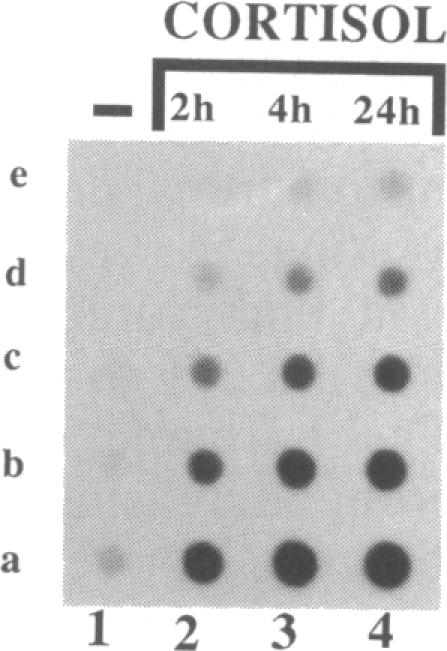
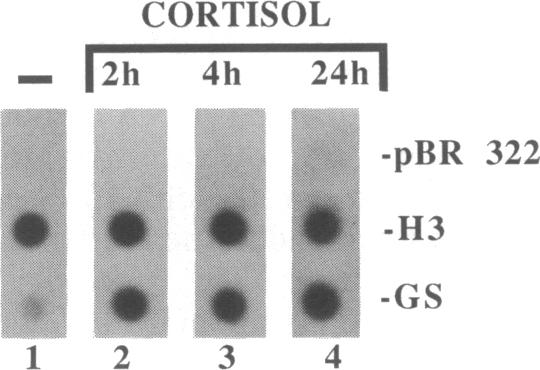
In embryonic neural retina the enzyme glutamine synthetase [GS; L-glutamate:ammonia ligase (ADP-forming), EC 6.3.1.2] is a glia-specific differentiation marker inducible with cortisol. We show that cortisol elicits GS mRNA accumulation by stimulating transcription of the GS gene and that this stimulation requires cell contacts: in dissociated and separated retina cells GS gene transcription was not induced; when the separated cells were reassembled into multicellular aggregates, restoring cell contacts, accumulation of GS mRNA was again inducible. In cells dissociated from retina tissue that had been preinduced with cortisol, GS gene transcription rapidly declined, despite continued hormone availability. In the separated cells transcription of the histone H3.3 gene and accumulation of carbonic anhydrase II mRNA were unaffected; therefore, cell separation selectively precluded induction of the GS gene. These findings provide direct evidence for the regulatory role of cell contacts in hormonal control of gene transcription.
在胚胎神经视网膜中,谷氨酰胺合成酶[GS;L-谷氨酸:氨连接酶(形成ADP),EC 6.3.1.2]是一种可被皮质醇诱导的神经胶质细胞特异性分化标志物。我们发现,皮质醇通过刺激GS基因的转录来引发GS mRNA的积累,并且这种刺激需要细胞间接触:在解离和分离的视网膜细胞中,GS基因转录未被诱导;当分离的细胞重新组装成多细胞聚集体,恢复细胞间接触时,GS mRNA的积累又可被诱导。在从已用皮质醇预诱导的视网膜组织中解离的细胞中,尽管激素持续存在,GS基因转录仍迅速下降。在分离的细胞中,组蛋白H3.3基因的转录和碳酸酐酶II mRNA的积累不受影响;因此,细胞分离选择性地排除了GS基因的诱导。这些发现为细胞间接触在激素对基因转录的控制中的调节作用提供了直接证据。