Centre for Plant Sciences, School of Biology, Faculty of Biological Sciences, University of Leeds, LS2 9JT Leeds, UK.
Centre for Agricultural Research, Hungarian Academy of Sciences, 2462 Martonvásár Brunszvik u. 2., Hungary.
Plant Cell Physiol. 2017 Nov 1;58(11):1833-1847. doi: 10.1093/pcp/pcx141.
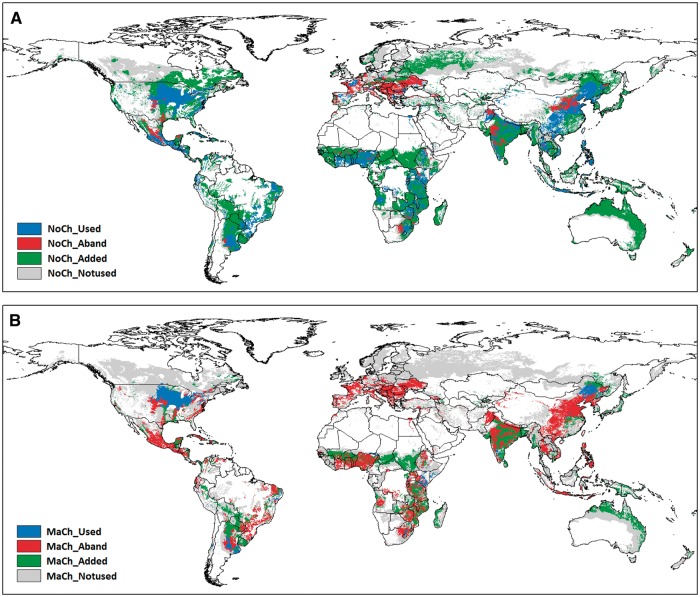
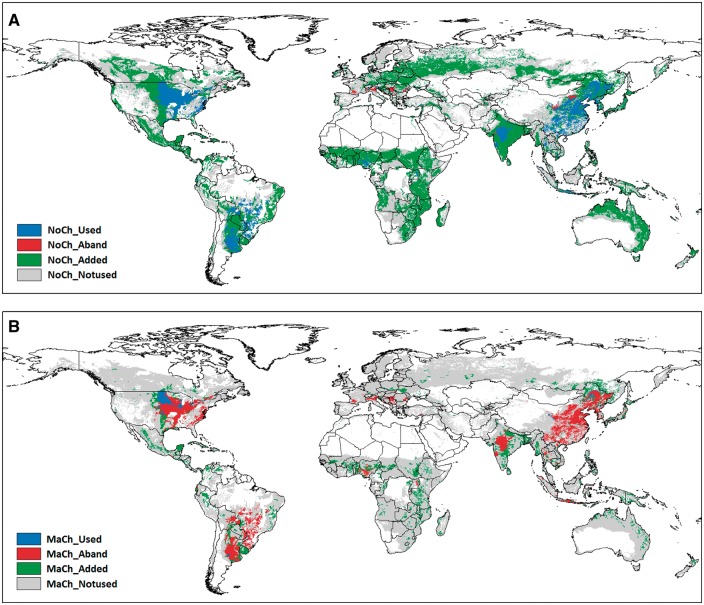
Increasing global CO2 emissions have profound consequences for plant biology, not least because of direct influences on carbon gain. However, much remains uncertain regarding how our major crops will respond to a future high CO2 world. Crop model inter-comparison studies have identified large uncertainties and biases associated with climate change. The need to quantify uncertainty has drawn the fields of plant molecular physiology, crop breeding and biology, and climate change modeling closer together. Comparing data from different models that have been used to assess the potential climate change impacts on soybean and maize production, future yield losses have been predicted for both major crops. When CO2 fertilization effects are taken into account significant yield gains are predicted for soybean, together with a shift in global production from the Southern to the Northern hemisphere. Maize production is also forecast to shift northwards. However, unless plant breeders are able to produce new hybrids with improved traits, the forecasted yield losses for maize will only be mitigated by agro-management adaptations. In addition, the increasing demands of a growing world population will require larger areas of marginal land to be used for maize and soybean production. We summarize the outputs of crop models, together with mitigation options for decreasing the negative impacts of climate on the global maize and soybean production, providing an overview of projected land-use change as a major determining factor for future global crop production.
全球 CO2 排放的增加对植物生物学有深远的影响,尤其是因为它直接影响了碳的获取。然而,我们主要的农作物将如何应对未来的高 CO2 世界,仍然存在许多不确定因素。作物模型的比较研究已经确定了与气候变化相关的巨大不确定性和偏差。需要量化不确定性已经使植物分子生理学、作物育种和生物学以及气候变化建模等领域更加紧密地结合在一起。通过比较不同模型的数据,这些模型被用来评估大豆和玉米生产对气候变化的潜在影响,预计这两种主要作物的未来产量都会下降。当考虑到 CO2 施肥效应时,大豆的产量预计会显著增加,同时全球的生产重心也会从南半球转移到北半球。玉米的生产也预计会向北转移。然而,除非植物育种家能够生产出具有改良特性的新杂交种,否则对玉米的预测产量损失只能通过农业管理措施来缓解。此外,不断增长的世界人口需求将需要更多的边际土地来种植玉米和大豆。我们总结了作物模型的输出结果,以及减少气候对全球玉米和大豆生产负面影响的缓解措施,提供了作为未来全球作物生产的主要决定因素的土地利用变化的预测概述。