Cold Spring Harbor Laboratory, New York, USA.
Cell Commun Signal. 2017 Oct 10;15(1):41. doi: 10.1186/s12964-017-0195-9.
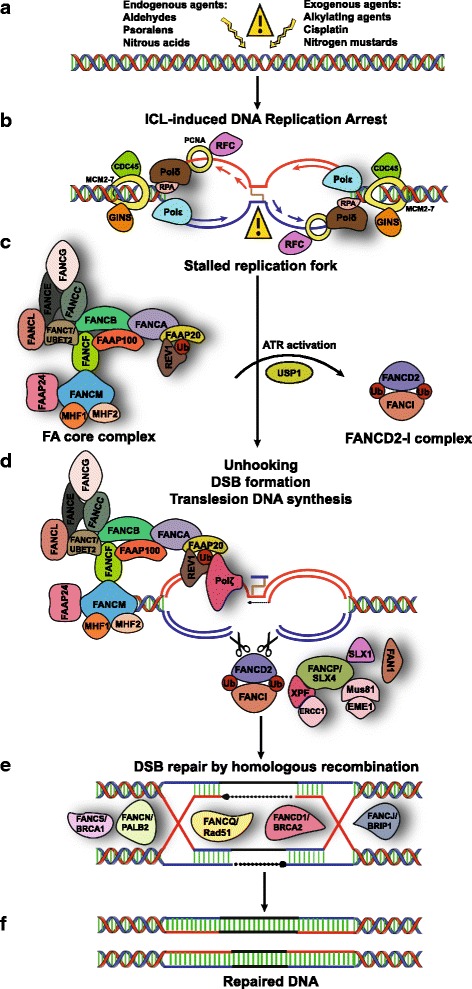
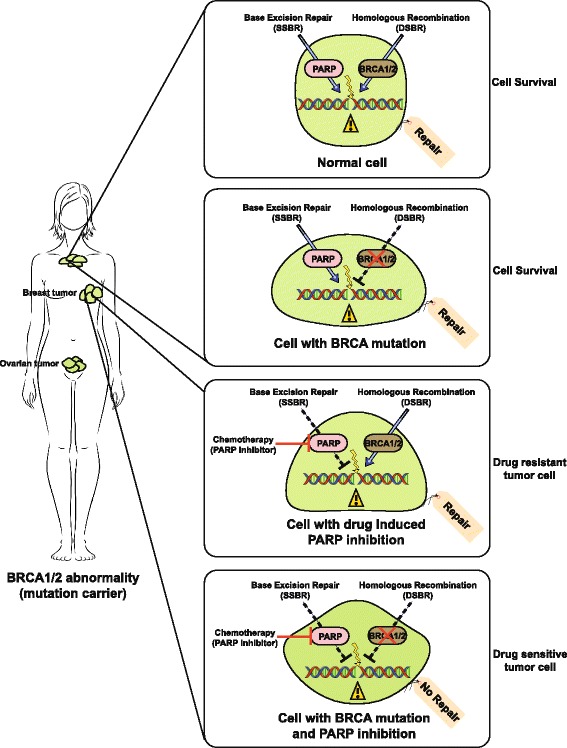
Fanconi Anemia (FA) is a rare, inherited genomic instability disorder, caused by mutations in genes involved in the repair of interstrand DNA crosslinks (ICLs). The FA signaling network contains a unique nuclear protein complex that mediates the monoubiquitylation of the FANCD2 and FANCI heterodimer, and coordinates activities of the downstream DNA repair pathway including nucleotide excision repair, translesion synthesis, and homologous recombination. FA proteins act at different steps of ICL repair in sensing, recognition and processing of DNA lesions. The multi-protein network is tightly regulated by complex mechanisms, such as ubiquitination, phosphorylation, and degradation signals that are critical for the maintenance of genome integrity and suppressing tumorigenesis. Here, we discuss recent advances in our understanding of how the FA proteins participate in ICL repair and regulation of the FA signaling network that assures the safeguard of the genome. We further discuss the potential application of designing small molecule inhibitors that inhibit the FA pathway and are synthetic lethal with DNA repair enzymes that can be used for cancer therapeutics.
范可尼贫血症(FA)是一种罕见的遗传性基因组不稳定性疾病,由参与修复链间 DNA 交联(ICLs)的基因中的突变引起。FA 信号网络包含一个独特的核蛋白复合物,介导 FANCD2 和 FANCI 异二聚体的单泛素化,并协调下游 DNA 修复途径的活性,包括核苷酸切除修复、跨损伤合成和同源重组。FA 蛋白在 ICL 修复的不同步骤中发挥作用,感应、识别和处理 DNA 损伤。多蛋白网络受到复杂机制的严格调控,如泛素化、磷酸化和降解信号,这些信号对于维持基因组完整性和抑制肿瘤发生至关重要。在这里,我们讨论了我们对 FA 蛋白如何参与 ICL 修复以及 FA 信号网络调节的理解的最新进展,该网络确保了基因组的安全。我们还进一步讨论了设计小分子抑制剂的潜力,这些抑制剂可以抑制 FA 途径,并与 DNA 修复酶具有合成致死性,可用于癌症治疗。