Kirkness Catherine J, Cain Kevin C, Becker Kyra J, Tirschwell David L, Buzaitis Ann M, Weisman Pamela L, McKenzie Sylvia, Teri Linda, Kohen Ruth, Veith Richard C, Mitchell Pamela H
Biobehavioral Nursing and Health Informatics, University of Washington, Box 357266, Seattle, WA, 98195-7266, USA.
Biostatistics and School of Nursing, University of Washington, Box 357232, Seattle, WA, 98195-7232, USA.
BMC Res Notes. 2017 Oct 10;10(1):500. doi: 10.1186/s13104-017-2819-y.
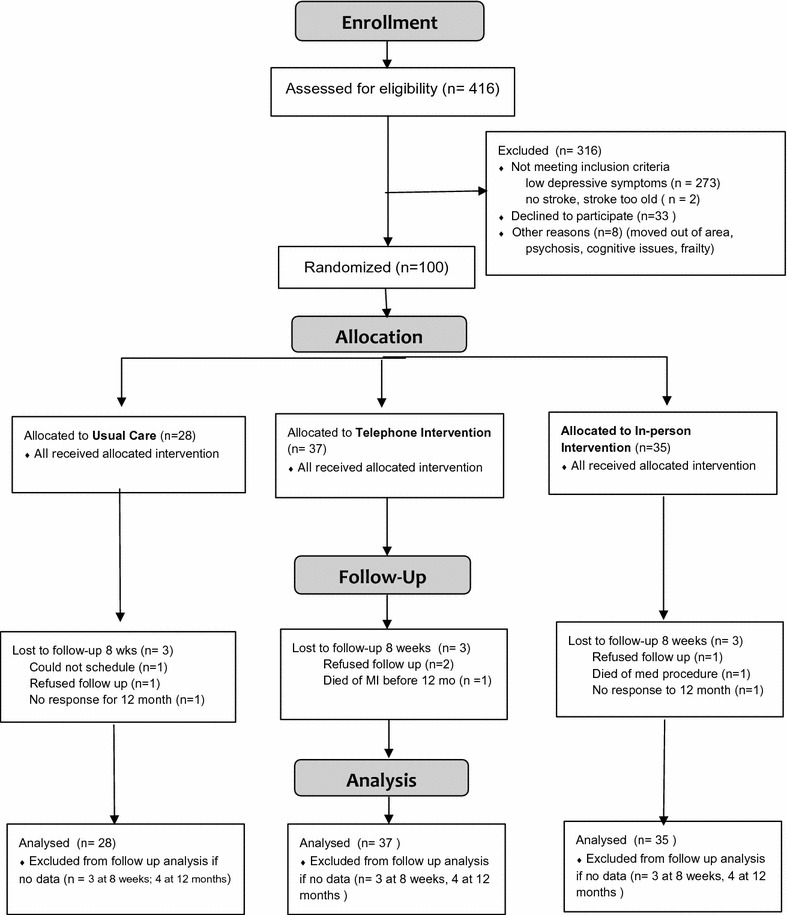
A psychosocial behavioral intervention delivered in-person by advanced practice nurses has been shown effective in substantially reducing post-stroke depression (PSD). This follow-up trial compared the effectiveness of a shortened intervention delivered by either telephone or in-person to usual care. To our knowledge, this is the first of current behavioral therapy trials to expand the protocol in a new clinical sample. 100 people with Geriatric Depression Scores ≥ 11 were randomized within 4 months of stroke to usual care (N = 28), telephone intervention (N = 37), or in-person intervention (N = 35). Primary outcome was response [percent reduction in the Hamilton Depression Rating Scale (HDRS)] and remission (HDRS score < 10) at 8 weeks and 12 months post treatment.
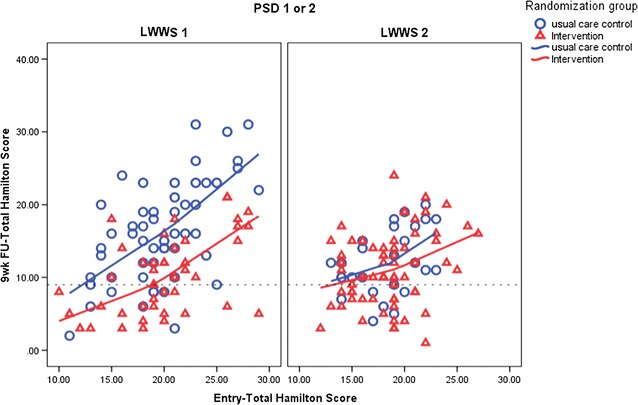
Intervention groups were combined for the primary analysis (pre-planned). The mean response in HDRS scores was 39% reduction for the combined intervention group (40% in-person; 38% telephone groups) versus 33% for the usual care group at 8 weeks (p = 0.3). Remission occurred in 37% in the combined intervention groups at 8 weeks versus 27% in the control group (p = 0.3) and 44% intervention versus 36% control at 12 months (p = 0.5). While favouring the intervention, these differences were not statistically significant.
A brief psychosocial intervention for PSD delivered by telephone or in-person did not reduce depression significantly more than usual care. However, the comparable effectiveness of telephone and in-person follow-up for treatment of depression found is important given greater accessibility by telephone and mandated post-hospital follow-up for comprehensive stroke centers. Clinical Trial Registration URL: https://register.clinicaltrials.gov , unique identifier: NCT01133106, Registered 5/26/2010.
高级执业护士亲自实施的社会心理行为干预已被证明能有效大幅降低中风后抑郁症(PSD)。这项随访试验比较了通过电话或亲自实施的缩短干预与常规护理的效果。据我们所知,这是当前行为疗法试验中首次在新的临床样本中扩展方案。100名老年抑郁评分≥11的患者在中风后4个月内被随机分为常规护理组(N = 28)、电话干预组(N = 37)或亲自干预组(N = 35)。主要结局是治疗后8周和12个月时的反应[汉密尔顿抑郁量表(HDRS)评分降低百分比]和缓解(HDRS评分<10)。
对干预组进行联合主要分析(预先计划)。联合干预组HDRS评分的平均反应降低了39%(亲自干预组为40%;电话干预组为38%),而常规护理组在8周时为33%(p = 0.3)。联合干预组在8周时缓解率为37%,而对照组为27%(p = 0.3),干预组在12个月时为44%,对照组为36%(p = 0.5)。虽然有利于干预,但这些差异无统计学意义。
通过电话或亲自实施的针对PSD的简短社会心理干预在降低抑郁症方面并不比常规护理显著更有效。然而,鉴于电话的可及性更高以及综合中风中心规定的出院后随访,电话随访和亲自随访在治疗抑郁症方面具有相当的有效性这一发现很重要。临床试验注册网址:https://register.clinicaltrials.gov ,唯一标识符:NCT01133106,于2010年5月26日注册。