An Young Jun, Rowland Sara E, Na Jung-Hyun, Spigolon Dario, Hong Seung Kon, Yoon Yeo Joon, Lee Jung-Hyun, Robb Frank T, Cha Sun-Shin
Marine Biotechnology Research Center, Korea Institute of Ocean Science and Technology, Ansan, 15627, Republic of Korea.
Department of Microbiology and Immunology, University of Maryland, Baltimore, MD, 21201, USA.
Nat Commun. 2017 Oct 10;8(1):827. doi: 10.1038/s41467-017-00980-z.
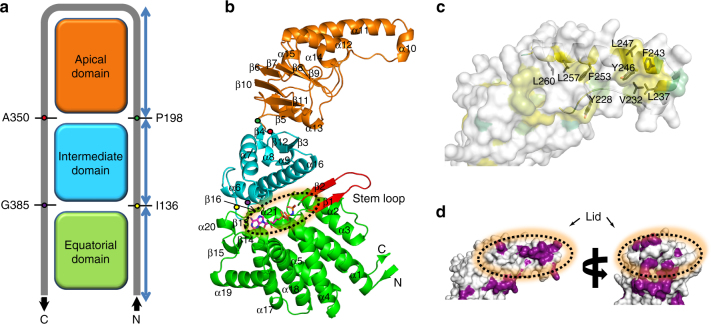
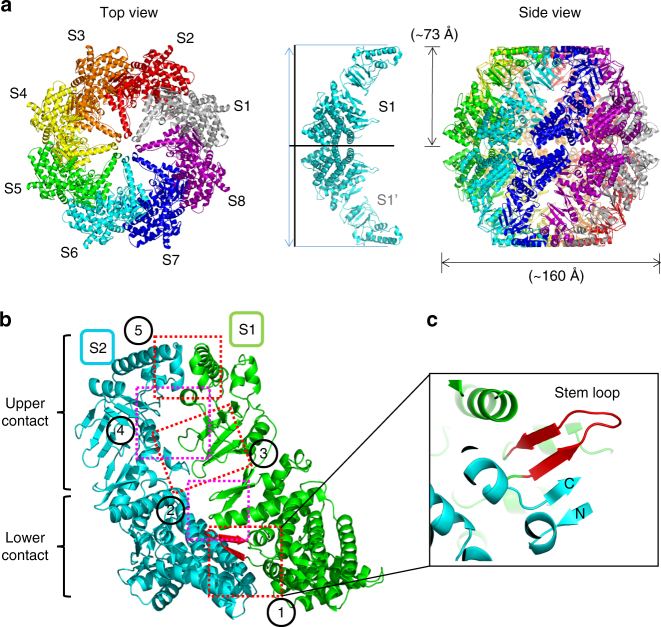
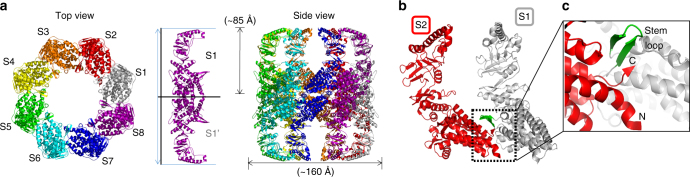
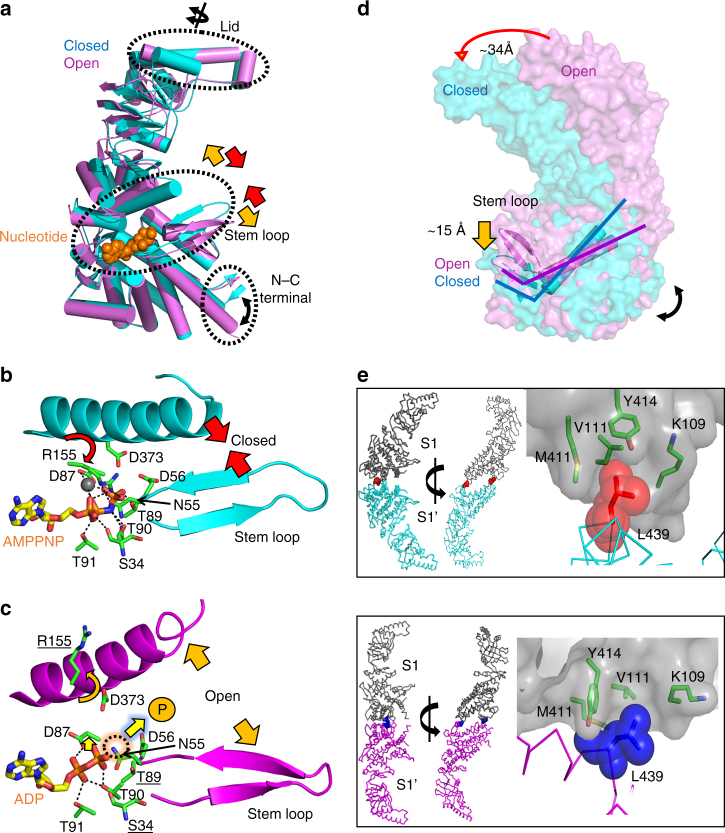
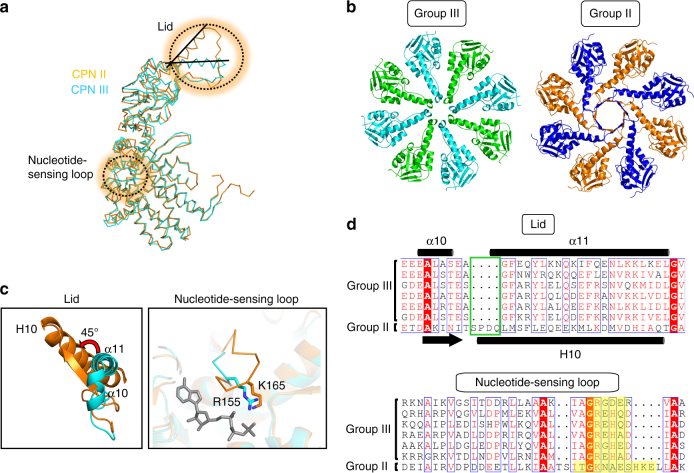
The chaperonins (CPNs) are megadalton sized hollow complexes with two cavities that open and close to encapsulate non-native proteins. CPNs are assigned to two sequence-related groups that have distinct allosteric mechanisms. In Group I CPNs a detachable co-chaperone, GroES, closes the chambers whereas in Group II a built-in lid closes the chambers. Group I CPNs have a bacterial ancestry, whereas Group II CPNs are archaeal in origin. Here we describe open and closed crystal structures representing a new phylogenetic branch of CPNs. These Group III CPNs are divergent in sequence and structure from extant CPNs, but are closed by a built-in lid like Group II CPNs. A nucleotide-sensing loop, present in both Group I and Group II CPNs, is notably absent. We identified inter-ring pivot joints that articulate during ring closure. These Group III CPNs likely represent a relic from the ancestral CPN that formed distinct bacterial and archaeal branches.Chaperonins (CPNs) are ATP-dependent protein-folding machines. Here the authors present the open and closed crystal structures of a Group III CPN from the thermophilic bacterium Carboxydothermus hydrogenoformans, discuss its mechanism and structurally compare it with Group I and II CPNs.
伴侣蛋白(CPNs)是兆道尔顿大小的中空复合物,有两个可打开和关闭的腔,用于包裹非天然蛋白质。CPNs分为两个序列相关的组,它们具有不同的变构机制。在第一组CPNs中,一个可分离的共伴侣蛋白GroES会关闭腔室,而在第二组中,一个内置的盖子会关闭腔室。第一组CPNs起源于细菌,而第二组CPNs起源于古细菌。在这里,我们描述了代表CPNs一个新系统发育分支的开放和关闭晶体结构。这些第三组CPNs在序列和结构上与现存的CPNs不同,但像第二组CPNs一样由一个内置的盖子关闭。第一组和第二组CPNs中都存在的核苷酸感应环明显不存在。我们确定了在环关闭过程中发生关节运动的环间枢轴关节。这些第三组CPNs可能代表了形成不同细菌和古细菌分支的祖先CPN的遗迹。伴侣蛋白(CPNs)是依赖ATP的蛋白质折叠机器。在这里,作者展示了来自嗜热细菌甲酸羧嗜热菌的第三组CPN的开放和关闭晶体结构,讨论了其机制,并在结构上与第一组和第二组CPNs进行了比较。