Wilson Sam
Royal Cornhill Hospital, Aberdeen.
BJPsych Bull. 2017 Oct;41(5):260-266. doi: 10.1192/pb.bp.116.055160.
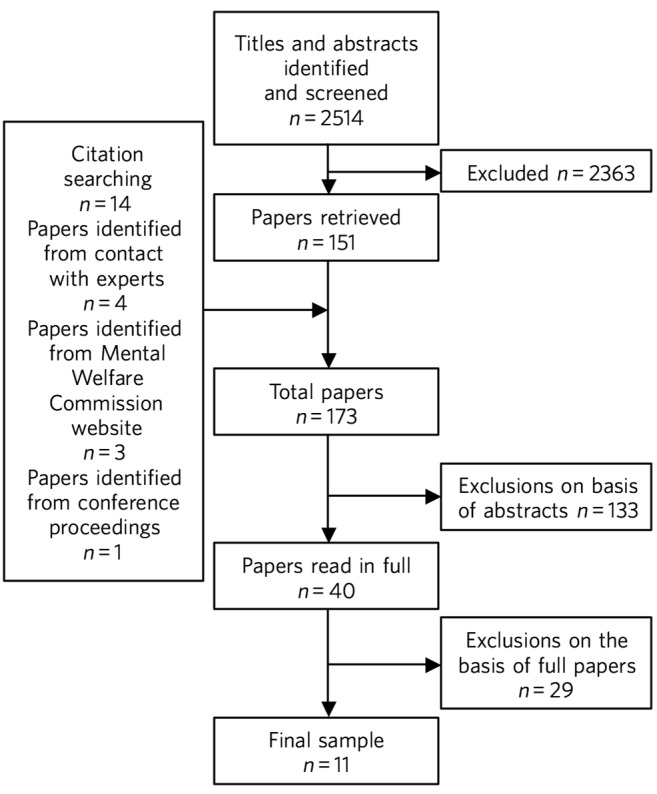
Capacity legislation in the UK allows substitute decision-making for adults lacking capacity. Research has explored the experiences of such adults and their carers in relation to the Adults with Incapacity (Scotland) Act 2000, and the Mental Capacity Act 2005 in England and Wales. A systematic review of the relevant research was performed using a framework method. The legislation provided mechanisms for substitute decision-making which were seen as useful, but there were negative experiences. Decision-making did not always seem to follow the legislative principles. Awareness of the legislation was limited. Most research was qualitative and some was of low methodological quality. Data were too heterogeneous to allow comparisons between English and Scottish law. Capacity legislation was generally viewed positively. However, some experiences were perceived negatively, and the potential benefits of the legislation were not always utilised.
英国的能力立法允许为缺乏能力的成年人进行替代决策。已有研究探讨了这类成年人及其照料者在涉及2000年《苏格兰无行为能力成年人法案》以及英格兰和威尔士2005年《精神能力法案》方面的经历。使用框架法对相关研究进行了系统综述。该立法提供了替代决策机制,这些机制被认为是有用的,但也存在负面经历。决策似乎并不总是遵循立法原则。对该立法的认知有限。大多数研究是定性研究,有些研究的方法质量较低。数据过于多样化,无法对英格兰和苏格兰法律进行比较。能力立法总体上受到积极看待。然而,一些经历被认为是负面的,该立法的潜在益处并未总是得到利用。