Laboratory of Neuronal Signaling and Psychopharmacology, Graduate Program in Health Sciences, Health Sciences Unit, University of Southern Santa Catarina, Criciúma, SC, Brazil; Laboratory of Neurosciences, Graduate Program in Health Sciences, Health Sciences Unit, University of Southern Santa Catarina, Criciúma, SC, Brazil; Laboratory of Inborn Errors of Metabolism, Graduate Program in Health Sciences, Health Sciences Unit, University of Southern Santa Catarina, Criciúma, SC, Brazil; Translational Psychiatry Research Group and Department of Clinical Medicine, Faculty of Medicine, Federal University of Ceará, Fortaleza, CE, Brazil; Translational Psychiatry Program, Department of Psychiatry and Behavioral Sciences, The University of Texas Health Science Center at Houston Medical School, Houston, Texas; Center of Excellence on Mood Disorders, Department of Psychiatry and Behavioral Sciences, The University of Texas Health Science Center at Houston Medical School, Houston, Texas; Neuroscience Graduate Program, The University of Texas Graduate School of Biomedical Sciences at Houston, Houston, Texas.
Int J Neuropsychopharmacol. 2017 Nov 1;20(11):877-885. doi: 10.1093/ijnp/pyx049.
The intracerebroventricular injection of ouabain, a specific inhibitor of the Na+/K+-adenosine-triphosphatase (Na+/K+-ATPase) enzyme, induces hyperactivity in rats in a putative animal model of mania. Several evidences have suggested that the protein kinase C signaling pathway is involved in bipolar disorder. In addition, it is known that protein kinase C inhibitors, such as lithium and tamoxifen, are effective in treating acute mania.
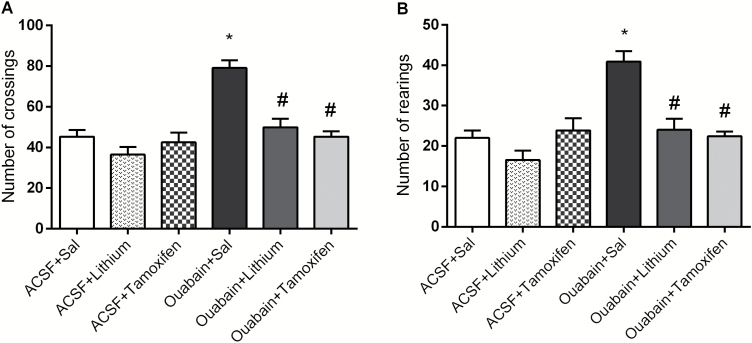
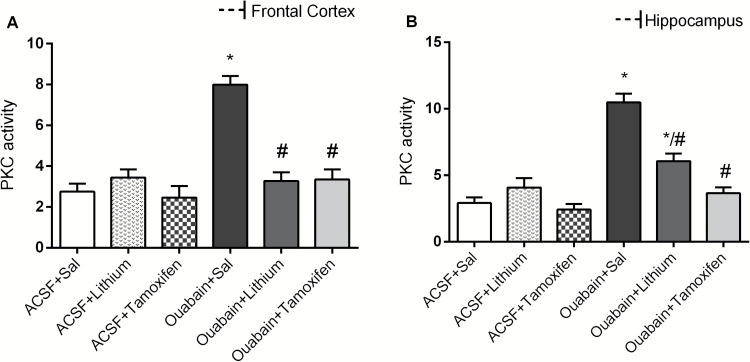
In the present study, we investigated the effects of lithium and tamoxifen on the protein kinase C signaling pathway in the frontal cortex and hippocampus of rats submitted to the animal model of mania induced by ouabain. We showed that ouabain induced hyperlocomotion in the rats.
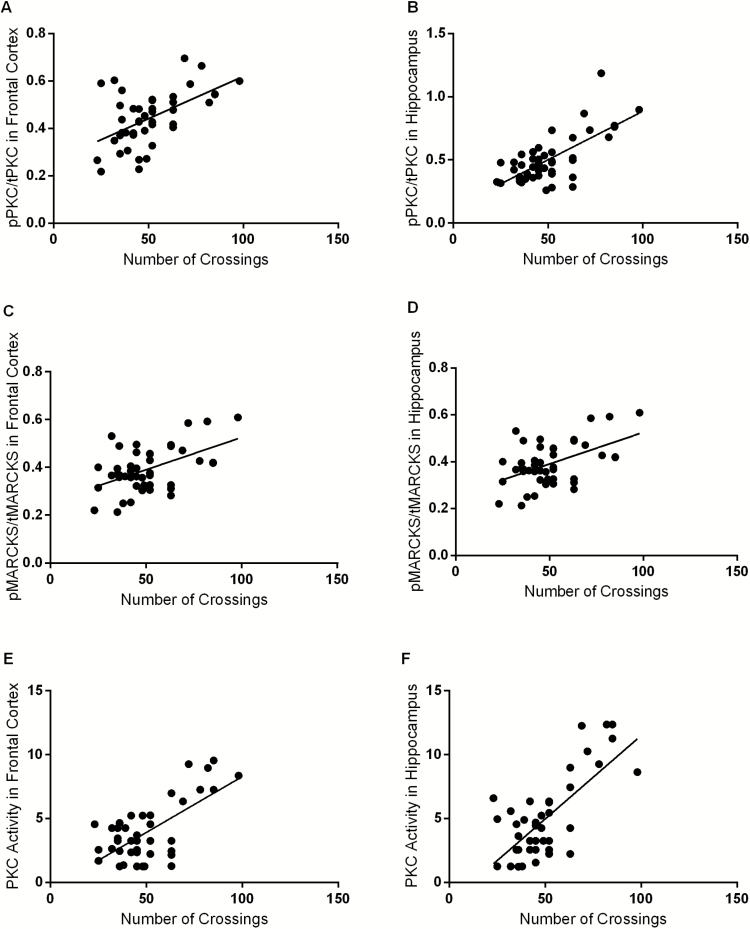
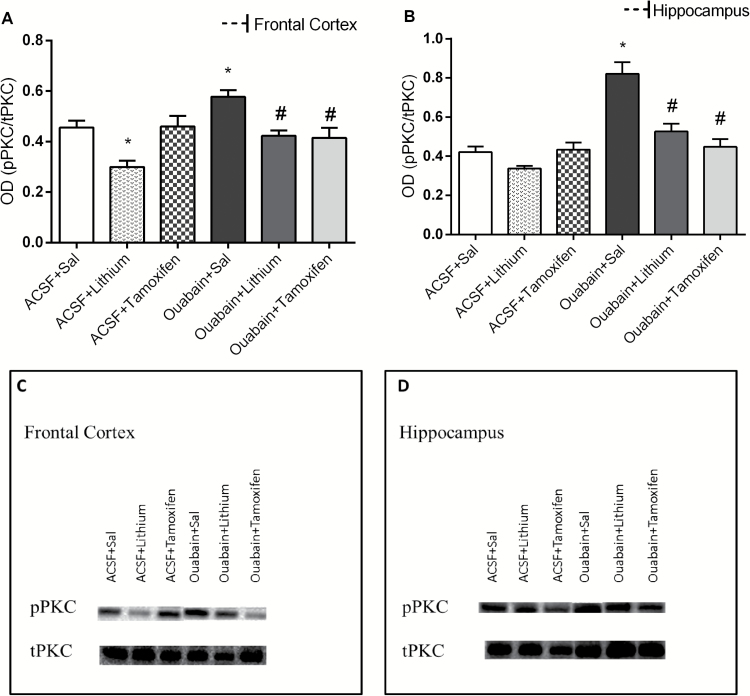
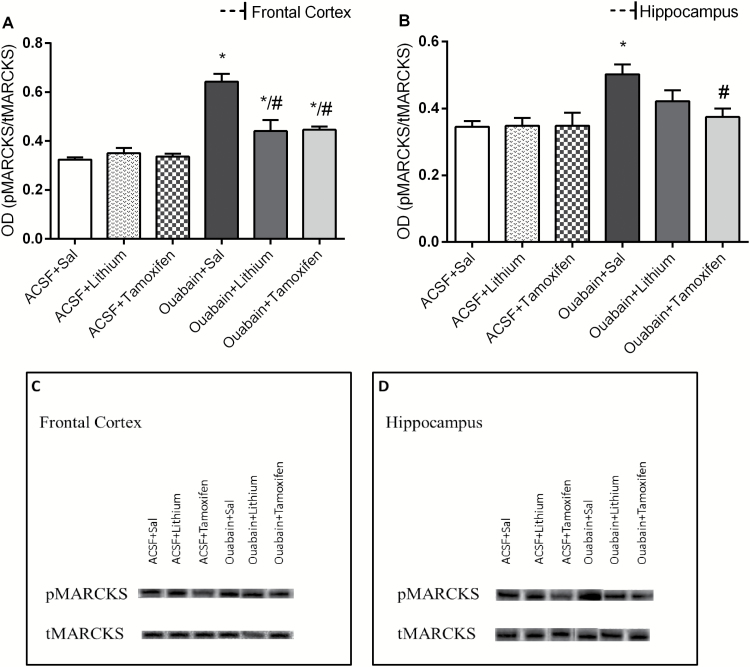
Ouabain increased the protein kinase C activity and the protein kinase C and MARCKS phosphorylation in frontal cortex and hippocampus of rats. Lithium and tamoxifen reversed the behavioral and protein kinase C pathway changes induced by ouabain. These findings indicate that the Na+/K+-ATPase inhibition can lead to protein kinase C alteration.
The present study showed that lithium and tamoxifen modulate changes in the behavior and protein kinase C signalling pathway alterations induced by ouabain, underlining the need for more studies of protein kinase C as a possible target for treatment of bipolar disorder.
特定的 Na+/K+-腺嘌呤三磷酸酶(Na+/K+-ATPase)抑制剂哇巴因脑室注射可在躁狂症的动物模型中诱导大鼠过度活跃。有几项证据表明蛋白激酶 C 信号通路参与双相情感障碍。此外,已知蛋白激酶 C 抑制剂,如锂和他莫昔芬,对治疗急性躁狂有效。
在本研究中,我们研究了锂和他莫昔芬对哇巴因诱导的躁狂症动物模型大鼠额叶皮质和海马体蛋白激酶 C 信号通路的影响。结果表明,哇巴因诱导大鼠过度活跃。
哇巴因增加了大鼠额叶皮质和海马体的蛋白激酶 C 活性以及蛋白激酶 C 和 MARCKS 的磷酸化。锂和他莫昔芬逆转了哇巴因诱导的行为和蛋白激酶 C 途径变化。这些发现表明 Na+/K+-ATP 酶抑制可导致蛋白激酶 C 改变。
本研究表明,锂和他莫昔芬可调节哇巴因诱导的行为和蛋白激酶 C 信号通路改变,强调需要进一步研究蛋白激酶 C 作为治疗双相情感障碍的可能靶点。