Division on Substance Use Disorders, Department of Psychiatry, New York State Psychiatric Institute, College of Physicians and Surgeons, Columbia University, 1051 Riverside Drive, Unit 120, New York, NY 10032, USA.
Division on Substance Use Disorders, Department of Psychiatry, New York State Psychiatric Institute, College of Physicians and Surgeons, Columbia University, 1051 Riverside Drive, Unit 120, New York, NY 10032, USA.
Pharmacol Biochem Behav. 2017 Dec;163:90-100. doi: 10.1016/j.pbb.2017.10.002. Epub 2017 Oct 8.
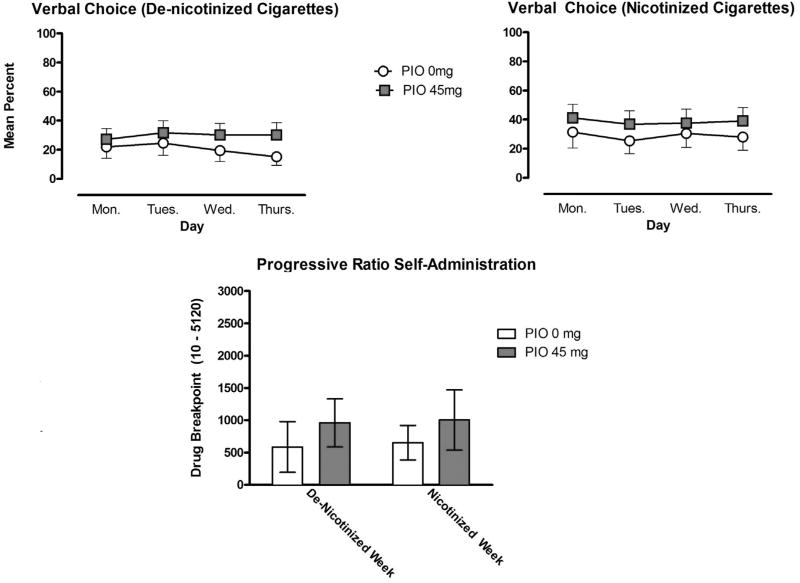
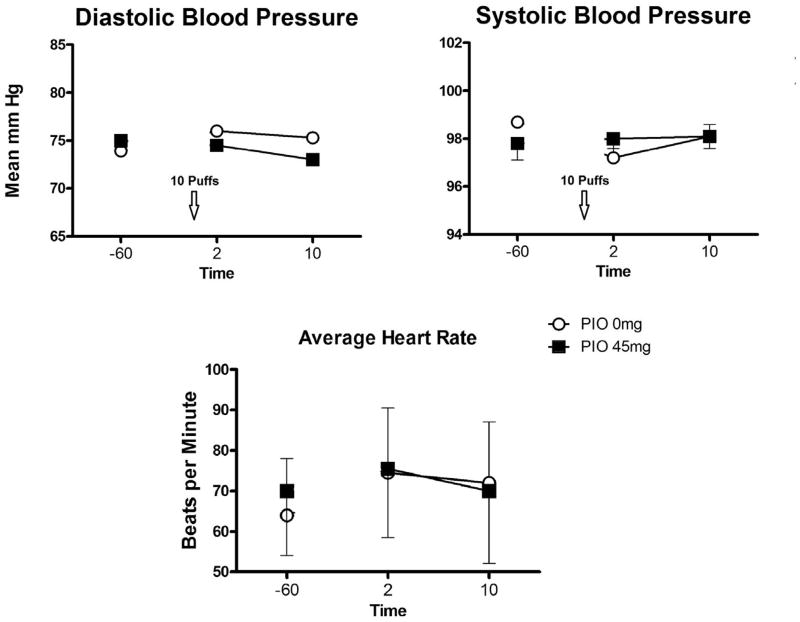
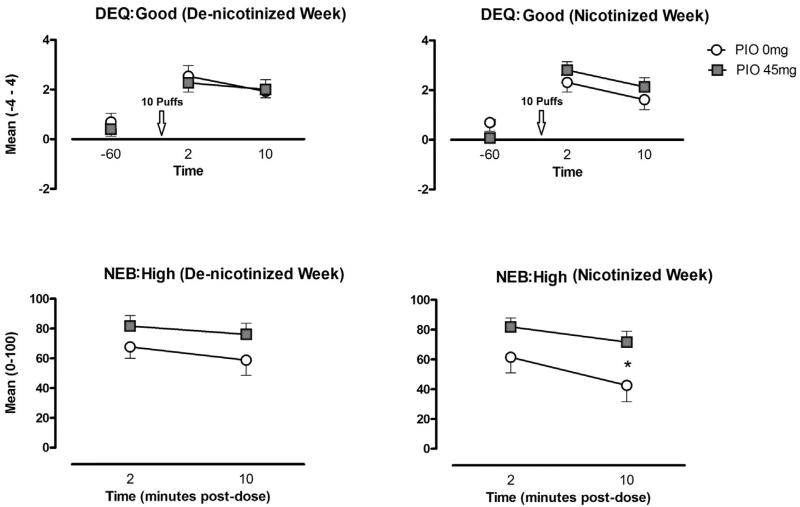
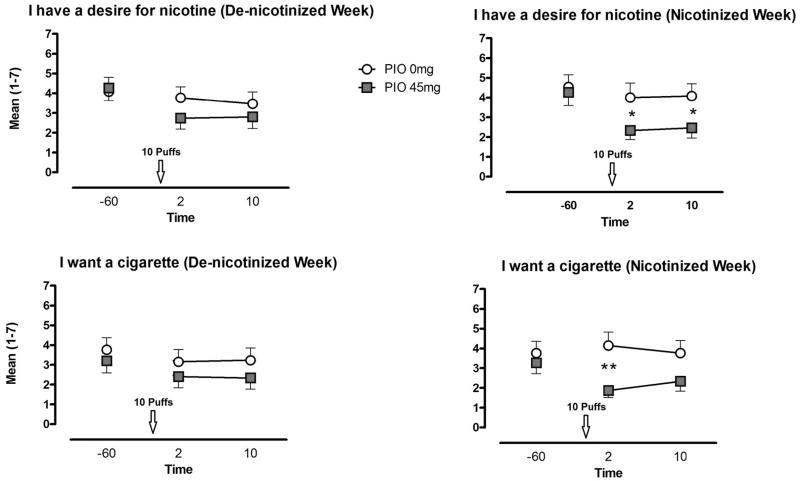
Possibly through their actions upon glia, peroxisome proliferator-activated receptor agonists (PPAR) have been shown to alter the abuse potential of addictive drugs in several preclinical models. The current study extends this research into the human laboratory as the first clinical study into the effects of the PPAR gamma agonist, pioglitazone, on the abuse potential of nicotine. Heavy smokers were recruited for this 3-week study. Upon admission, participants were randomized to either active (45mg, n=14) or placebo (0mg, n=13) PIO maintenance conditions for the duration of the study. After 5-7days of stabilization on a 7mg nicotine patch, participants began laboratory testing. On the 1st-4th test days, participants could self-administer cigarettes or receive money by making verbal choices for either option. On the 5th day, participants were administered 10 puffs of their usual brand of cigarette in the morning and later chose between smoking and money by making finger presses on a computer mouse in a progressive ratio self-administration task. Later on the 5th day participants also underwent a smoking cue exposure session. The 8th-11th test days were identical to the 1st-4th test days with the exception that during one of the test weeks de-nicotinized cigarettes were available, and during the other nicotinized cigarettes were available. Nicotinized cigarettes were always administered on the 5th and 12th days. On some measures PIO increased indicators of abuse potential, though this effect was typically not statistically significant. However, PIO did significantly reduce measures of craving.
可能是通过对神经胶质细胞的作用,过氧化物酶体增殖物激活受体激动剂 (PPAR) 在几种临床前模型中显示出改变成瘾药物滥用潜力的作用。本研究将这一研究扩展到人类实验室,首次研究了 PPARγ 激动剂吡格列酮对尼古丁滥用潜力的影响。这项为期 3 周的研究招募了大量吸烟者。入院时,参与者被随机分配到活性(45mg,n=14)或安慰剂(0mg,n=13)PIO 维持条件下进行研究。在稳定使用 7mg 尼古丁贴片 5-7 天后,参与者开始进行实验室测试。在第 1-4 天的测试中,参与者可以自行选择吸烟或通过口头选择获得金钱。第 5 天,参与者早上吸 10 口他们通常品牌的香烟,然后通过在计算机鼠标上按手指来选择吸烟或金钱,这是一个递增比率自我管理任务。后来在第 5 天,参与者还进行了吸烟线索暴露。第 8-11 天的测试与第 1-4 天的测试相同,除了在其中一周的测试中可以使用脱尼古丁香烟,而在另一周的测试中可以使用尼古丁香烟。尼古丁香烟总是在第 5 天和第 12 天使用。在某些指标上,PIO 增加了滥用潜力的指标,尽管这种影响通常不具有统计学意义。然而,PIO 确实显著降低了渴望的测量。