Lengel Dana, Kenny Paul J
Nash Family Department of Neuroscience, Icahn School of Medicine at Mount Sinai, New York, NY 10029, USA.
Drug Discovery Institute (DDI), Icahn School of Medicine at Mount Sinai, New York, NY 10029, USA.
Addict Neurosci. 2023 Sep;7. doi: 10.1016/j.addicn.2023.100103. Epub 2023 May 18.
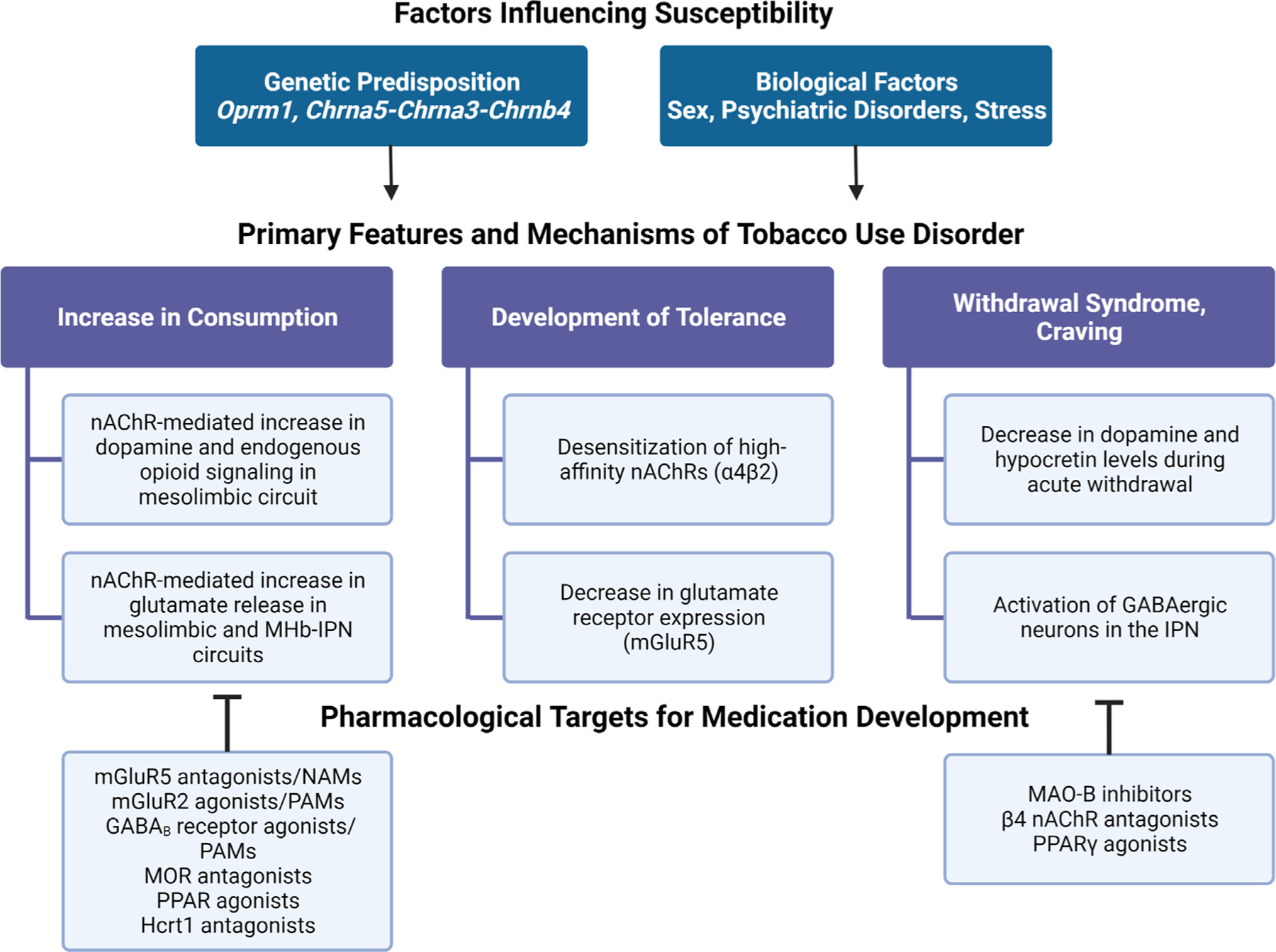
Diseases associated with nicotine dependence in the form of habitual tobacco use are a major cause of premature death in the United States. The majority of tobacco smokers will relapse within the first month of attempted abstinence. Smoking cessation agents increase the likelihood that smokers can achieve long-term abstinence. Nevertheless, currently available smoking cessation agents have limited utility and fail to prevent relapse in the majority of smokers. Pharmacotherapy is therefore an effective strategy to aid smoking cessation efforts but considerable risk of relapse persists even when the most efficacious medications currently available are used. The past decade has seen major breakthroughs in our understanding of the molecular, cellular, and systems-level actions of nicotine in the brain that contribute to the development and maintenance of habitual tobacco use. In parallel, large-scale human genetics studies have revealed allelic variants that influence vulnerability to tobacco use disorder. These advances have revealed targets for the development of novel smoking cessation agents. Here, we summarize current efforts to develop smoking cessation therapeutics and highlight opportunities for future efforts.
以习惯性吸烟形式出现的与尼古丁依赖相关的疾病是美国过早死亡的主要原因。大多数吸烟者在尝试戒烟的第一个月内就会复发。戒烟药物增加了吸烟者实现长期戒烟的可能性。然而,目前可用的戒烟药物效用有限,无法防止大多数吸烟者复发。因此,药物治疗是辅助戒烟努力的有效策略,但即使使用目前最有效的药物,仍存在相当大的复发风险。在过去十年中,我们对尼古丁在大脑中的分子、细胞和系统水平作用的理解取得了重大突破,这些作用促成了习惯性吸烟的形成和维持。与此同时,大规模人类遗传学研究揭示了影响烟草使用障碍易感性的等位基因变体。这些进展揭示了新型戒烟药物的开发靶点。在此,我们总结了目前开发戒烟治疗方法的努力,并强调了未来努力的机会。