Institute of Human Genetics, UMR 9002, CNRS and University of Montpellier, Montpellier, France.
Institute of Human Genetics, UMR 9002, CNRS and University of Montpellier, Montpellier, France
Open Biol. 2017 Oct;7(10). doi: 10.1098/rsob.170172.
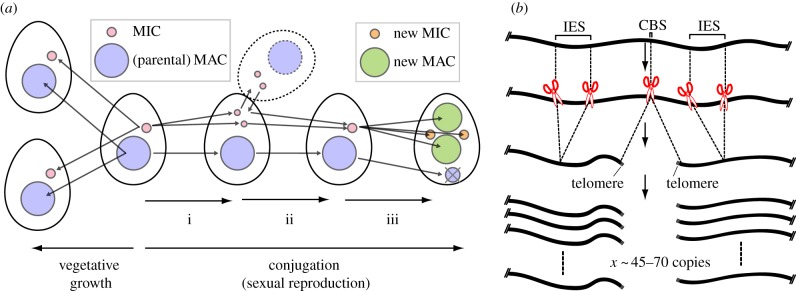
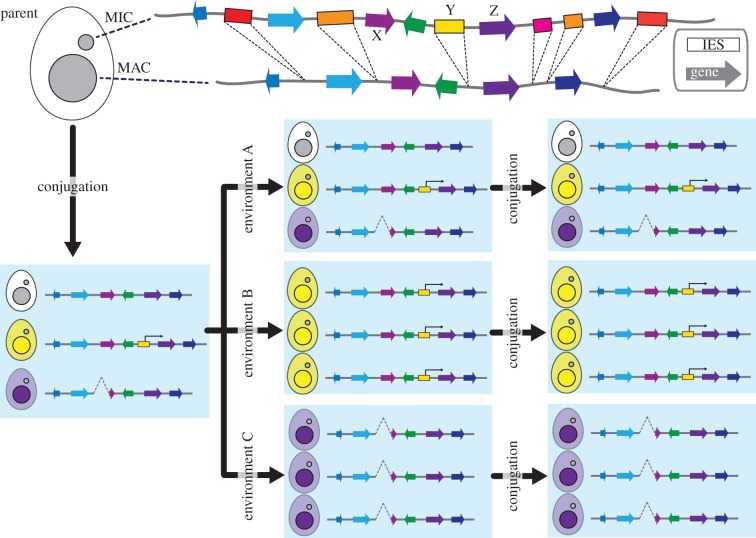
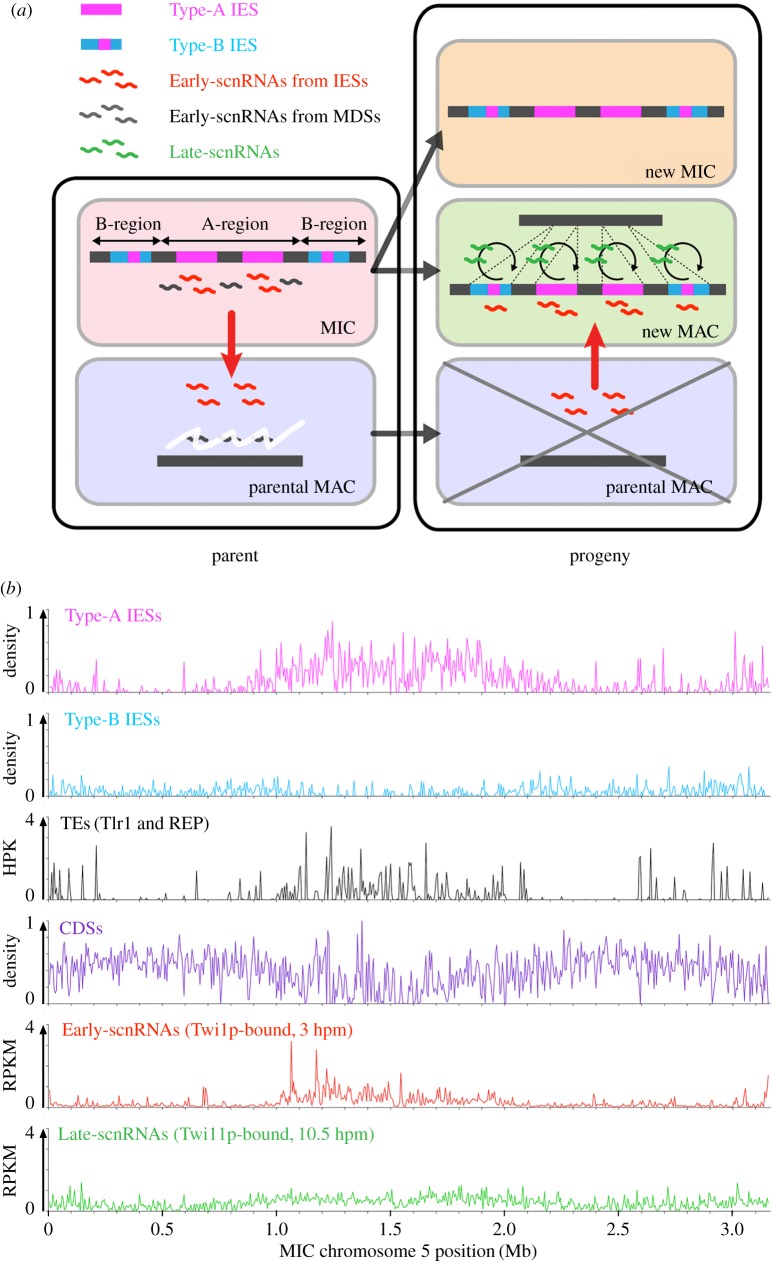
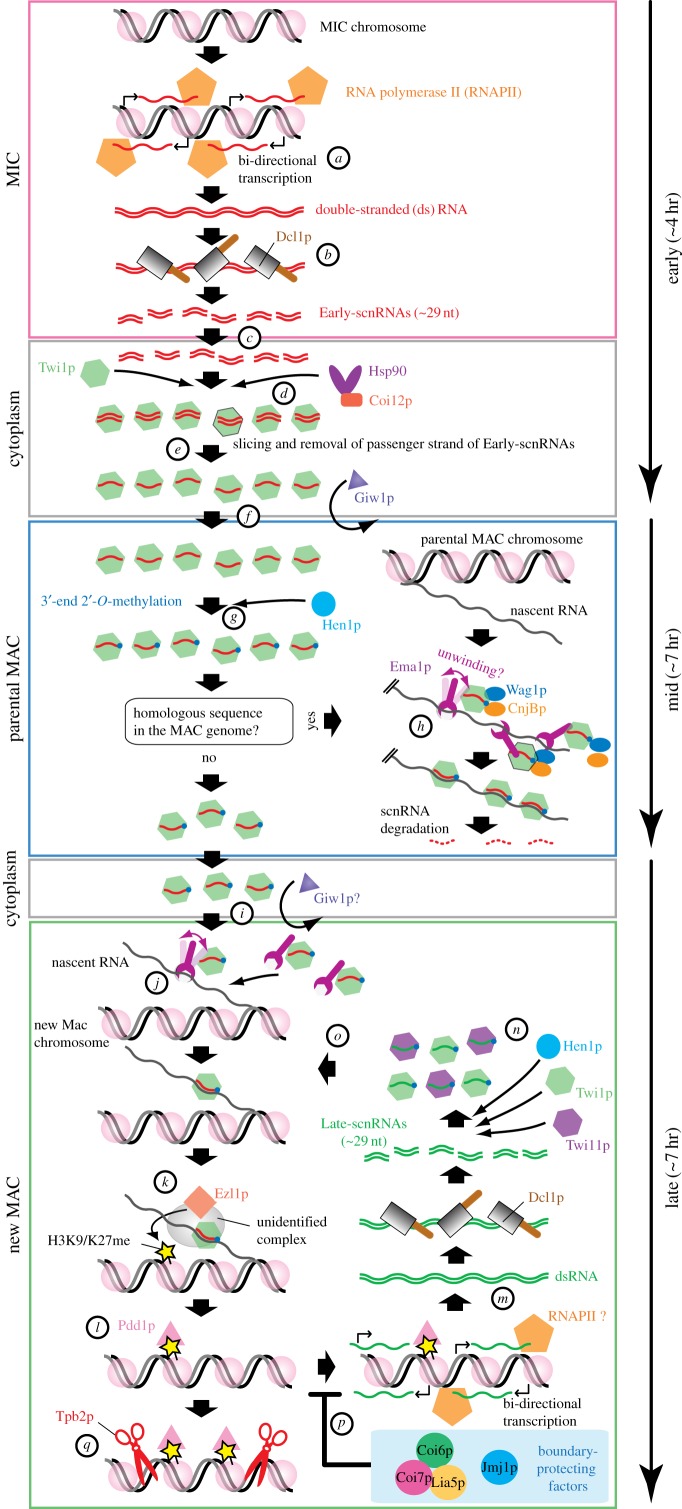
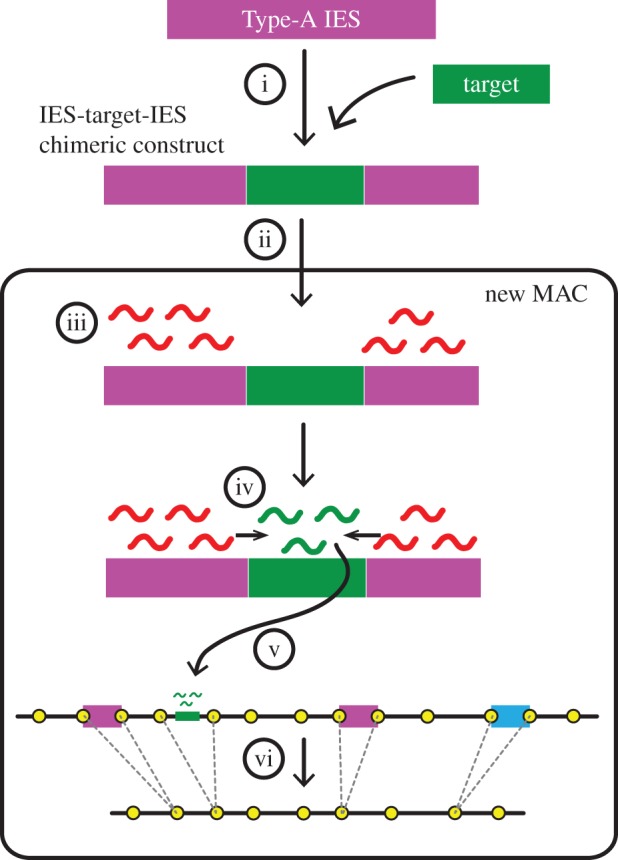
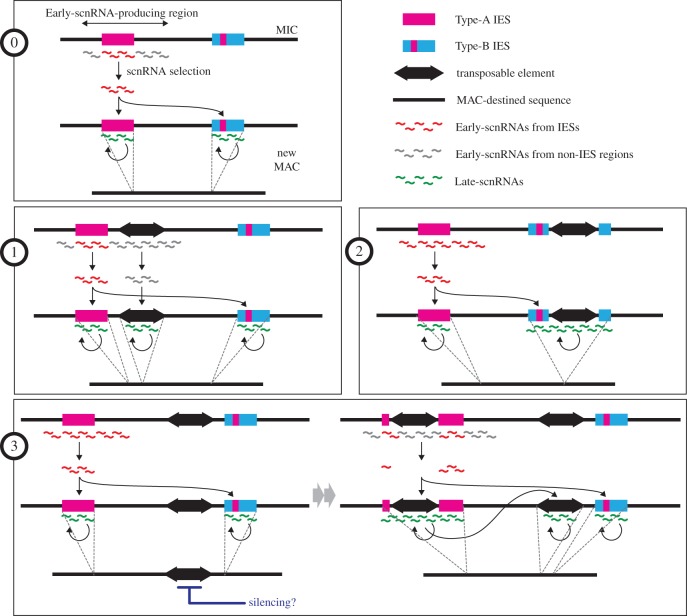
Programmed genome rearrangements in ciliates provide fascinating examples of flexible epigenetic genome regulations and important insights into the interaction between transposable elements (TEs) and host genomes. DNA elimination in removes approximately 12 000 internal eliminated sequences (IESs), which correspond to one-third of the genome, when the somatic macronucleus (MAC) differentiates from the germline micronucleus (MIC). More than half of the IESs, many of which show high similarity to TEs, are targeted for elimination in by the small RNA-mediated genome comparison of the MIC to the MAC. Other IESs are targeted for elimination in by the same small RNAs through repetitive sequences. Furthermore, the small RNA-heterochromatin feedback loop ensures robust DNA elimination. Here, we review an updated picture of the DNA elimination mechanism, discuss the physiological and evolutionary roles of DNA elimination, and outline the key questions that remain unanswered.
纤毛虫中的程序性基因组重排为灵活的表观遗传基因组调控提供了引人入胜的范例,并深入了解了转座元件 (TEs) 与宿主基因组之间的相互作用。当体细胞巨核 (MAC) 从生殖细胞微核 (MIC) 分化时, 中大约有 12000 个内部消除序列 (IESs) 被消除,这些 IESs 对应于基因组的三分之一。超过一半的 IESs 被靶向消除,其中许多与 TEs 高度相似,这是通过 MIC 与 MAC 之间的小 RNA 介导的基因组比较在 中实现的。其他 IESs 通过重复序列被相同的小 RNA 靶向消除。此外,小 RNA-异染色质反馈环确保了强大的 DNA 消除。在这里,我们回顾了 DNA 消除机制的最新图片,讨论了 DNA 消除的生理和进化作用,并概述了仍然存在的未解决的关键问题。