Bianco Carlo, Patiño Higuita Janis Eneida, Tosco Tiziana, Tiraferri Alberto, Sethi Rajandrea
Department of Environment, Land and Infrastructure Engineering (DIATI), Politecnico di Torino, Corso Duca degli Abruzzi 24, 10129, Torino, Italy.
Sci Rep. 2017 Oct 11;7(1):12992. doi: 10.1038/s41598-017-13423-y.
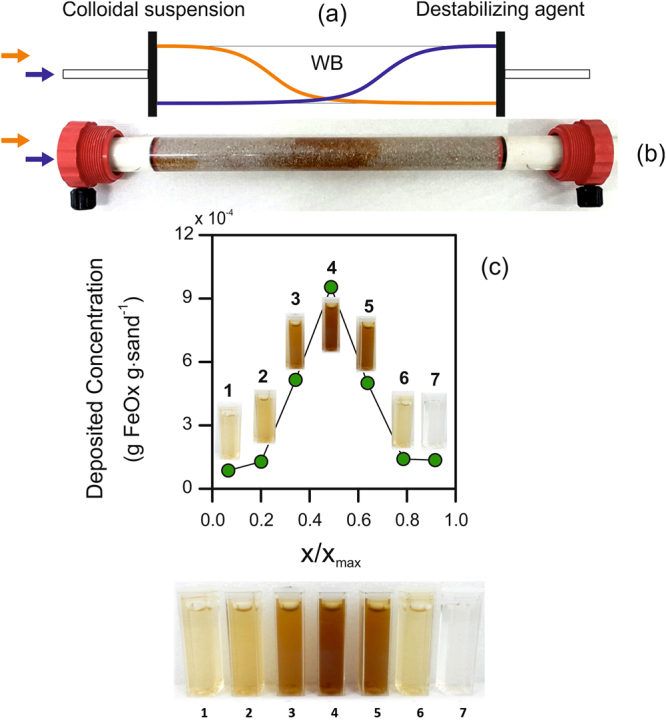
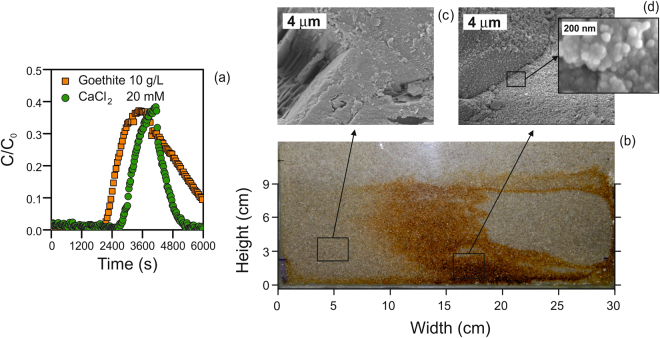
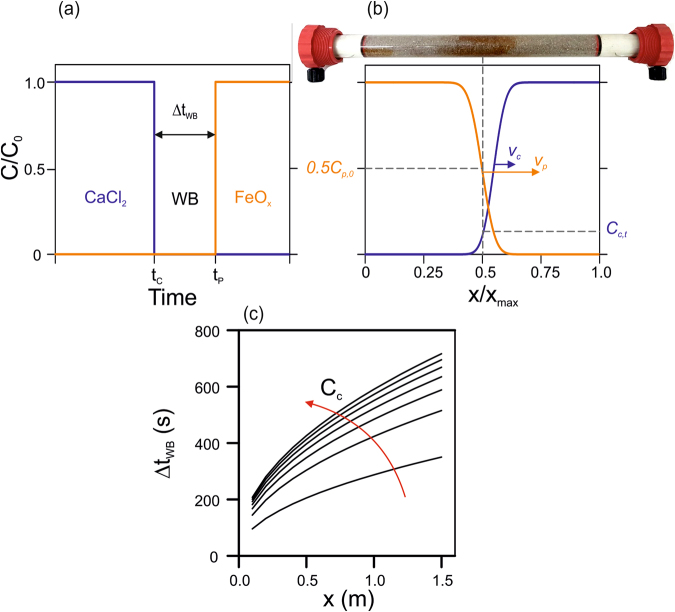
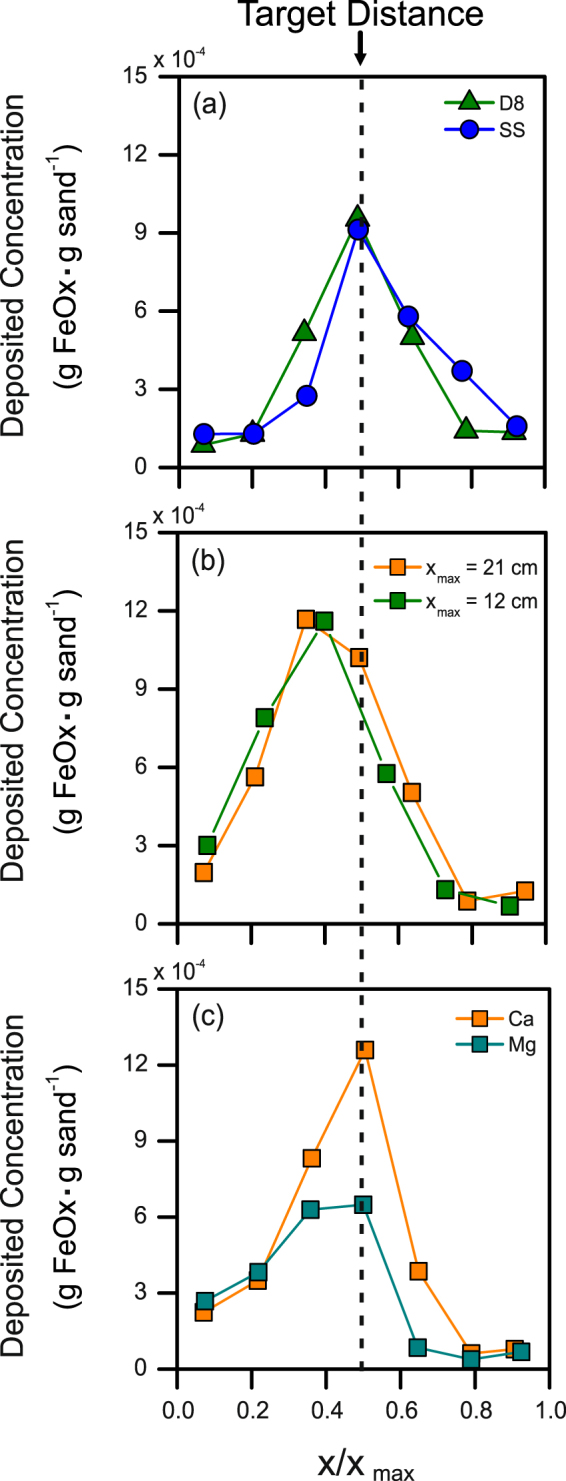
In this study, a model assisted strategy is developed to control the distribution of colloids in porous media in the framework of nanoremediation, an innovative environmental nanotechnology aimed at reclaiming contaminated aquifers. This approach is exemplified by the delivery of humic acid-stabilized iron oxide nanoparticles (FeOx), a typical reagent for in situ immobilization of heavy metals. By tuned sequential injections of FeOx suspensions and of solutions containing a destabilizing agent (i.e. calcium or magnesium), the two fronts, which advance at different rates, overlap at the target location (i.e., the central portion) of the porous systems. Here, the particles deposit and accumulate irreversibly, creating a reactive zone. An analytical expression predicting the position of the clustering zone in 1D systems is derived from first principles of advective-dispersive transport. Through this equation, the sequence and duration of the injection of the different solutions in the medium is assessed. The model robustness is demonstrated by its successful application to various systems, comprising the use of different sands or immobilizing cations, both in 1D and 2D geometries. The method represents an advancement in the control of nanomaterial fate in the environment, and could enhance nanoremediation making it an effective alternative to more conventional techniques.
在本研究中,开发了一种模型辅助策略,以在纳米修复框架内控制胶体在多孔介质中的分布。纳米修复是一种创新的环境纳米技术,旨在修复受污染的含水层。这种方法以腐殖酸稳定的氧化铁纳米颗粒(FeOx)的输送为例,FeOx是一种用于原位固定重金属的典型试剂。通过调整顺序注入FeOx悬浮液和含有去稳定剂(即钙或镁)的溶液,以不同速率推进的两个前沿在多孔系统的目标位置(即中心部分)重叠。在这里,颗粒不可逆地沉积和积累,形成一个反应区。从平流 - 扩散传输的第一原理推导出预测一维系统中聚集区位置的解析表达式。通过这个方程,可以评估在介质中注入不同溶液的顺序和持续时间。该模型通过成功应用于各种系统得到了验证,包括在一维和二维几何结构中使用不同的沙子或固定阳离子。该方法代表了在控制环境中纳米材料归宿方面的一项进展,并可增强纳米修复效果,使其成为更传统技术的有效替代方法。