Department of Anatomy, Histology and Neuroscience, Faculty of Medicine, Autonomous University of Madrid, Madrid, Spain.
Front Neural Circuits. 2017 Sep 27;11:69. doi: 10.3389/fncir.2017.00069. eCollection 2017.
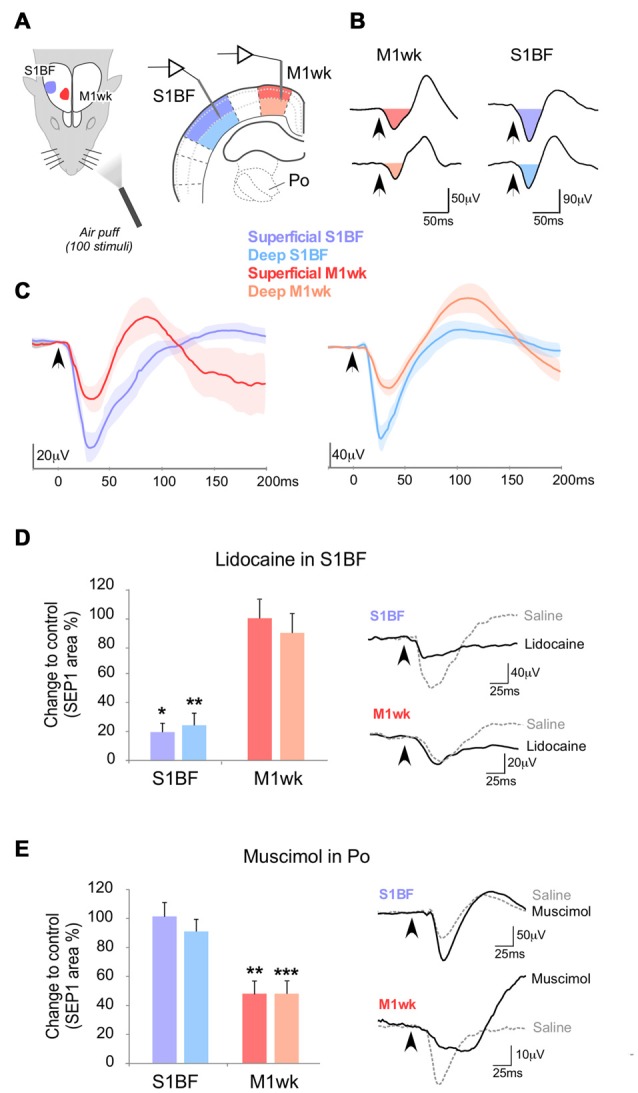
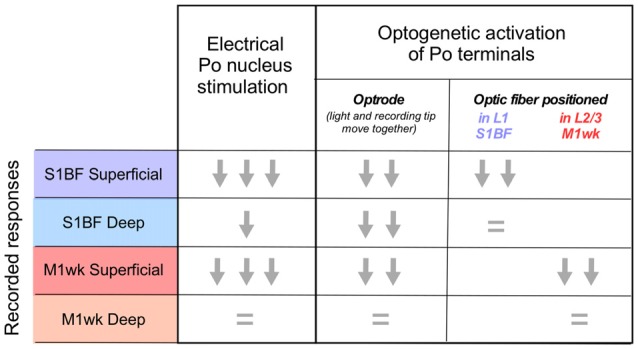
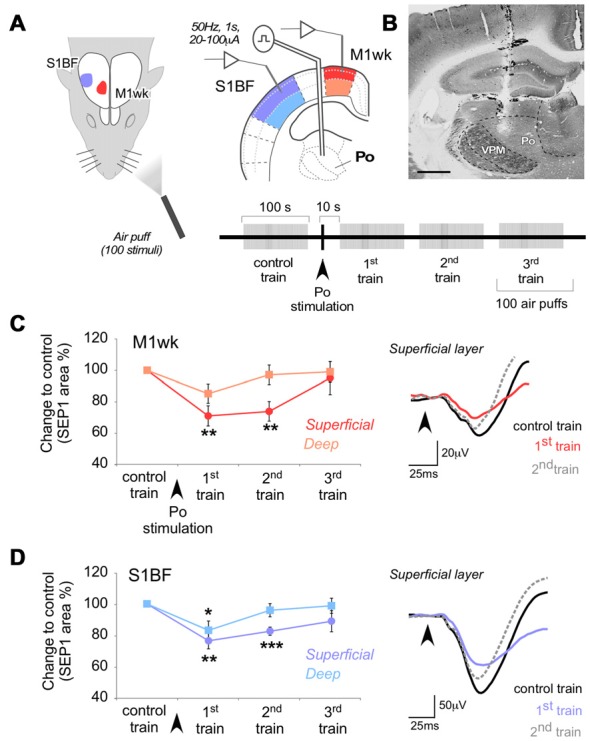
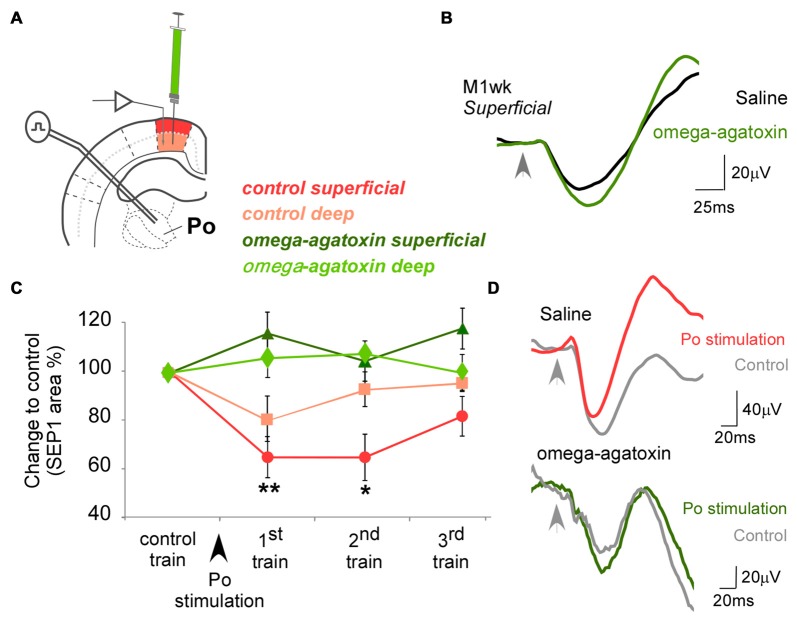
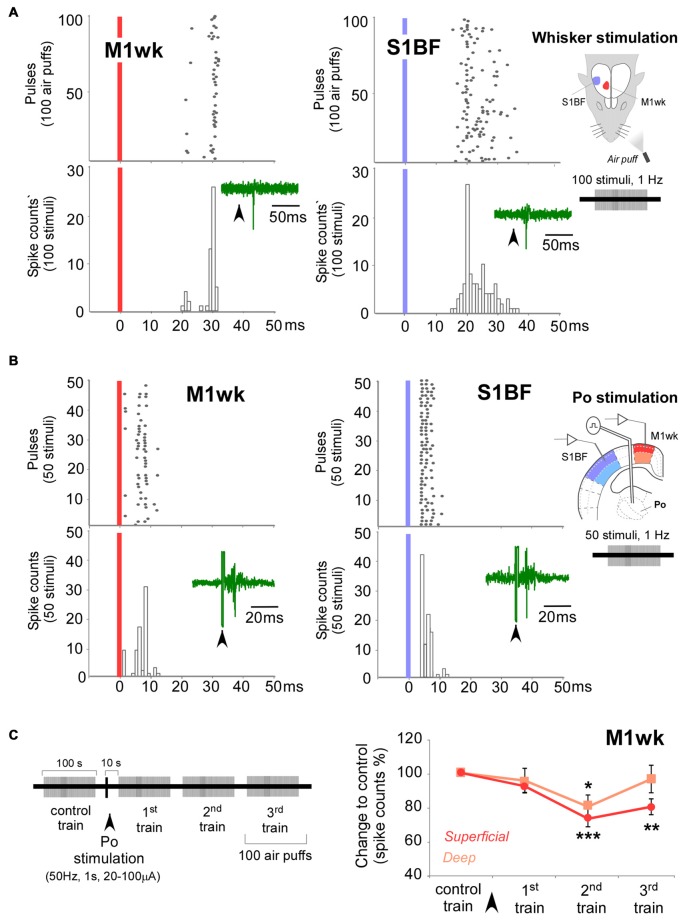
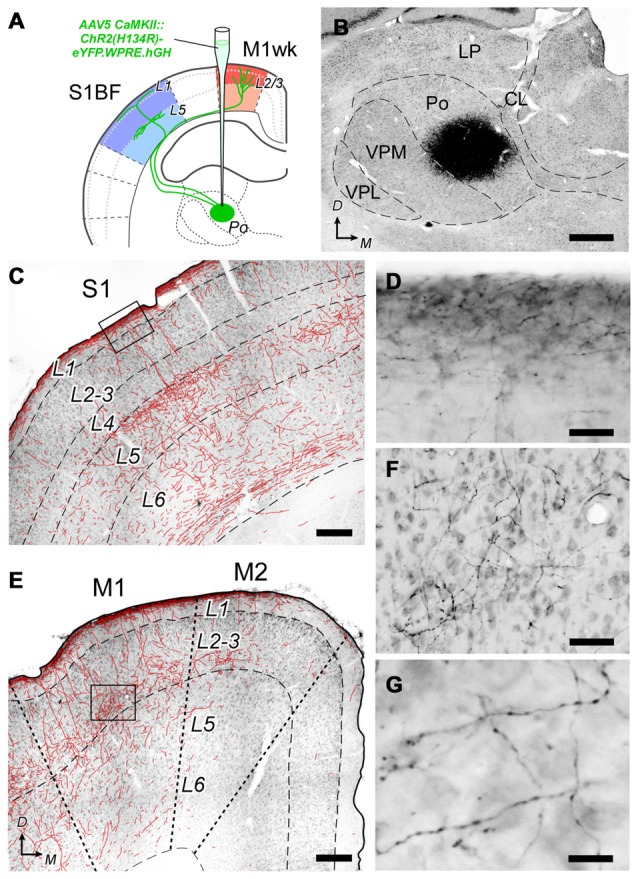
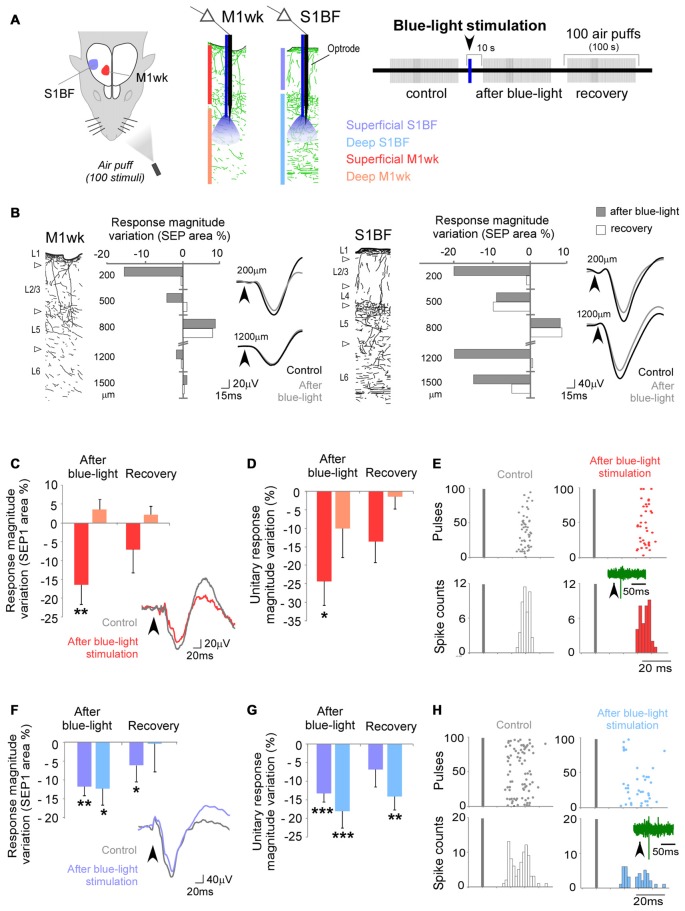
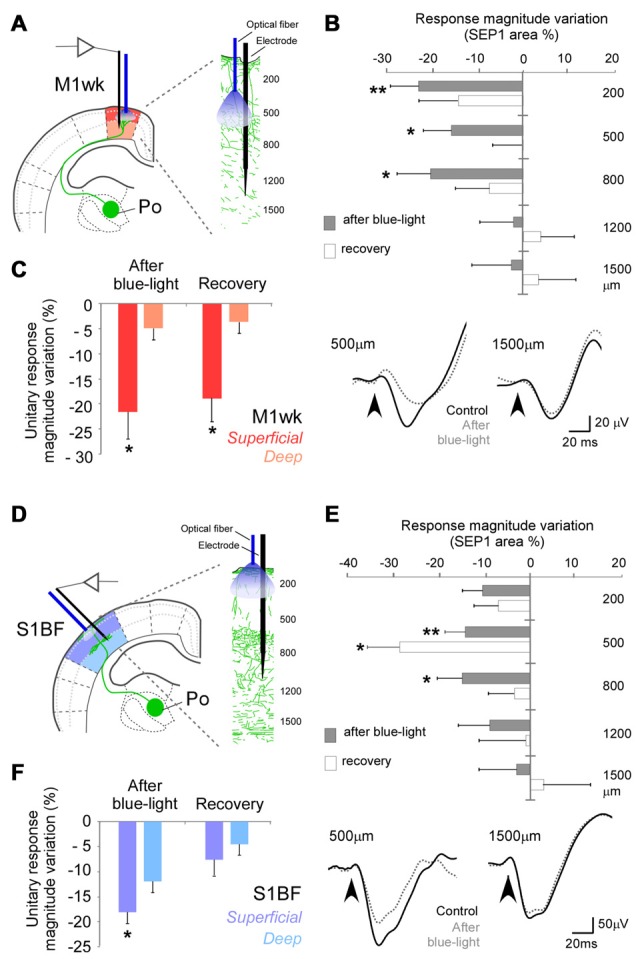
Rodents move rhythmically their facial whiskers and compute differences between signals predicted and those resulting from the movement to infer information about objects near their head. These computations are carried out by a large network of forebrain structures that includes the thalamus and the primary somatosensory (S1BF) and motor (M1wk) cortices. Spatially and temporally precise mechanorreceptive whisker information reaches the S1BF cortex via the ventroposterior medial thalamic nucleus (VPM). Other whisker-related information may reach both M1wk and S1BF via the axons from the posterior thalamic nucleus (Po). However, Po axons may convey, in addition to direct sensory signals, the dynamic output of computations between whisker signals and descending motor commands. It has been proposed that this input may be relevant for adjusting cortical responses to predicted vs. unpredicted whisker signals, but the effects of Po input on M1wk and S1BF function have not been directly tested or compared . Here, using electrophysiology, optogenetics and pharmacological tools, we compared in adult rats M1wk and S1BF responses in the whisker areas of the motor and primary somatosensory cortices to passive multi-whisker deflection, their dependence on Po activity, and their changes after a brief intense activation of Po axons. We report that the latencies of the first component of tactile-evoked local field potentials in M1wk and S1BF are similar. The evoked potentials decrease markedly in M1wk, but not in S1BF, by injection in Po of the GABA agonist muscimol. A brief high-frequency electrical stimulation of Po decreases the responsivity of M1wk and S1BF cells to subsequent whisker stimulation. This effect is prevented by the local application of omega-agatoxin, suggesting that it may in part depend on GABA release by fast-spiking parvalbumin (PV)-expressing cortical interneurons. Local optogenetic activation of Po synapses in different cortical layers also diminishes M1wk and S1BF responses. This effect is most pronounced in the superficial layers of both areas, known to be the main source and target of their reciprocal cortico-cortical connections.
啮齿动物会有节奏地移动面部胡须,并计算预测信号与运动产生的信号之间的差异,从而推断头部附近物体的信息。这些计算是由包括丘脑和初级体感(S1BF)和运动(M1wk)皮层在内的一大脑前脑结构网络进行的。空间和时间精确的机械性胡须信息通过腹后内侧丘脑核(VPM)到达 S1BF 皮层。其他与胡须相关的信息可能通过来自后丘脑核(Po)的轴突到达 M1wk 和 S1BF。然而,除了直接的感觉信号外,Po 轴突可能传递来自胡须信号和下行运动指令之间的计算的动态输出。有人提出,这种输入可能与调整皮层对预测与未预测的胡须信号的反应有关,但 Po 输入对 M1wk 和 S1BF 功能的影响尚未直接测试或比较。在这里,我们使用电生理学、光遗传学和药理学工具,在成年大鼠中比较了运动和初级体感皮层的胡须区域中 M1wk 和 S1BF 的反应,比较了被动多胡须偏转、它们对 Po 活动的依赖性以及 Po 轴突短暂强烈激活后的变化。我们报告说,M1wk 和 S1BF 中触觉诱发局部场电位的第一成分的潜伏期相似。在 Po 中注射 GABA 激动剂 muscimol 会显著降低 M1wk 但不降低 S1BF 的诱发电位。短暂的高频电刺激 Po 会降低 M1wk 和 S1BF 细胞对随后胡须刺激的反应性。这种效应被局部应用 omega-agatoxin 阻止,表明它可能部分依赖于快速放电的 parvalbumin (PV) 表达皮质中间神经元释放的 GABA。Po 突触在不同皮层层中的局部光遗传学激活也会降低 M1wk 和 S1BF 的反应。这种效应在两个区域的浅层最为明显,已知浅层是它们相互皮质皮质连接的主要来源和靶点。