Askmyr Maria, von Palffy Sofia, Hansen Nils, Landberg Niklas, Högberg Carl, Rissler Marianne, Ågerstam Helena, Fioretos Thoas
Department of Clinical Genetics, Lund University, Lund, Sweden.
Department of Clinical Genetics, University and Regional Laboratories, Region Skåne, Lund, Sweden.
PLoS One. 2017 Oct 12;12(10):e0186035. doi: 10.1371/journal.pone.0186035. eCollection 2017.
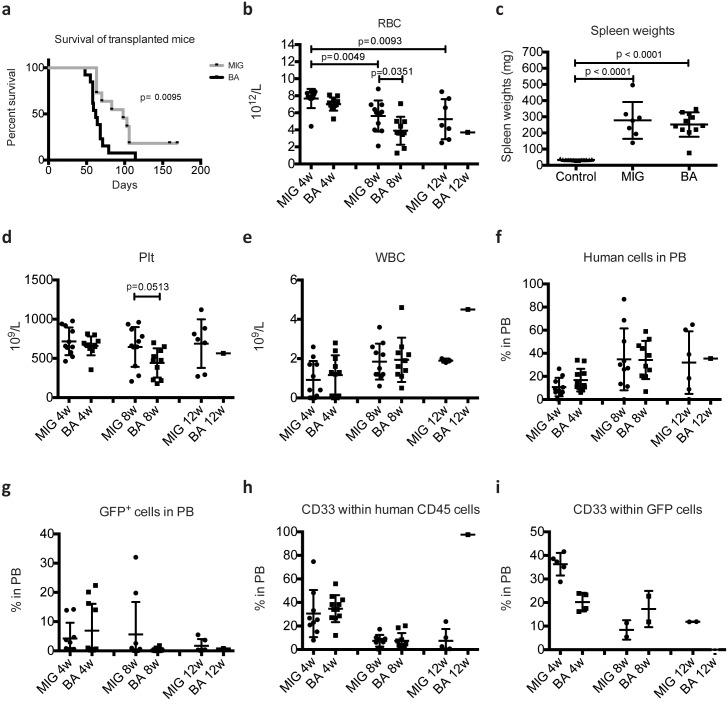
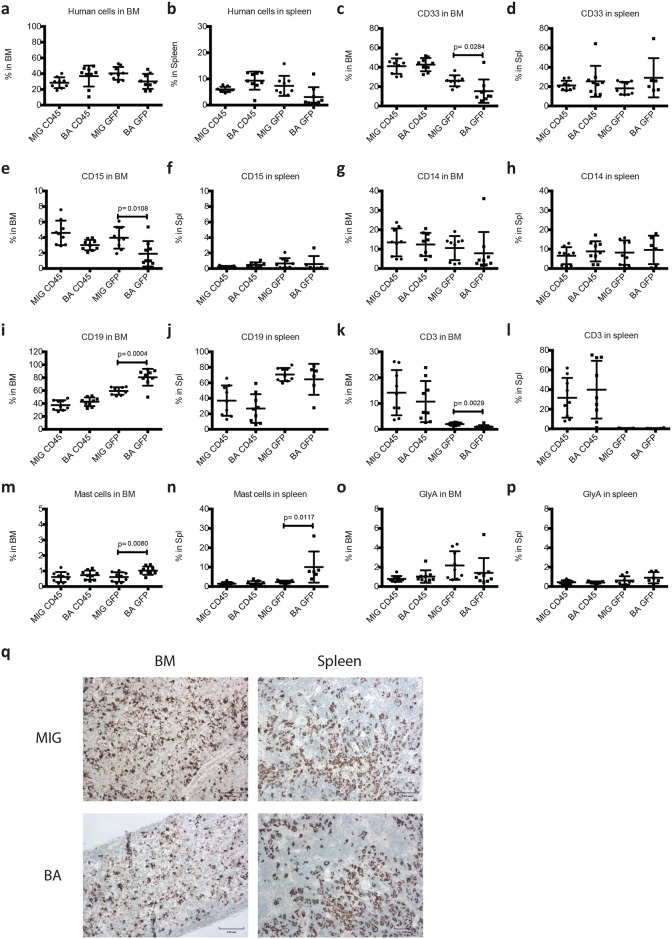
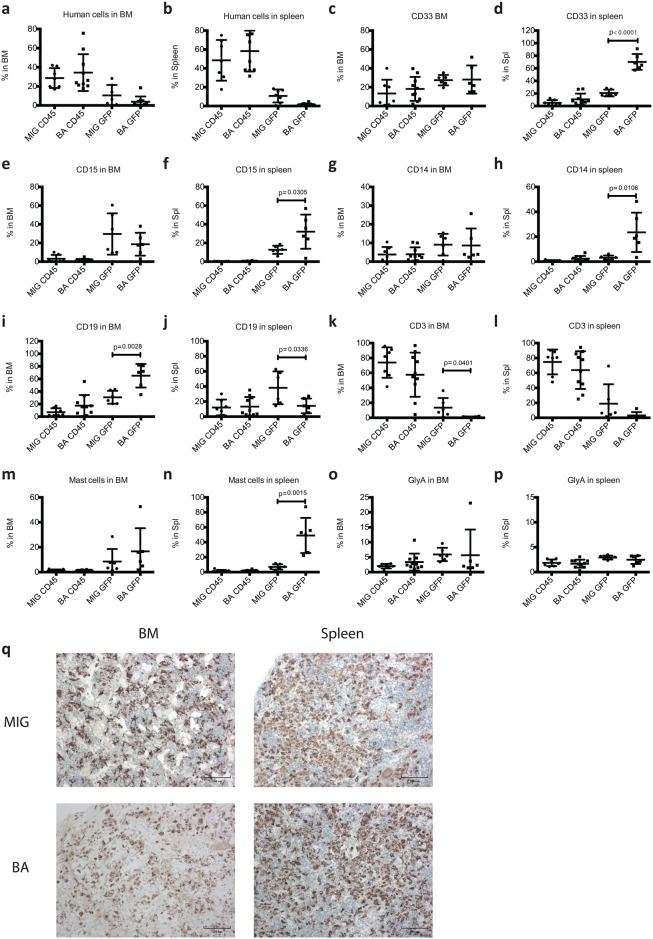
Several attempts have been made to model chronic myeloid leukemia (CML) in a xenograft setting but expansion of human myeloid cells in immunodeficient mice has proven difficult to achieve. Lack of cross-reacting cytokines in the microenvironment of the mice has been proposed as a potential reason. In this study we have used NOD/SCID IL2-receptor gamma deficient mice expressing human SCF, IL-3 and GM-CSF (NSGS mice), that should be superior in supporting human, and particularly, myeloid cell engraftment, to expand BCR-ABL1 expressing human cells in order to model CML. NSGS mice transplanted with BCR-ABL1 expressing cells became anemic and had to be sacrificed due to illness, however, this was not accompanied by an expansion of human myeloid cells but rather we observed a massive expansion of human T-cells and macrophages/histiocytes. Importantly, control human cells without BCR-ABL1 expression elicited a similar reaction, although with a slight delay of disease induction, suggesting that while BCR-ABL1 contributes to the inflammatory reaction, the presence of normal human hematopoietic cells is detrimental for NSGS mice.
已经进行了几次尝试在异种移植环境中模拟慢性粒细胞白血病(CML),但事实证明在免疫缺陷小鼠中扩增人髓细胞很难实现。小鼠微环境中缺乏交叉反应性细胞因子被认为是一个潜在原因。在本研究中,我们使用了表达人干细胞因子(SCF)、白细胞介素-3(IL-3)和粒细胞-巨噬细胞集落刺激因子(GM-CSF)的NOD/SCID白细胞介素-2受体γ缺陷小鼠(NSGS小鼠),其在支持人细胞尤其是髓细胞植入方面应该更具优势,以扩增表达BCR-ABL1的人细胞来模拟CML。移植了表达BCR-ABL1细胞的NSGS小鼠出现贫血,并且由于疾病不得不被处死,然而,这并未伴随人髓细胞的扩增,相反,我们观察到了人T细胞和巨噬细胞/组织细胞的大量扩增。重要的是,没有BCR-ABL1表达的对照人细胞引发了类似的反应,尽管疾病诱导稍有延迟,这表明虽然BCR-ABL1促成了炎症反应,但正常人造血细胞的存在对NSGS小鼠是有害的。