Askmyr M, Ågerstam H, Lilljebjörn H, Hansen N, Karlsson C, von Palffy S, Landberg N, Högberg C, Lassen C, Rissler M, Richter J, Ehinger M, Järås M, Fioretos T
Department of Clinical Genetics, University and Regional Laboratories, Lund University Hospital, Lund University, Lund, Sweden.
Department of Molecular Medicine and Gene Therapy, Lund University and Department of Hematology and Vascular Disorders, Skåne University Hospital, Lund, Sweden.
Blood Cancer J. 2014 Dec 12;4(12):e269. doi: 10.1038/bcj.2014.89.
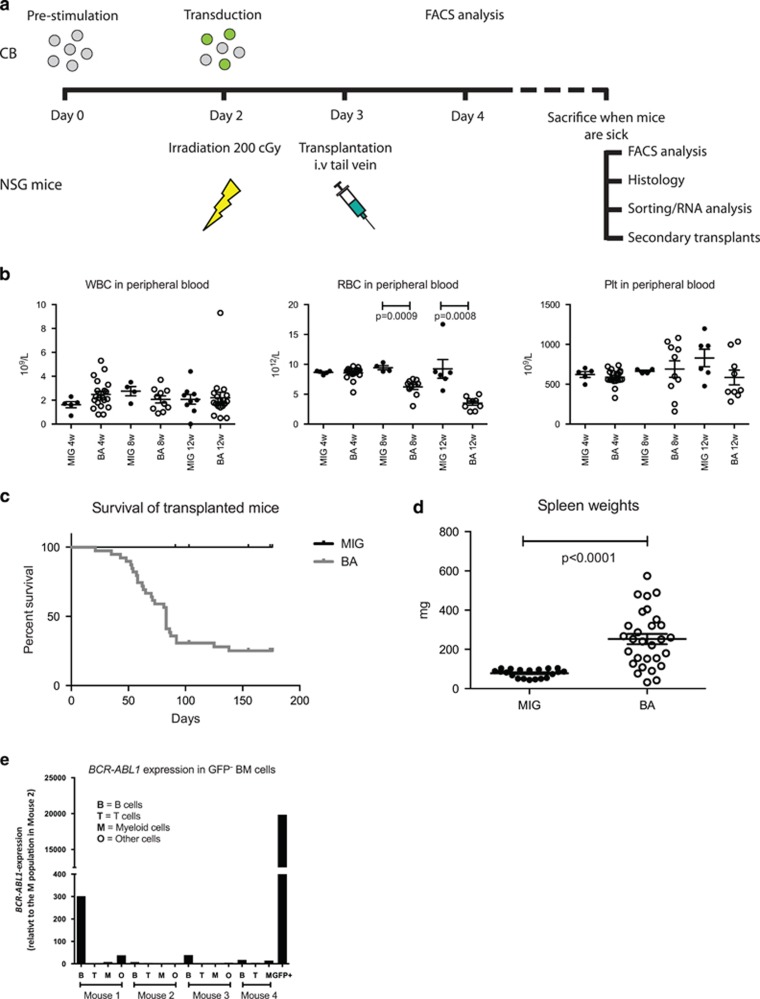
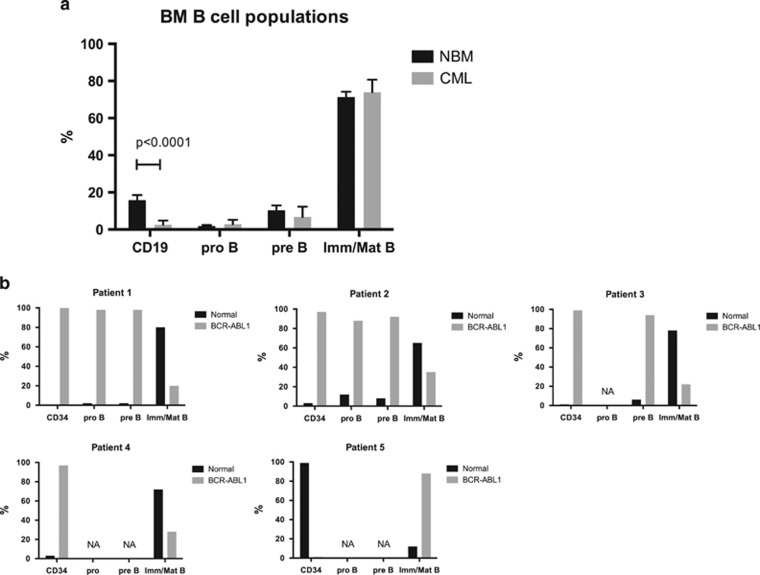
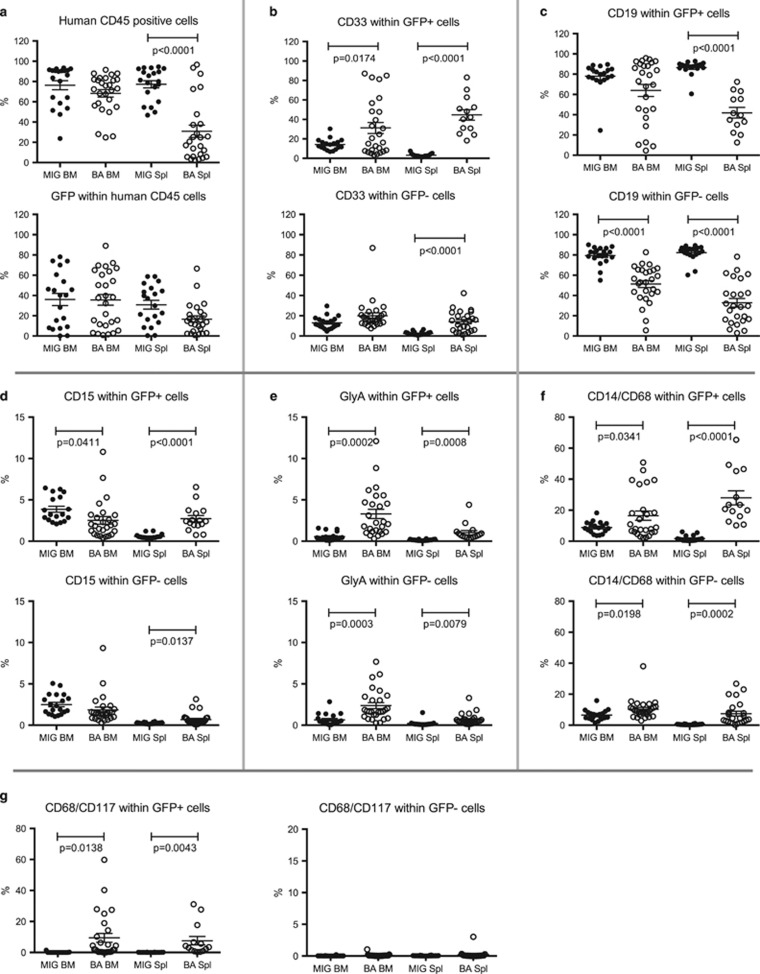
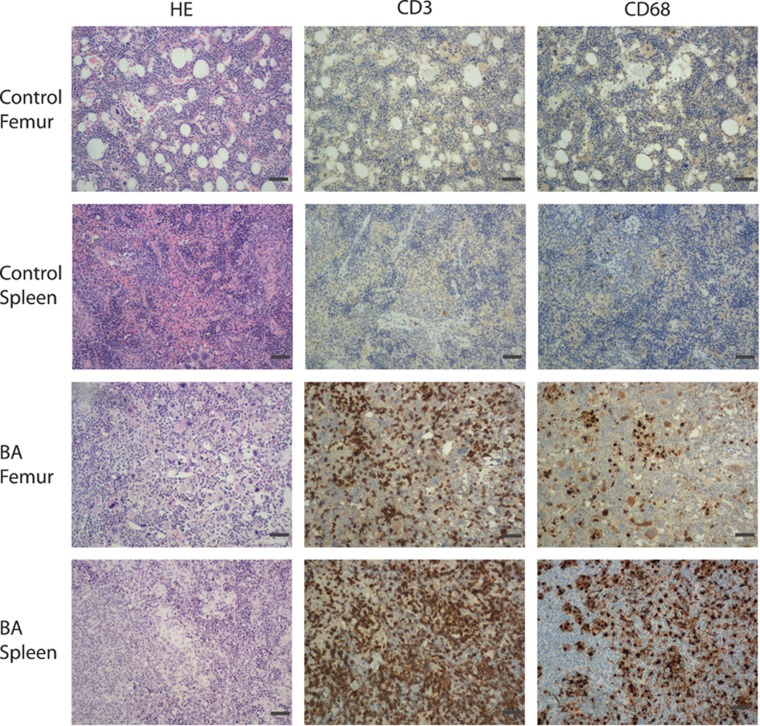
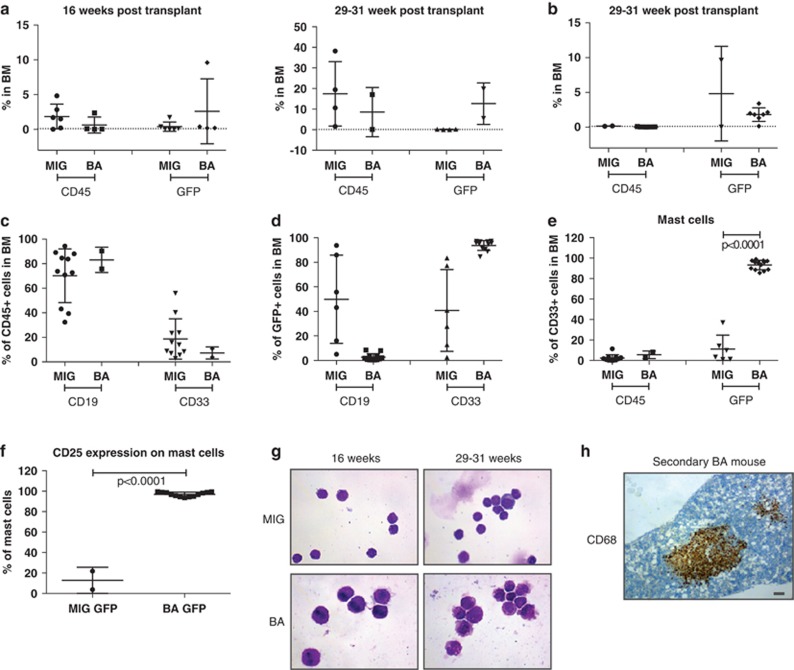
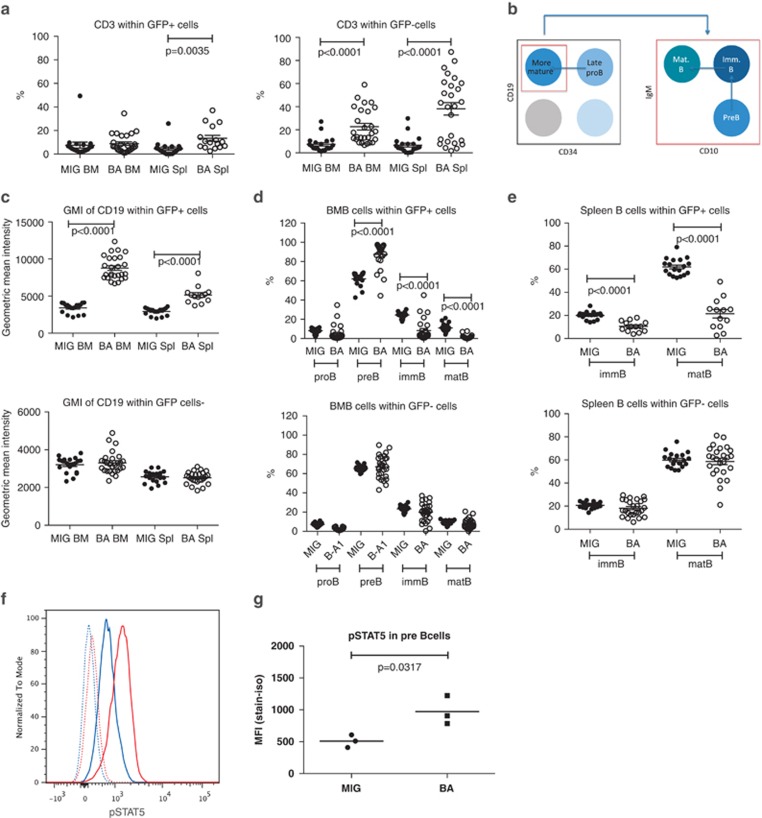
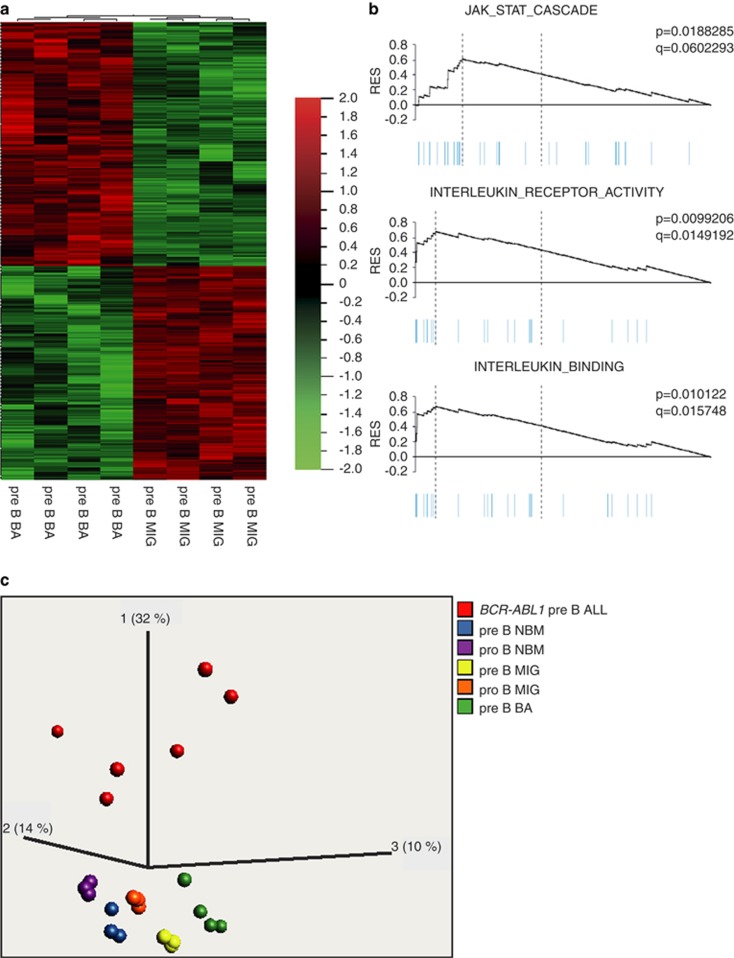
Chronic myeloid leukemia (CML) is a myeloproliferative neoplasm that, if not treated, will progress into blast crisis (BC) of either myeloid or B lymphoid phenotype. The BCR-ABL1 fusion gene, encoding a constitutively active tyrosine kinase, is thought to be sufficient to cause chronic phase (CP) CML, whereas additional genetic lesions are needed for progression into CML BC. To generate a humanized CML model, we retrovirally expressed BCR-ABL1 in the cord blood CD34(+) cells and transplanted these into NOD-SCID (non-obese diabetic/severe-combined immunodeficient) interleukin-2-receptor γ-deficient mice. In primary mice, BCR-ABL1 expression induced an inflammatory-like state in the bone marrow and spleen, and mast cells were the only myeloid lineage specifically expanded by BCR-ABL1. Upon secondary transplantation, the pronounced inflammatory phenotype was lost and mainly human mast cells and macrophages were found in the bone marrow. Moreover, a striking block at the pre-B-cell stage was observed in primary mice, resulting in an accumulation of pre-B cells. A similar block in B-cell differentiation could be confirmed in primary cells from CML patients. Hence, this humanized mouse model of CML reveals previously unexplored features of CP CML and should be useful for further studies to understand the disease pathogenesis of CML.
慢性髓性白血病(CML)是一种骨髓增殖性肿瘤,如果不进行治疗,将进展为髓系或B淋巴系表型的急变期(BC)。编码组成型活性酪氨酸激酶的BCR-ABL1融合基因被认为足以导致慢性期(CP)CML,而进展为CML BC则需要额外的基因损伤。为了生成人源化CML模型,我们通过逆转录病毒在脐血CD34(+)细胞中表达BCR-ABL1,并将这些细胞移植到NOD-SCID(非肥胖糖尿病/严重联合免疫缺陷)白细胞介素-2受体γ缺陷小鼠体内。在初代小鼠中,BCR-ABL1表达在骨髓和脾脏中诱导了一种炎症样状态,肥大细胞是唯一被BCR-ABL1特异性扩增的髓系谱系。二次移植后,明显的炎症表型消失,骨髓中主要发现人肥大细胞和巨噬细胞。此外,在初代小鼠中观察到前B细胞阶段存在显著阻滞,导致前B细胞积累。在CML患者的原代细胞中也可以证实B细胞分化存在类似阻滞。因此,这种CML人源化小鼠模型揭示了CP CML以前未被探索的特征,应该有助于进一步研究以了解CML的疾病发病机制。