Odum School of Ecology, University of Georgia, Athens, GA, USA.
Center for the Ecology of Infectious Disease, University of Georgia, Athens, GA, USA.
J Anim Ecol. 2018 Mar;87(2):511-525. doi: 10.1111/1365-2656.12765. Epub 2017 Nov 13.
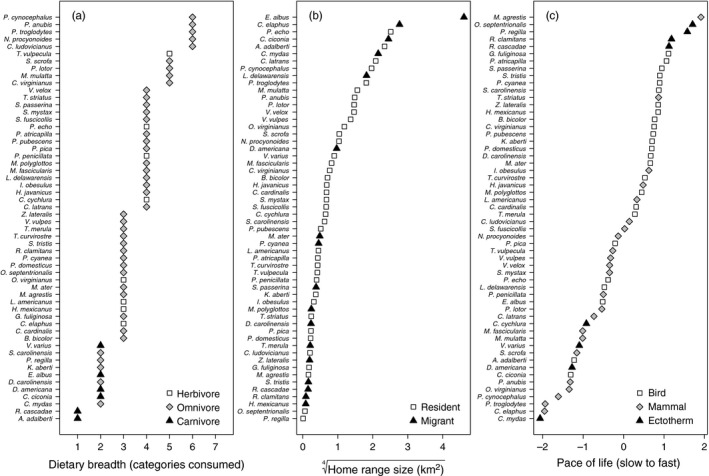
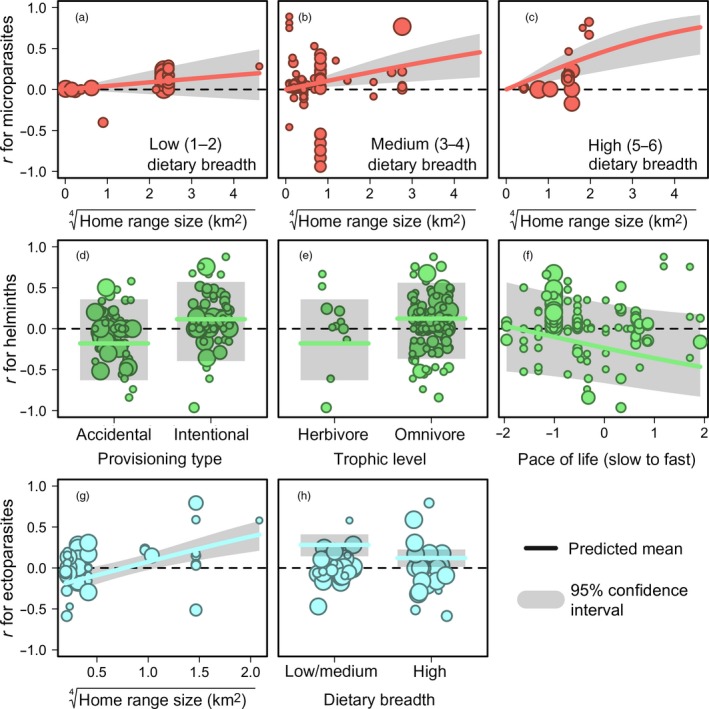
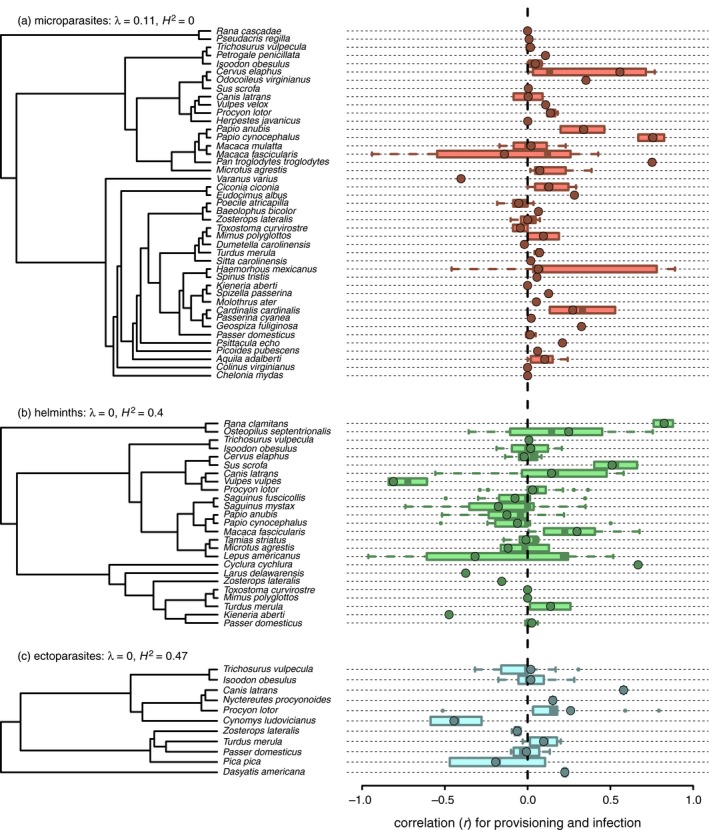
Supplemental food provided to wildlife by human activities can be more abundant and predictable than natural resources, and subsequent changes in wildlife ecology can have profound impacts on host-parasite interactions. Identifying traits of species associated with increases or decreases in infection outcomes with resource provisioning could improve assessments of wildlife most prone to disease risks in changing environments. We conducted a phylogenetic meta-analysis of 342 host-parasite interactions across 56 wildlife species and three broad taxonomic groups of parasites to identify host-level traits that influence whether provisioning is associated with increases or decreases in infection. We predicted dietary generalists that capitalize on novel food would show greater infection in provisioned habitats owing to population growth and food-borne exposure to contaminants and parasite infectious stages. Similarly, species with fast life histories could experience stronger demographic and immunological benefits from provisioning that affect parasite transmission. We also predicted that wide-ranging and migratory behaviours could increase infection risks with provisioning if concentrated and non-seasonal foods promote dense aggregations that increase exposure to parasites. We found that provisioning increased infection with bacteria, viruses, fungi and protozoa (i.e. microparasites) most for wide-ranging, dietary generalist host species. Effect sizes for ectoparasites were also highest for host species with large home ranges but were instead lowest for dietary generalists. In contrast, the type of provisioning was a stronger correlate of infection outcomes for helminths than host species traits. Our analysis highlights host traits related to movement and feeding behaviour as important determinants of whether species experience greater infection with supplemental feeding. These results could help prioritize monitoring wildlife with particular trait profiles in anthropogenic habitats to reduce infectious disease risks in provisioned populations.
人类活动向野生动物提供的补充食物可能比自然资源更丰富、更可预测,随后野生动物生态的变化会对宿主-寄生虫相互作用产生深远影响。确定与资源供应增加或减少感染结果相关的物种特征,可以提高对变化环境中最易患疾病风险的野生动物的评估。我们对 56 种野生动物和寄生虫的三个广泛分类群的 342 个宿主-寄生虫相互作用进行了系统发育荟萃分析,以确定影响供应是否与感染增加或减少相关的宿主水平特征。我们预测,利用新食物的杂食性物种由于种群增长以及食物传播的污染物和寄生虫感染阶段,在供应栖息地中会表现出更大的感染。同样,具有快速生活史的物种可以从供应中获得更强的人口增长和免疫效益,从而影响寄生虫传播。我们还预测,如果集中和非季节性食物促进密集聚集,从而增加寄生虫暴露,那么广泛分布和迁徙的行为可能会增加供应时的感染风险。我们发现,对于广泛分布的、杂食性的宿主物种,供应增加了细菌、病毒、真菌和原生动物(即微寄生虫)的感染。宿主物种的大活动范围对寄生性体外寄生虫的影响最大,但对杂食性物种的影响最小。相比之下,供应类型是寄生虫感染结果的更强相关因素,而不是宿主物种特征。我们的分析强调了与运动和觅食行为相关的宿主特征是物种是否经历更多补充喂养感染的重要决定因素。这些结果可以帮助优先监测具有特定特征谱的野生动物在人为栖息地中,以降低补充喂养种群中的传染病风险。