Bieber Michael, Werner Rudolf A, Tanai Edit, Hofmann Ulrich, Higuchi Takahiro, Schuh Kai, Heuschmann Peter U, Frantz Stefan, Ritter Oliver, Kraft Peter, Kleinschnitz Christoph
Department of Neurology, University Hospital Würzburg, Würzburg, Germany.
Comprehensive Heart Failure Center Würzburg, Würzburg, Germany.
Ann Neurol. 2017 Nov;82(5):729-743. doi: 10.1002/ana.25073. Epub 2017 Nov 6.
Cardiac diseases are established risk factors for ischemic stroke incidence and severity. Conversely, there is increasing evidence that brain ischemia can cause cardiac dysfunction. The mechanisms underlying this neurogenic heart disease are incompletely understood. Although it is established that ischemic stroke is associated with cardiac arrhythmias, myocardial damage, elevated cardiac enzymes, and plasma catecholamines in the acute phase, nothing is known about the delayed consequences of ischemic stroke on cardiovascular function.
To determine the long-term cardiac consequences of a focal cerebral ischemia, we subjected young and aged mice to a 30-minute transient middle cerebral artery occlusion and analyzed cardiac function by serial transthoracic echocardiography and hemodynamic measurements up to week 8 after surgery. Finally, animals were treated with metoprolol to evaluate a pharmacologic treatment option to prevent the development of heart failure.
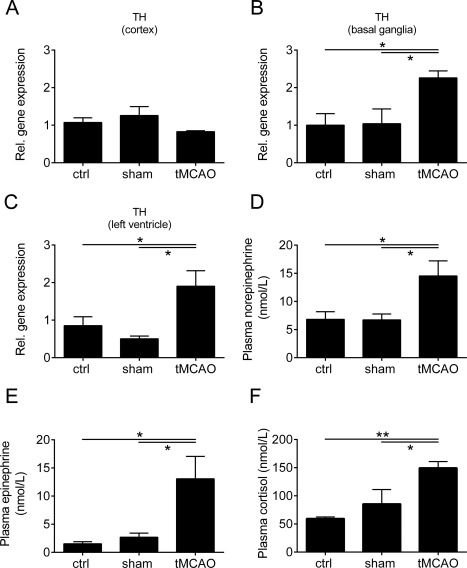
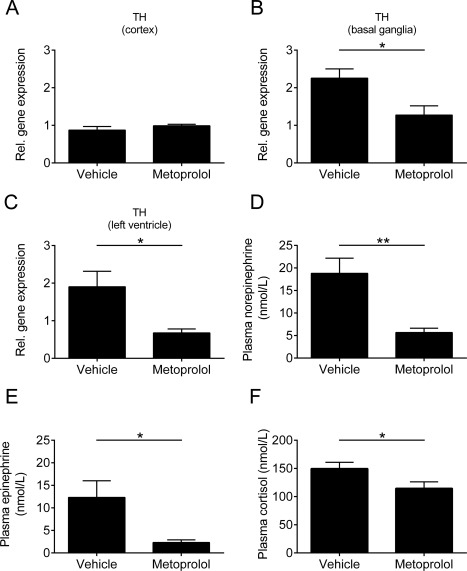
Focal cerebral ischemia induced a long-term cardiac dysfunction with a reduction in left ventricular ejection fraction and an increase in left ventricular volumes; this development was associated with higher peripheral sympathetic activity. Metoprolol treatment prevented the development of chronic cardiac dysfunction by decelerating extracellular cardiac remodeling and inhibiting sympathetic signaling relevant to chronic autonomic dysfunction.
Focal cerebral ischemia in mice leads to the development of chronic systolic dysfunction driven by increased sympathetic activity. If these results can be confirmed in a clinical setting, treating physicians should be attentive to clinical signs of heart failure in every patient after ischemic stroke. Therapeutically, the successful β-blockade with metoprolol in mice could also have future clinical implications. Ann Neurol 2017;82:729-743.
心脏疾病是缺血性脑卒中发病及严重程度的既定危险因素。相反,越来越多的证据表明脑缺血可导致心脏功能障碍。这种神经源性心脏病的潜在机制尚未完全明确。虽然已证实缺血性脑卒中在急性期与心律失常、心肌损伤、心脏酶升高及血浆儿茶酚胺有关,但对于缺血性脑卒中对心血管功能的延迟影响却一无所知。
为了确定局灶性脑缺血的长期心脏后果,我们对年轻和老年小鼠进行了30分钟的短暂大脑中动脉闭塞,并通过连续经胸超声心动图和血流动力学测量分析术后长达8周的心脏功能。最后,用美托洛尔对动物进行治疗,以评估预防心力衰竭发展的药物治疗方案。
局灶性脑缺血导致长期心脏功能障碍,左心室射血分数降低,左心室容积增加;这种发展与更高的外周交感神经活动有关。美托洛尔治疗通过减缓细胞外心脏重塑和抑制与慢性自主神经功能障碍相关的交感神经信号传导,预防了慢性心脏功能障碍的发展。
小鼠局灶性脑缺血导致由交感神经活动增加驱动的慢性收缩功能障碍。如果这些结果能在临床环境中得到证实,治疗医生应关注缺血性脑卒中后每位患者的心力衰竭临床体征。在治疗方面,美托洛尔在小鼠中成功的β受体阻滞也可能具有未来的临床意义。《神经病学纪事》2017年;82:729 - 743。