Bayliss Marc, Donaldson Matthew I, Nepogodiev Sergey A, Pergolizzi Giulia, Scott Andrew E, Harmer Nicholas J, Field Robert A, Prior Joann L
Chemical, Biological and Radiological Division, Defence Science and Technology Laboratory, Porton Down, Salisbury, Wiltshire, SP4 0JQ, UK.
Department of Biological Chemistry, John Innes Centre, Norwich Research Park, Norwich, NR4 7UH, UK.
Carbohydr Res. 2017 Nov 27;452:17-24. doi: 10.1016/j.carres.2017.09.011. Epub 2017 Sep 21.
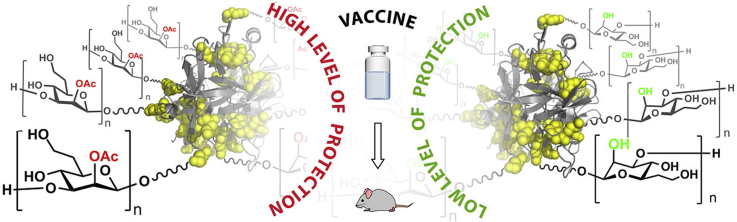
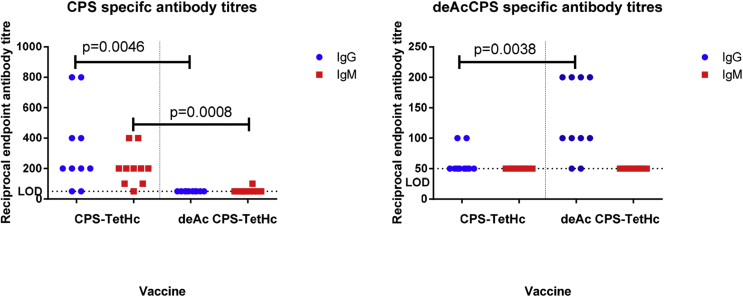
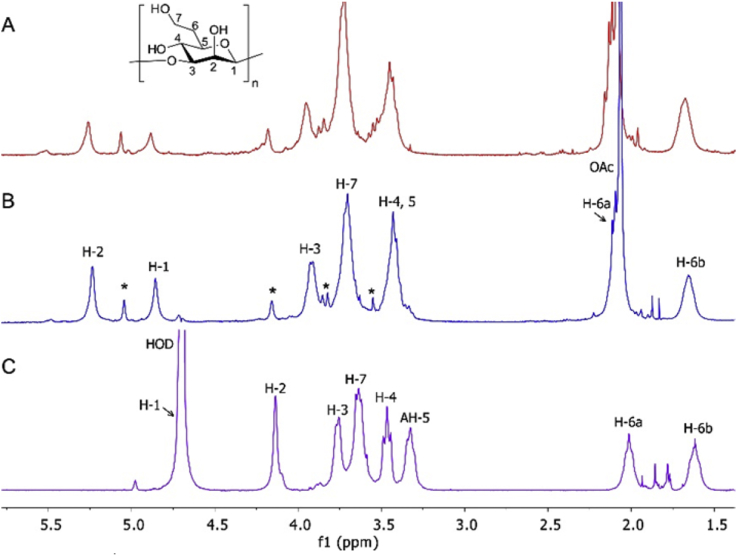
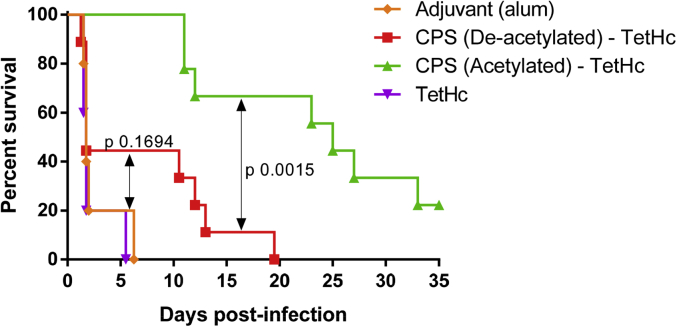
Burkholderia pseudomallei and its close relative B. mallei are human pathogens that are classified as Tier 1 bio-threat agents. Both organisms have previously been shown to constitutively produce a capsular polysaccharide (CPS) that is both a virulence determinant and protective antigen. Extraction and purification of CPS for use as a potential vaccine candidate requires containment level 3 laboratories which is expensive and time-consuming. B. thailandensis strain E555 is closely related to B. pseudomallei and B. mallei, but is non-pathogenic to humans and based on immunological cross-reactivity has previously been shown to express a B. pseudomallei-like CPS. In this study, capsular polysaccharide isolated from an O-antigen deficient strain of B. thailandensis E555 was identified by H and C NMR spectroscopy as -3-)-2-O-acetyl-6-deoxy-β-d-manno-heptopyranose-(-1, and identical to that produced by B. pseudomallei. This was further substantiated by anti-CPS monoclonal antibody binding. In connection with the production of CPS fragments for use in glycoconjugate vaccines, we set out to assess the importance or otherwise of the CPS 2-OAc groups in immune protection. To this end conjugates of the native and de-O-acetylated CPS with the Hc fragment of tetanus toxin (TetH) were used as vaccines in a mouse model of melioidosis. The level of protection provided by deacetylated CPS was significantly lower than that from native, acetylated CPS. In addition, sera from mice vaccinated with the deacetylated CPS conjugate did not recognise native CPS. This suggests that CPS extracted from B. thailandensis can be used as antigen and that the acetyl group is essential for protection.
类鼻疽伯克霍尔德菌及其近亲鼻疽伯克霍尔德菌是被列为一级生物威胁因子的人类病原体。此前已证明这两种微生物都能组成性地产生一种荚膜多糖(CPS),它既是一种毒力决定因素,也是保护性抗原。提取和纯化用作潜在疫苗候选物的CPS需要3级防护实验室,这既昂贵又耗时。泰国伯克霍尔德菌E555菌株与类鼻疽伯克霍尔德菌和鼻疽伯克霍尔德菌密切相关,但对人类无致病性,并且基于免疫交叉反应性,此前已证明它能表达一种类鼻疽伯克霍尔德菌样CPS。在本研究中,通过氢和碳核磁共振光谱法鉴定了从泰国伯克霍尔德菌E555的O抗原缺陷菌株中分离出的荚膜多糖为-3-)-2-O-乙酰基-6-脱氧-β-D-甘露庚糖-(-1,与类鼻疽伯克霍尔德菌产生的相同。抗CPS单克隆抗体结合进一步证实了这一点。关于生产用于糖缀合物疫苗的CPS片段,我们着手评估CPS 2-OAc基团在免疫保护中的重要性。为此,将天然和去O-乙酰化CPS与破伤风毒素(TetH)的Hc片段的缀合物用作类鼻疽病小鼠模型中的疫苗。去乙酰化CPS提供的保护水平明显低于天然乙酰化CPS。此外,用去乙酰化CPS缀合物免疫的小鼠血清不能识别天然CPS。这表明从泰国伯克霍尔德菌中提取的CPS可作为抗原,并且乙酰基对于保护至关重要。