Yamada Kohji, Osakabe Yuriko, Yamaguchi-Shinozaki Kazuko
Graduate School of Agricultural and Life Sciences, University of Tokyo, Tokyo, Japan.
Graduate School of Technology, Industrial and Social Sciences, Tokushima University, Tokushima, Japan.
PLoS One. 2017 Oct 13;12(10):e0186326. doi: 10.1371/journal.pone.0186326. eCollection 2017.
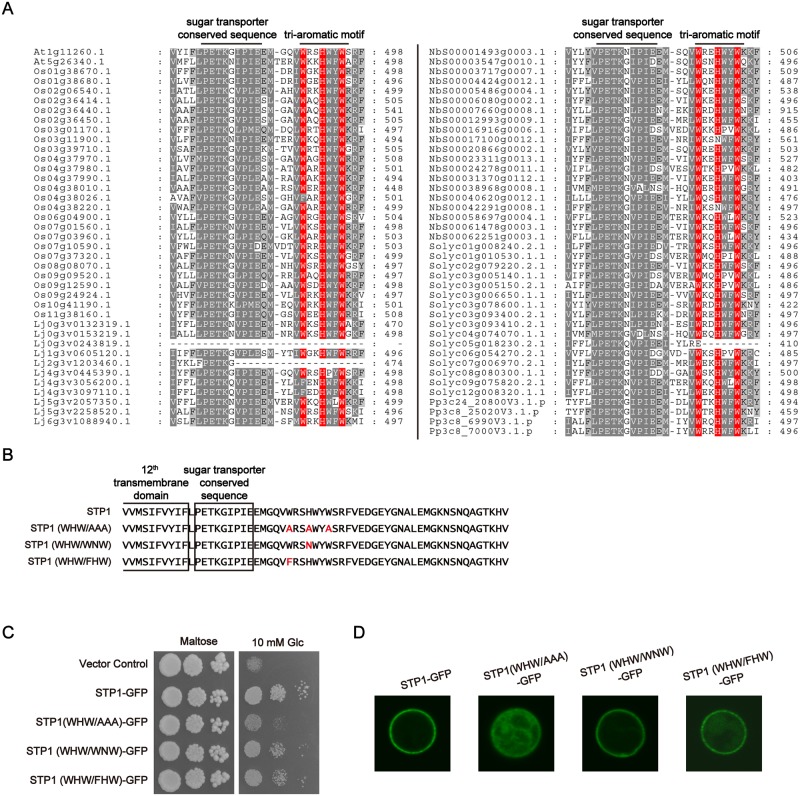
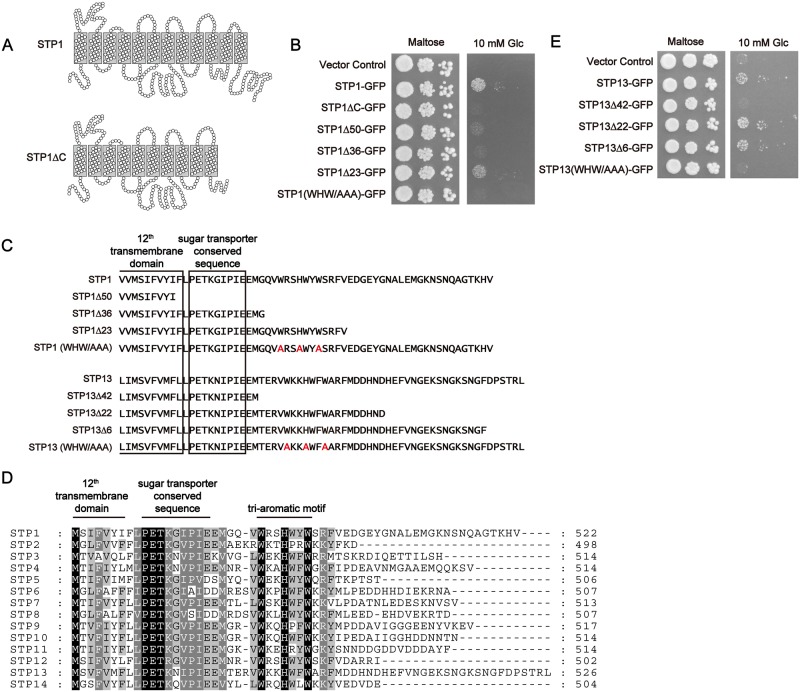
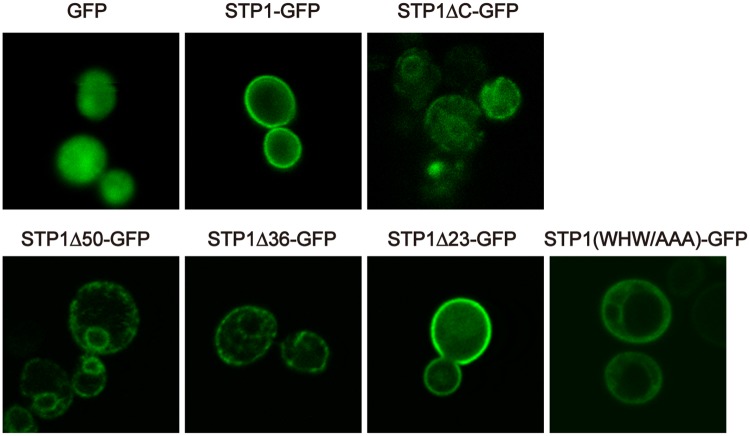
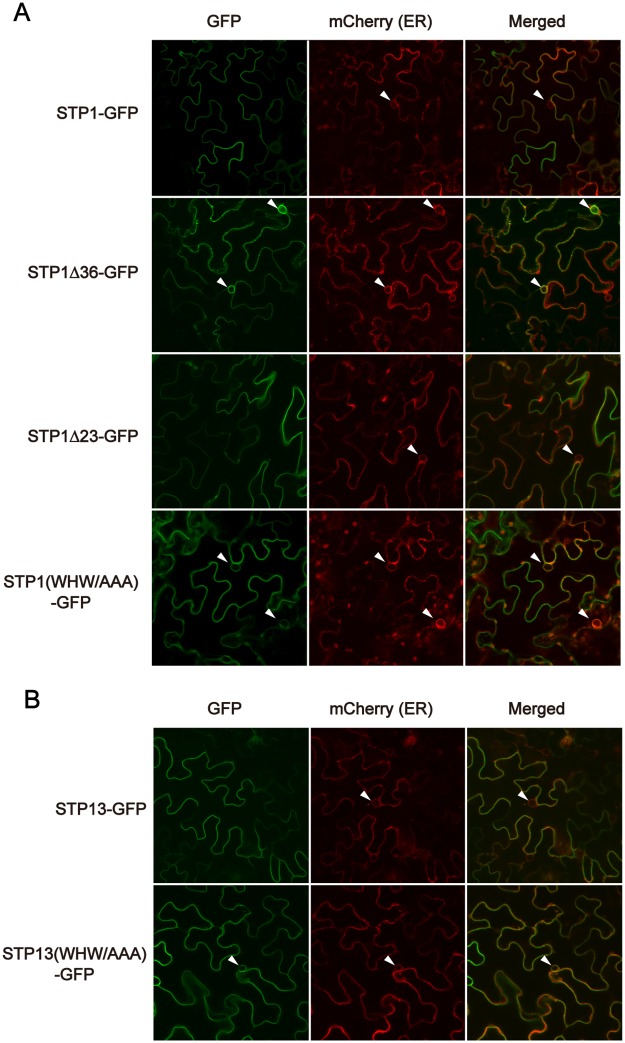
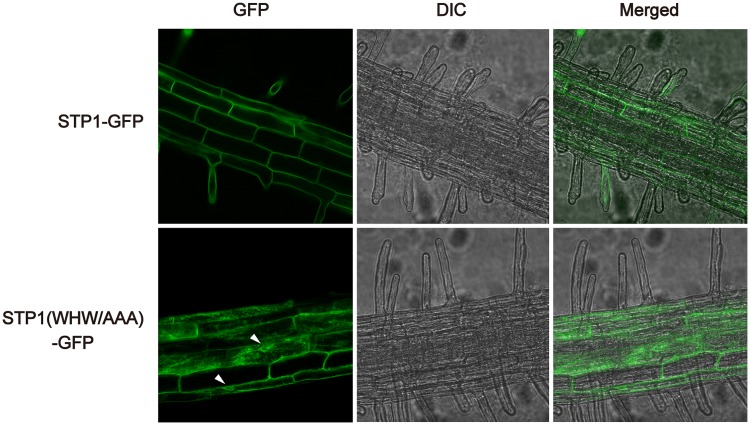
Membrane trafficking is highly organized to maintain cellular homeostasis in any organisms. Membrane-embedded transporters are targeted to various organelles to execute appropriate partition and allocation of their substrates, such as ions or sugars. To ensure the fidelity of targeting and sorting, membrane proteins including transporters have sorting signals that specify the subcellular destination and the trafficking pathway by which the destination is to be reached. Here, we have identified a novel sorting signal (called the tri-aromatic motif) which contains three aromatic residues, two tryptophans and one histidine, for the plasma membrane localization of sugar transporters in the STP family in Arabidopsis. We firstly found that a C-terminal deletion disrupted the sugar uptake activity of STP1 in yeast cells. Additional deletion and mutation analyses demonstrated that the three aromatic residues in the C-terminus, conserved among all Arabidopsis STP transporters, were critical for sugar uptake by not only STP1 but also another STP transporter STP13. We observed that, when the tri-aromatic motif was mutated, STP1 was largely localized at the endomembrane compartments in yeast cells, indicating that this improper subcellular localization led to the loss of sugar absorption. Importantly, our further analyses uncovered that mutations of the tri-aromatic motif resulted in the endoplasmic reticulum (ER) retention of STP1 and STP13 in plant cells, suggesting that this motif is involved at the step of ER exit of STP transporters to facilitate their plasma membrane localization. Together, we here identified a novel ER export signal, and showed that appropriate sorting via the tri-aromatic motif is important for sugar absorption by STP transporters.
膜运输具有高度的组织性,以维持任何生物体中的细胞内稳态。膜嵌入转运蛋白靶向各种细胞器,以对其底物(如离子或糖类)进行适当的分配。为确保靶向和分选的准确性,包括转运蛋白在内的膜蛋白具有分选信号,这些信号指定亚细胞目的地以及到达该目的地的运输途径。在这里,我们鉴定了一种新的分选信号(称为三芳香基序),它包含三个芳香族残基,两个色氨酸和一个组氨酸,用于拟南芥中STP家族糖转运蛋白的质膜定位。我们首先发现C末端缺失破坏了酵母细胞中STP1的糖摄取活性。进一步的缺失和突变分析表明,C末端的三个芳香族残基在所有拟南芥STP转运蛋白中保守,不仅对STP1而且对另一种STP转运蛋白STP13的糖摄取都至关重要。我们观察到,当三芳香基序发生突变时,STP1在酵母细胞中主要定位于内膜区室,表明这种不正确的亚细胞定位导致糖吸收丧失。重要的是,我们的进一步分析发现,三芳香基序的突变导致植物细胞中STP1和STP13在内质网(ER)中滞留,表明该基序参与STP转运蛋白的ER出口步骤,以促进它们的质膜定位。总之,我们在这里鉴定了一种新的ER输出信号,并表明通过三芳香基序进行适当的分选对STP转运蛋白的糖吸收很重要。