Cheng Jingwei, Park Donglim Esther, Berrios Christian, White Elizabeth A, Arora Reety, Yoon Rosa, Branigan Timothy, Xiao Tengfei, Westerling Thomas, Federation Alexander, Zeid Rhamy, Strober Benjamin, Swanson Selene K, Florens Laurence, Bradner James E, Brown Myles, Howley Peter M, Padi Megha, Washburn Michael P, DeCaprio James A
Department of Medical Oncology, Dana-Farber Cancer Institute, Boston, Massachusetts, United States of America.
Department of Medicine, Brigham and Women's Hospital, Boston, Massachusetts, United States of America.
PLoS Pathog. 2017 Oct 13;13(10):e1006668. doi: 10.1371/journal.ppat.1006668. eCollection 2017 Oct.
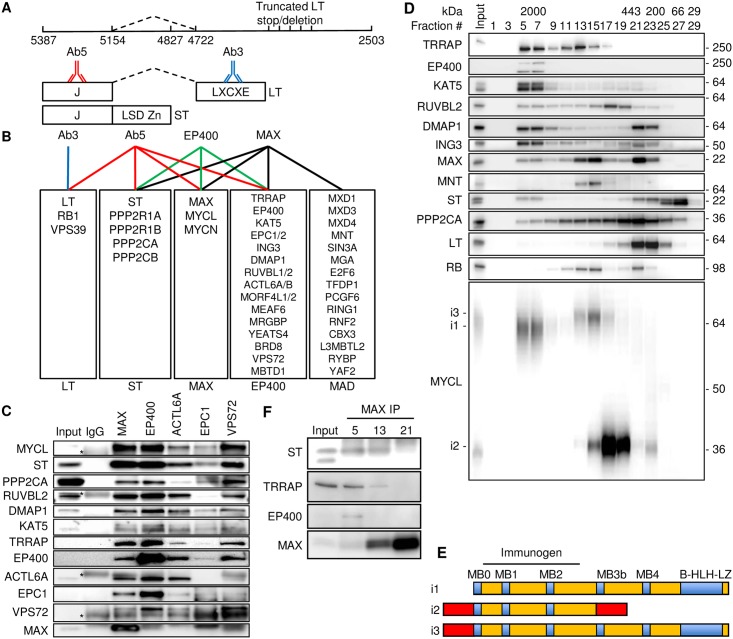
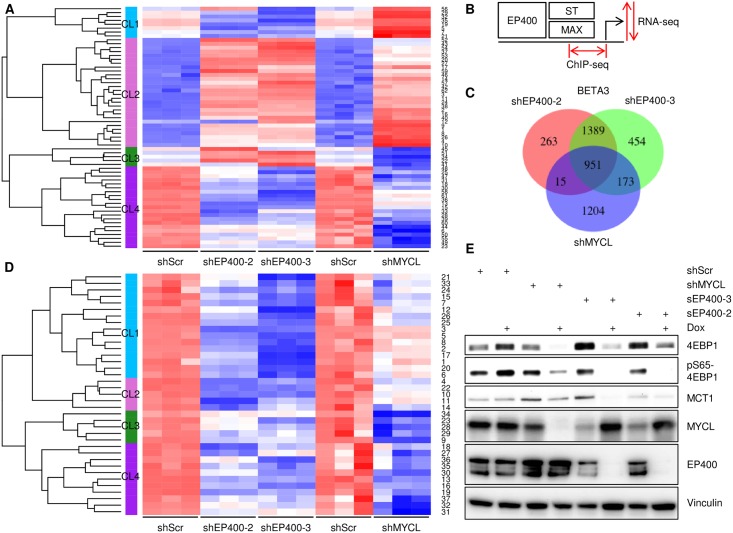
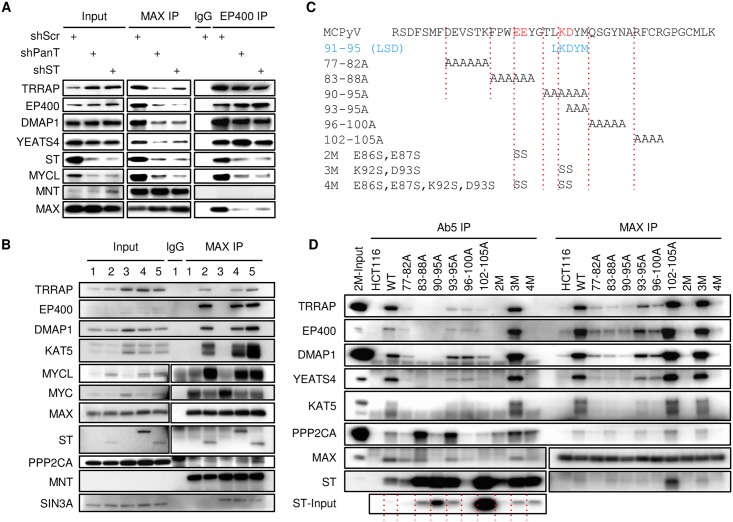
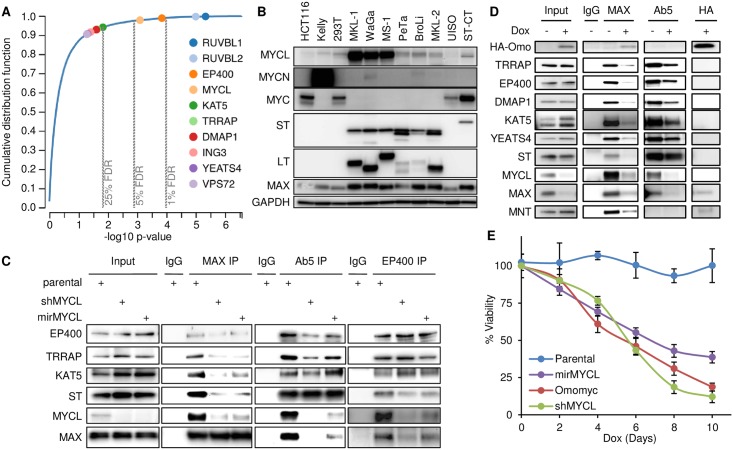
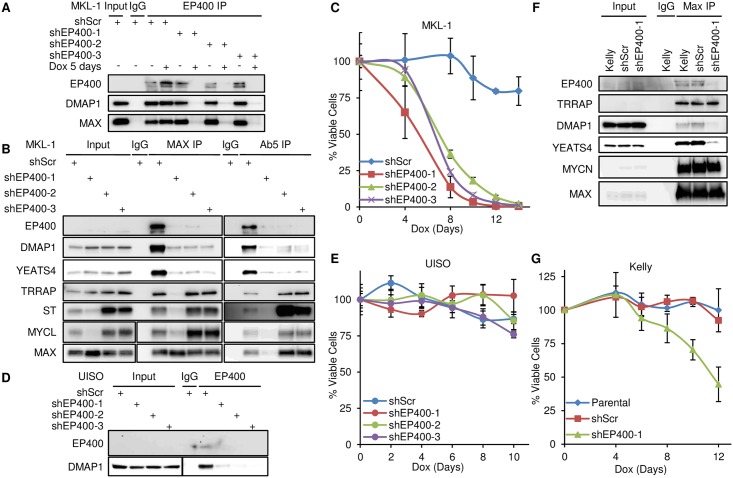
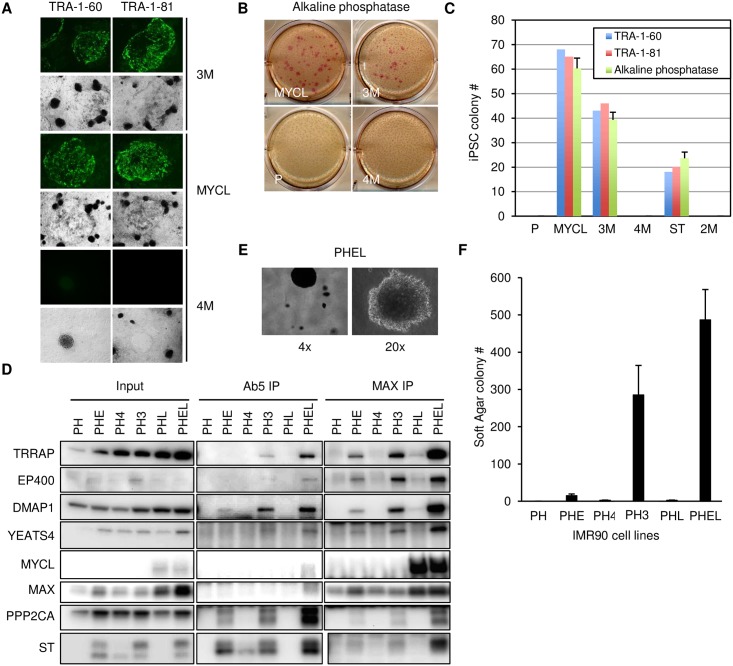
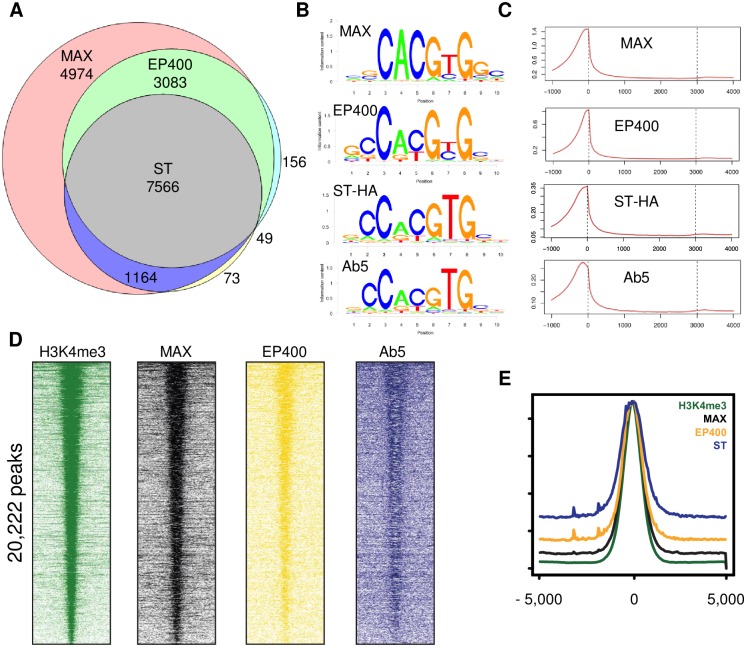
Merkel cell carcinoma (MCC) frequently contains integrated copies of Merkel cell polyomavirus DNA that express a truncated form of Large T antigen (LT) and an intact Small T antigen (ST). While LT binds RB and inactivates its tumor suppressor function, it is less clear how ST contributes to MCC tumorigenesis. Here we show that ST binds specifically to the MYC homolog MYCL (L-MYC) and recruits it to the 15-component EP400 histone acetyltransferase and chromatin remodeling complex. We performed a large-scale immunoprecipitation for ST and identified co-precipitating proteins by mass spectrometry. In addition to protein phosphatase 2A (PP2A) subunits, we identified MYCL and its heterodimeric partner MAX plus the EP400 complex. Immunoprecipitation for MAX and EP400 complex components confirmed their association with ST. We determined that the ST-MYCL-EP400 complex binds together to specific gene promoters and activates their expression by integrating chromatin immunoprecipitation with sequencing (ChIP-seq) and RNA-seq. MYCL and EP400 were required for maintenance of cell viability and cooperated with ST to promote gene expression in MCC cell lines. A genome-wide CRISPR-Cas9 screen confirmed the requirement for MYCL and EP400 in MCPyV-positive MCC cell lines. We demonstrate that ST can activate gene expression in a EP400 and MYCL dependent manner and this activity contributes to cellular transformation and generation of induced pluripotent stem cells.
默克尔细胞癌(MCC)通常含有默克尔细胞多瘤病毒DNA的整合拷贝,这些拷贝表达截短形式的大T抗原(LT)和完整的小T抗原(ST)。虽然LT与RB结合并使其肿瘤抑制功能失活,但ST如何促进MCC肿瘤发生尚不清楚。在这里,我们表明ST特异性结合MYC同源物MYCL(L-MYC),并将其招募到由15个组分组成的EP400组蛋白乙酰转移酶和染色质重塑复合物中。我们对ST进行了大规模免疫沉淀,并通过质谱鉴定了共沉淀蛋白。除了蛋白磷酸酶2A(PP2A)亚基外,我们还鉴定出了MYCL及其异二聚体伴侣MAX以及EP400复合物。对MAX和EP400复合物组分的免疫沉淀证实了它们与ST的关联。我们通过染色质免疫沉淀测序(ChIP-seq)和RNA测序确定,ST-MYCL-EP400复合物共同结合到特定基因启动子上并激活其表达。MYCL和EP400是维持细胞活力所必需的,并与ST协同促进MCC细胞系中的基因表达。全基因组CRISPR-Cas9筛选证实了MCPyV阳性MCC细胞系中对MYCL和EP400的需求。我们证明,ST可以以EP400和MYCL依赖的方式激活基因表达,并且这种活性有助于细胞转化和诱导多能干细胞的产生。