Li Wei, Qian Li, Lin Junhao, Huang Guihai, Hao Nan, Wei Xiuwang, Wang Wei, Liang Jianbo
Department of Urology, The People's Hospital of Guangxi Zhuang Autonomous Region, NanNing, China.
Department of Pharmacy, The People's Hospital of Guangxi Zhuang Autonomous Region, NanNing, China.
Oncotarget. 2017 May 11;8(39):65143-65151. doi: 10.18632/oncotarget.17821. eCollection 2017 Sep 12.
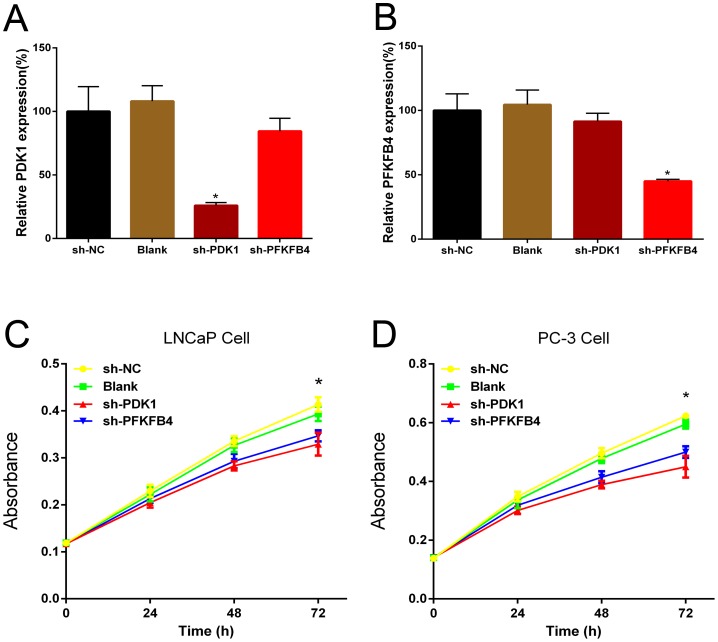
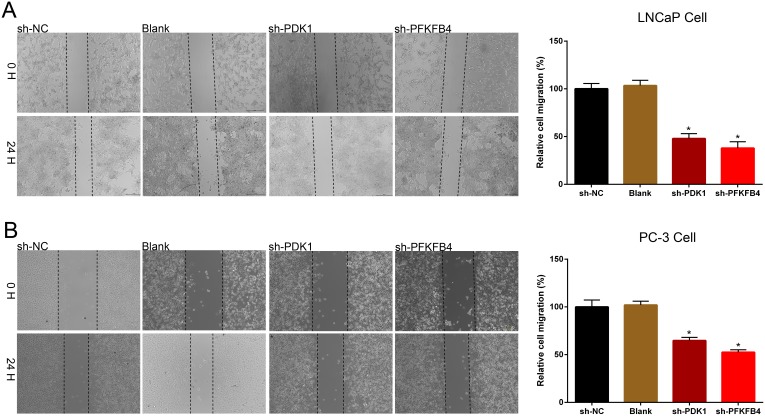
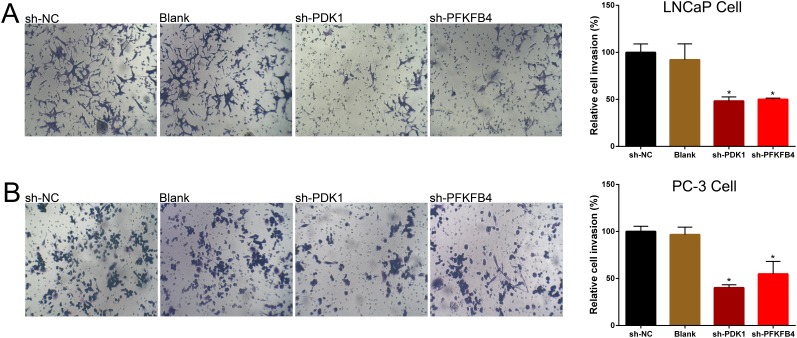
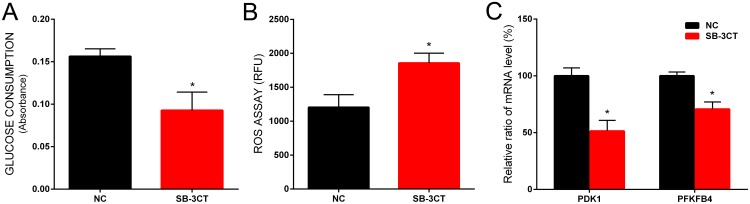
Our recent studies have shown that CD44, a cell-surface protein with functions in many biologic processes, involved in glucose metabolism of prostate cancer cells. However, the molecular mechanisms of the regulation need to be further elucidated. In present study, LNCaP cells infected with lentivirus vector overexpressing CD44. The expression levels of key enzymes in glucose metabolism known as PDK1 and PFKFB4 were determined using QRT-PCR and western blot. PDK1 and PFKFB4 in LNCaP and PC3 cells were knocked down with shRNA respectively, and then cell proliferation, invasion and cell migration assay were performed. We found that overexpression of CD44 increased expression levels of PDK1 and PFKFB4 in LNCaP cells. Silencing of PDK1 and PFKFB4 could decrease cell proliferation, inhibit invasion and migration ability of prostate cancer cells. In addition, CD44 inhibitor could decrease glucose consumption and increase ROS levels of PC-3 cells significantly, as well as sensitize PC-3 cells to docetaxel. Taken together, CD44 could modulate aggressive phenotype of prostate cancer cells, by regulation of the expression of PDK1 and PFKFB4. CD44 may be a novel potential therapeutic target.
我们最近的研究表明,CD44是一种在许多生物过程中发挥作用的细胞表面蛋白,参与前列腺癌细胞的葡萄糖代谢。然而,其调控的分子机制仍需进一步阐明。在本研究中,用慢病毒载体感染LNCaP细胞以过表达CD44。使用定量逆转录聚合酶链反应(QRT-PCR)和蛋白质免疫印迹法测定葡萄糖代谢中关键酶即丙酮酸脱氢酶激酶1(PDK1)和6-磷酸果糖-2-激酶/果糖-2,6-二磷酸酶4(PFKFB4)的表达水平。分别用短发夹RNA(shRNA)敲低LNCaP和PC3细胞中的PDK1和PFKFB4,然后进行细胞增殖、侵袭和细胞迁移实验。我们发现,CD44的过表达增加了LNCaP细胞中PDK1和PFKFB4的表达水平。沉默PDK1和PFKFB4可降低细胞增殖,抑制前列腺癌细胞的侵袭和迁移能力。此外,CD44抑制剂可显著降低PC-3细胞的葡萄糖消耗并增加其活性氧水平,还可使PC-3细胞对多西他赛敏感。综上所述,CD44可通过调节PDK1和PFKFB4的表达来调节前列腺癌细胞的侵袭性表型。CD44可能是一个新的潜在治疗靶点。