Zhao Gangyin, Zeng Ye, Cheng Wanli, Karkampouna Sofia, Papadopoulou Panagiota, Hu Bochuan, Zang Shuya, Wezenberg Emma, Forn-Cuní Gabriel, Lopes-Bastos Bruno, Julio Marianna Kruithof-de, Kros Alexander, Snaar-Jagalska B Ewa
Department of Cellular Tumor Biology, Leiden Institute of Biology, Leiden University, Einsteinweg 55, Leiden 2333 CC, the Netherlands.
Shenzhen Institute of Advanced Technology, Chinese Academy of Sciences, Shenzhen 51800, China.
ACS Nano. 2025 Apr 15;19(14):13685-13704. doi: 10.1021/acsnano.4c14625. Epub 2025 Apr 2.
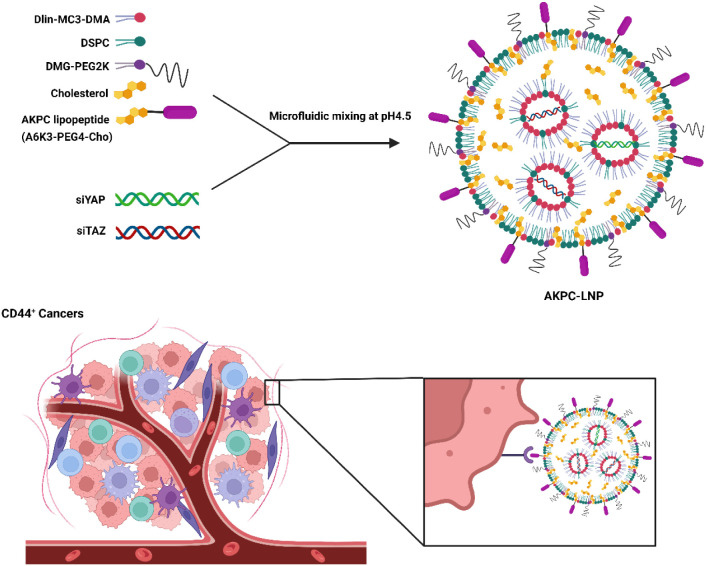
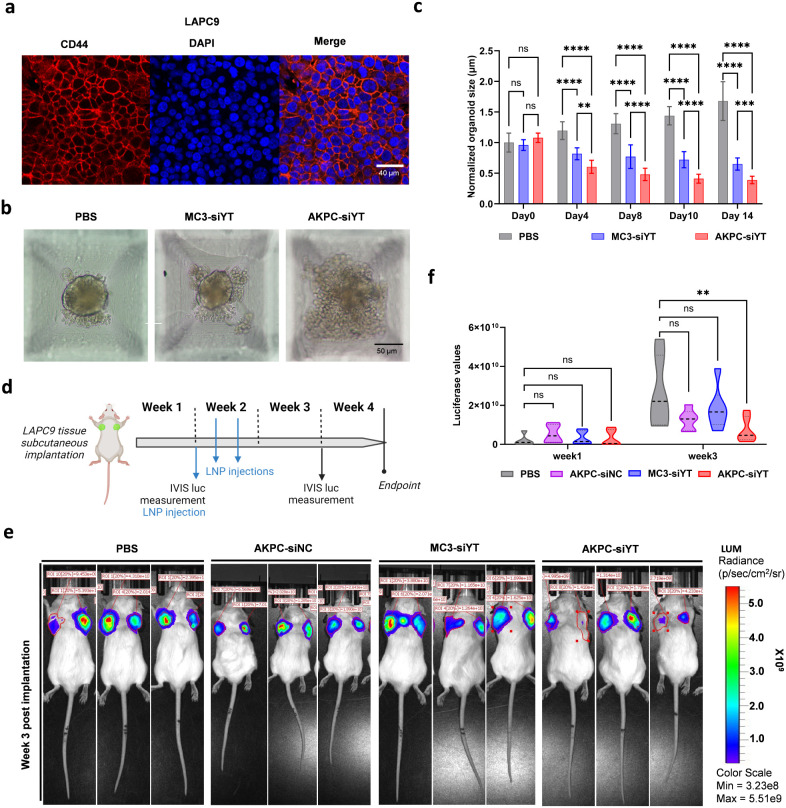
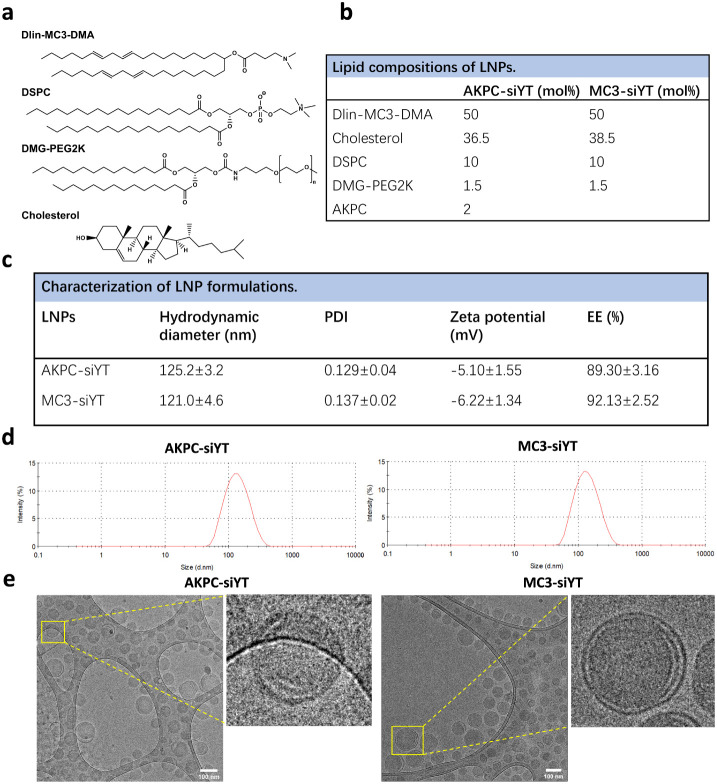
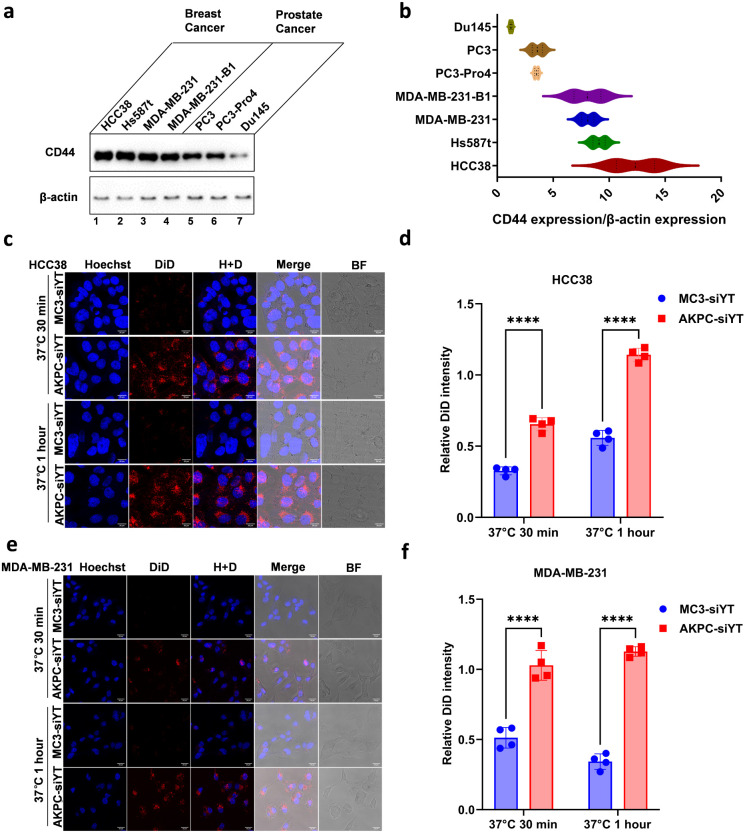
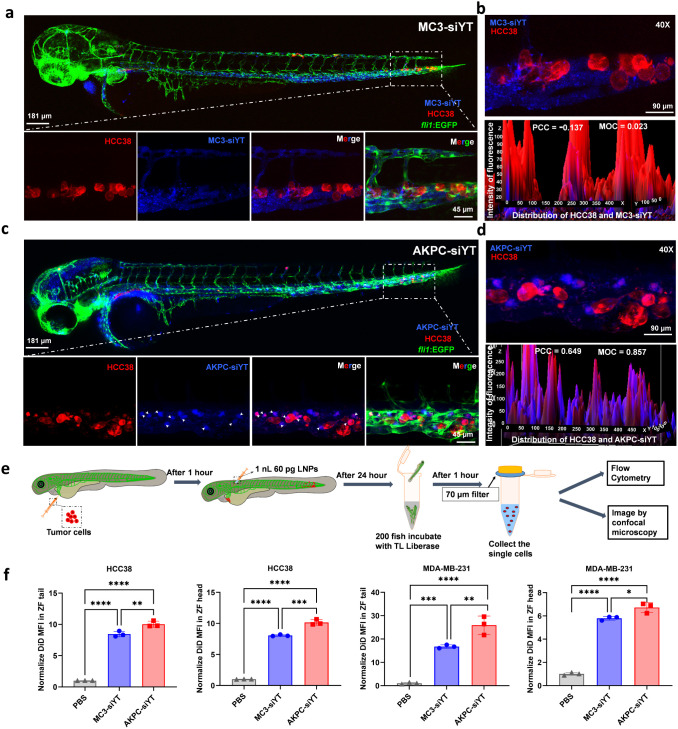
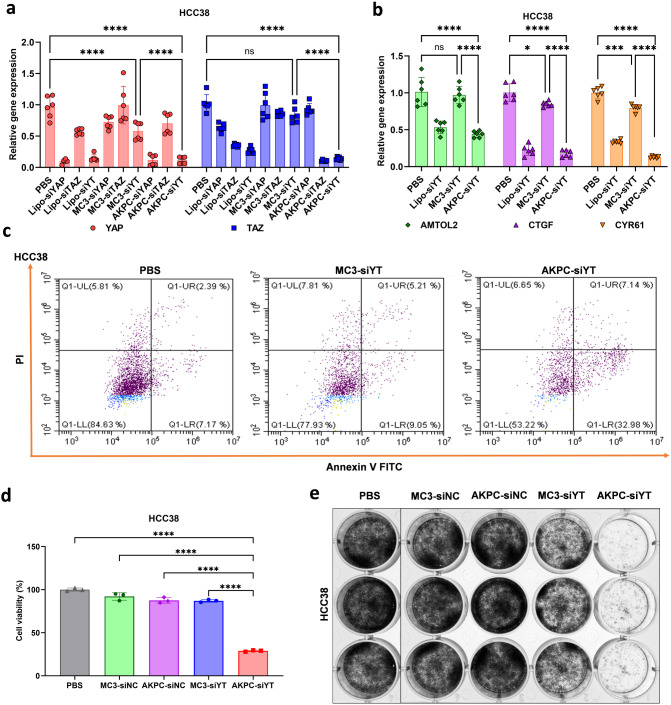
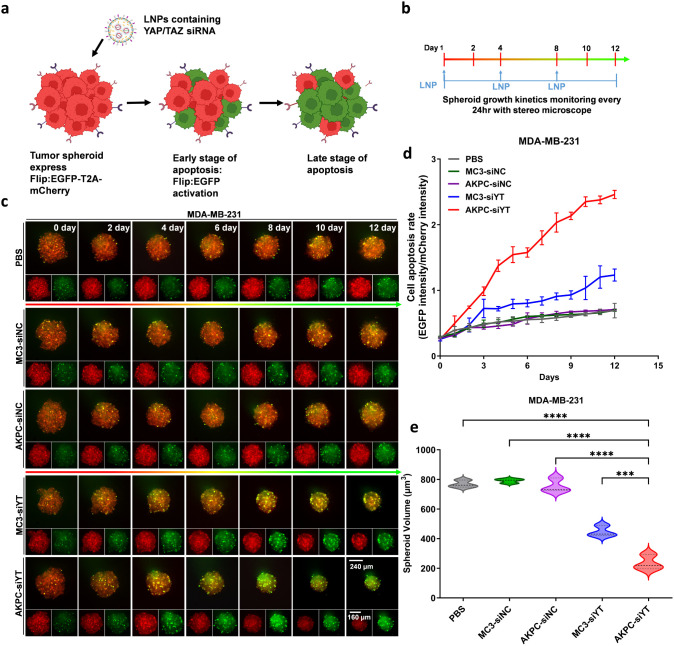
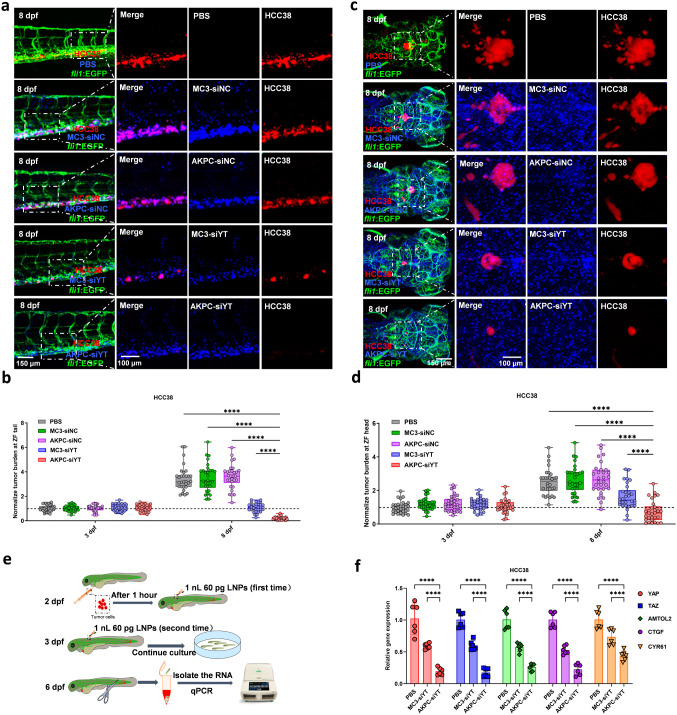
RNA therapeutics offer a promising approach to cancer treatment by precisely regulating cancer-related genes. While lipid nanoparticles (LNPs) are currently the most advanced nonviral clinically approved vectors for RNA therapeutics, their antitumor efficacy is limited by their unspecific hepatic accumulation after systemic administration. Thus, there is an urgent need to enhance the delivery efficiency of LNPs to target tumor-residing tissues. Here, we conjugated the cluster of differentiation 44 (CD44)-specific targeting peptide A6 (KPSSPPEE) to the cholesterol of LNPs via PEG, named AKPC-LNP, enabling specific tumor delivery. This modification significantly improved delivery to breast cancer cells both and , as shown by flow cytometry and confocal microscopy. We further used AKPC-siYT to codeliver siRNAs targeting the transcriptional coactivators YAP and TAZ, achieving potent gene silencing and increased cell death in both 2D cultures and 3D tumor spheroids, outperforming unmodified LNPs. In a breast tumor cell xenografted zebrafish model, systemically administered AKPC-siYT induced robust silencing of YAP/TAZ and downstream genes and significantly enhanced tumor suppression compared to unmodified LNPs. Additionally, AKPC-siYT effectively reduced proliferation in prostate cancer organoids and tumor growth in a patient-derived xenograft (PDX) model. Overall, we developed highly efficient AKPC-LNPs carrying RNA therapeutics for targeted cancer therapy.
RNA疗法通过精确调控癌症相关基因,为癌症治疗提供了一种很有前景的方法。虽然脂质纳米颗粒(LNPs)目前是RNA疗法中最先进的非病毒临床批准载体,但其抗肿瘤功效受到全身给药后非特异性肝内蓄积的限制。因此,迫切需要提高LNPs向肿瘤驻留组织的递送效率。在这里,我们通过聚乙二醇(PEG)将分化簇44(CD44)特异性靶向肽A6(KPSSPPEE)与LNPs的胆固醇偶联,命名为AKPC-LNP,实现特异性肿瘤递送。如流式细胞术和共聚焦显微镜所示,这种修饰显著提高了对乳腺癌细胞的递送效率。我们进一步使用AKPC-siYT共递送靶向转录共激活因子YAP和TAZ的小干扰RNA(siRNAs),在二维培养和三维肿瘤球体中均实现了有效的基因沉默并增加了细胞死亡,优于未修饰的LNPs。在异种移植乳腺癌细胞的斑马鱼模型中,与未修饰的LNPs相比,全身给药的AKPC-siYT诱导YAP/TAZ和下游基因的强烈沉默,并显著增强肿瘤抑制作用。此外,AKPC-siYT在患者来源的异种移植(PDX)模型中有效降低了前列腺癌类器官的增殖和肿瘤生长。总体而言,我们开发了用于靶向癌症治疗的携带RNA疗法的高效AKPC-LNPs。