Wickström Malin, Nygren Peter, Larsson Rolf, Harmenberg Johan, Lindberg Jakob, Sjöberg Per, Jerling Markus, Lehmann Fredrik, Richardson Paul, Anderson Kenneth, Chauhan Dharminder, Gullbo Joachim
Department of Medical Sciences, Division of Clinical Pharmacology, Uppsala University, Uppsala SE, Sweden.
Department of Women's and Children's Health, Childhood Cancer Research Unit, Karolinska Institutet, Stockholm, Sweden.
Oncotarget. 2017 Jun 8;8(39):66641-66655. doi: 10.18632/oncotarget.18420. eCollection 2017 Sep 12.
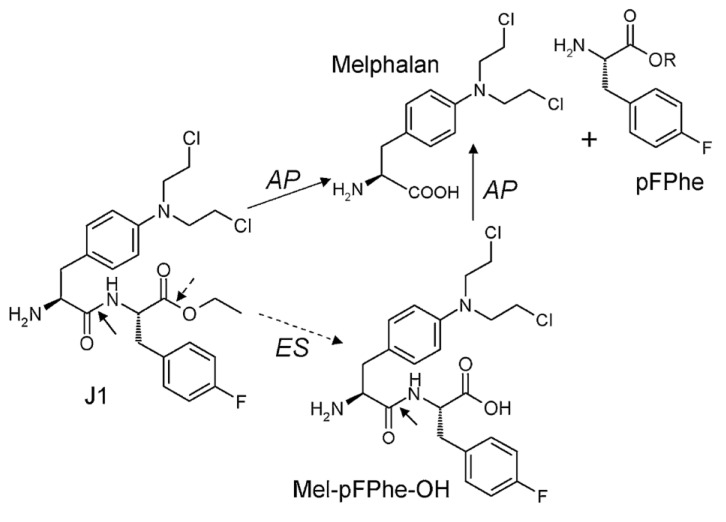
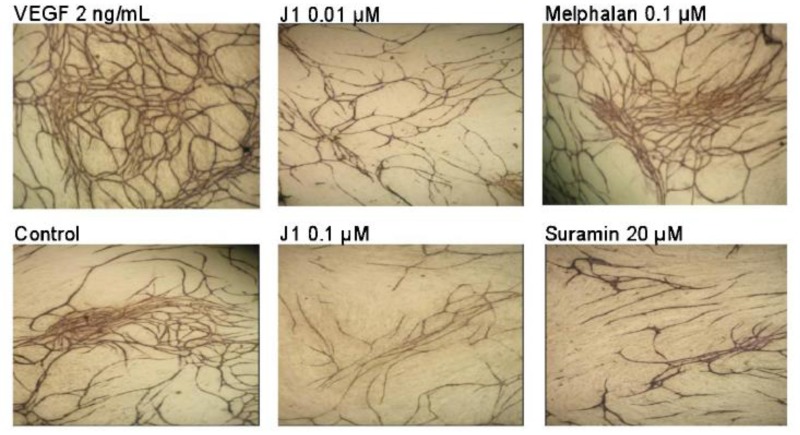
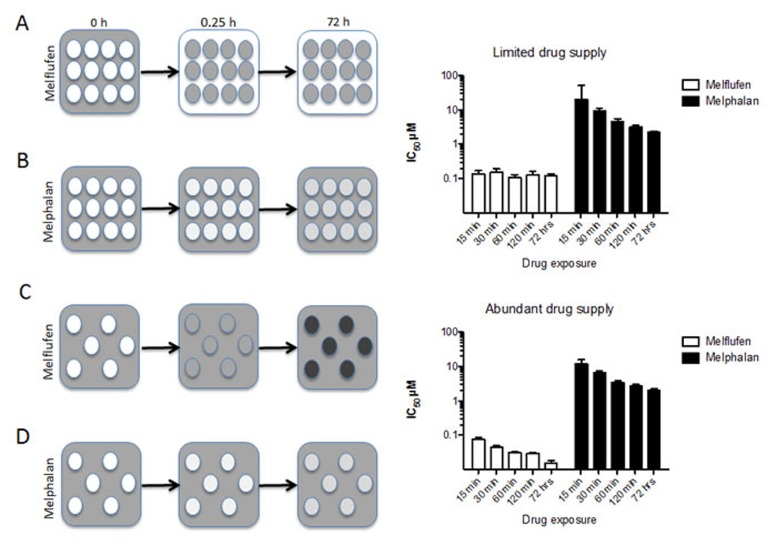
Aminopeptidases like aminopeptidase N (APN, also known as CD13) play an important role not only in normal cellular functioning but also in the development of cancer, including processes like tumor cell invasion, differentiation, proliferation, apoptosis, motility, and angiogenesis. An increased expression of APN has been described in several types of human malignancies, especially those characterized by fast-growing and aggressive phenotypes, suggesting APN as a potential therapeutic target. Melphalan flufenamide ethyl ester (melflufen, previously denoted J1) is a peptidase-potentiated alkylating agent. Melflufen readily penetrates membranes and an equilibrium is rapidly achieved, followed by enzymatic cleavage in aminopeptidase positive cells, which results in trapping of less lipophilic metabolites. This targeting effect results in very high intracellular concentrations of its metabolite melphalan and subsequent apoptotic cell death. This results in a potency increase (melflufen melphalan) ranging from 10- to several 100-fold in different models. Melflufen triggers a rapid, robust, and an irreversible DNA damage which may account for its ability to overcome melphalan-resistance in multiple myeloma cells. Furthermore, anti-angiogenic properties of melflufen have been described. Consequently, it is hypothesized that melflufen could provide better efficacy but no more toxicity than what is achieved with melphalan, an assumption so far supported by experiences from hollow fiber and xenograft studies in rodents as well as by clinical data from patients with solid tumors and multiple myeloma. This review summarizes the current preclinical and clinical knowledge of melflufen.
氨肽酶,如氨肽酶N(APN,也称为CD13),不仅在正常细胞功能中发挥重要作用,而且在癌症发展过程中也发挥重要作用,包括肿瘤细胞侵袭、分化、增殖、凋亡、运动和血管生成等过程。在几种类型的人类恶性肿瘤中,尤其是那些具有快速生长和侵袭性表型的肿瘤中,APN的表达增加,这表明APN是一个潜在的治疗靶点。美法仑氟芬酰胺乙酯(melflufen,以前称为J1)是一种肽酶增强的烷化剂。Melflufen很容易穿透细胞膜并迅速达到平衡,随后在氨肽酶阳性细胞中进行酶促裂解,这导致亲脂性较低的代谢产物被捕获。这种靶向作用导致其代谢产物美法仑在细胞内的浓度非常高,随后细胞发生凋亡死亡。这导致在不同模型中效力增加(melflufen对美法仑),范围从10倍到几百倍。Melflufen引发快速、强烈且不可逆的DNA损伤,这可能解释了它克服多发性骨髓瘤细胞中美法仑耐药性的能力。此外,还描述了melflufen的抗血管生成特性。因此,据推测,melflufen可能比美法仑具有更好的疗效,但毒性不会增加,到目前为止,啮齿动物中空纤维和异种移植研究的经验以及实体瘤和多发性骨髓瘤患者的临床数据都支持这一假设。这篇综述总结了melflufen目前的临床前和临床知识。