Ibtisham Fahar, Wu Jiang, Xiao Mei, An Lilong, Banker Zachary, Nawab Aamir, Zhao Yi, Li Guanghui
Agricultural College, Guangdong Ocean University, Zhanjiang, Guangdong, China.
Foreign Language College, Guangdong Ocean University, Zhanjiang, Guangdong, China.
Oncotarget. 2017 Jul 27;8(39):66709-66727. doi: 10.18632/oncotarget.19640. eCollection 2017 Sep 12.
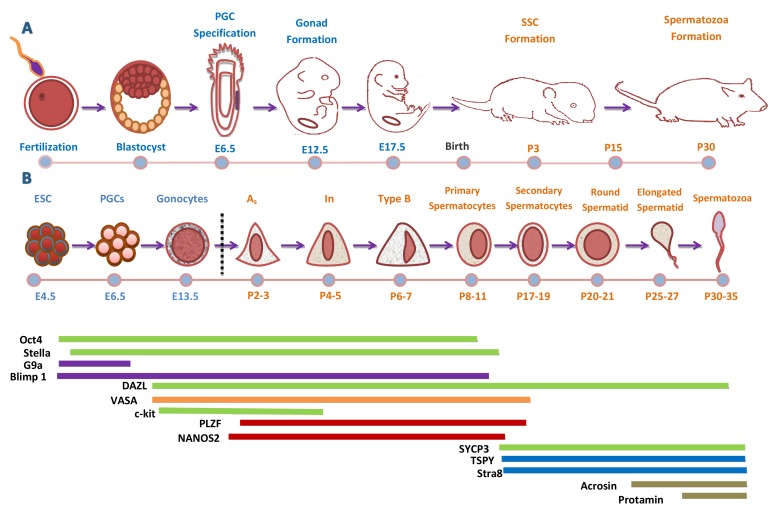
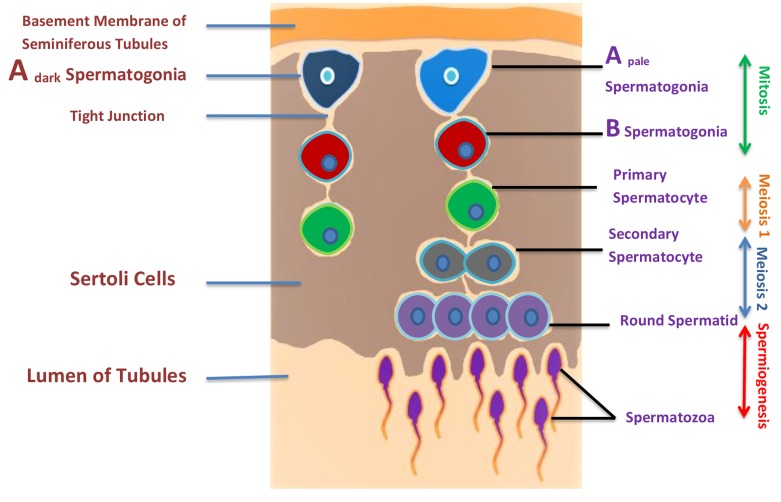
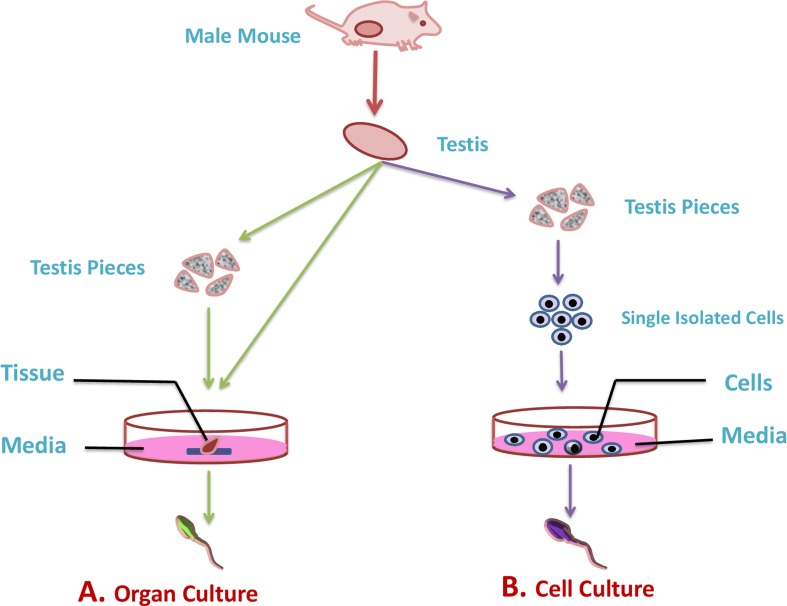
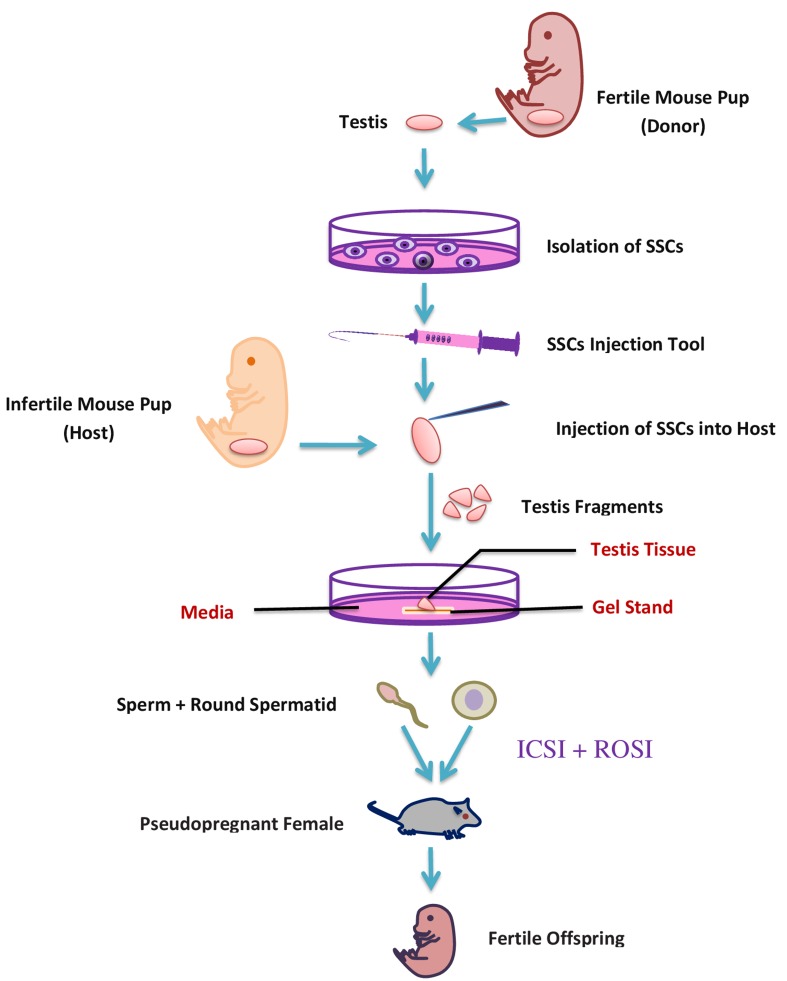
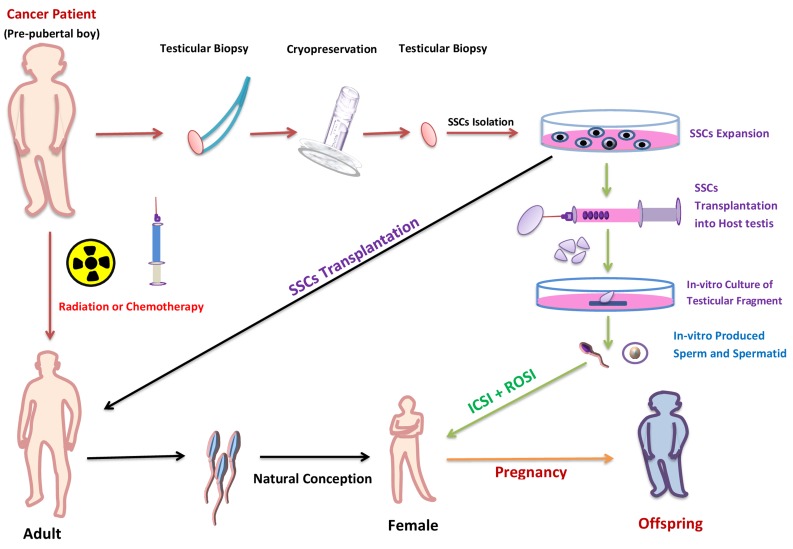
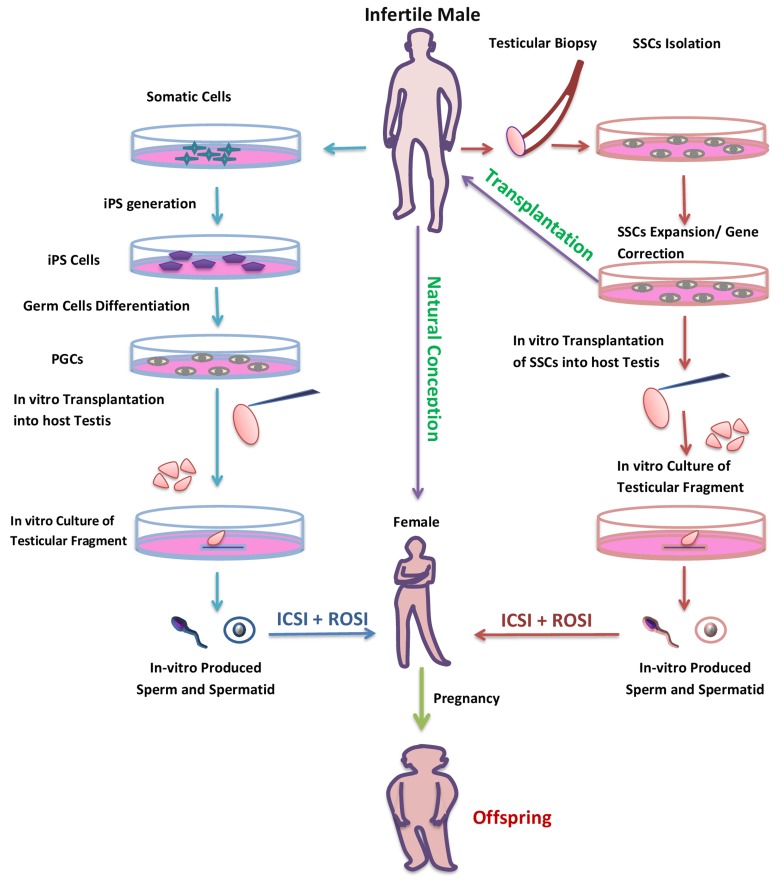
Infertility has become a major health issue in the world. It affects the social life of couples and of all infertility cases; approximately 40-50% is due to "male factor" infertility. Male infertility could be due to genetic factors, environment or due to gonadotoxic treatment. Developments in reproductive biotechnology have made it possible to rescue fertility and uphold biological fatherhood. In vitro production of haploid male germ cell is a powerful tool, not only for the treatment of infertility including oligozoospermic or azoospermic patient, but also for the fertility preservation in pre-pubertal boys whose gonadal function is threatened by gonadotoxic therapies. Genomic editing of cultured germ cells could also potentially cure flaws in spermatogenesis due to genomic mutation. Furthermore, this ex-vivo maturation technique with genomic editing may be used to prevent paternal transmission of genomic diseases. Here, we summarize the historical progress of in vitro spermatogenesis research by using organ and cell culture techniques and the future clinical application of in vitro spermatogenesis.
不孕症已成为全球一个主要的健康问题。它影响着夫妻的社会生活,在所有不孕症病例中,约40%-50%是由“男性因素”导致的不孕。男性不育可能是由遗传因素、环境因素或性腺毒性治疗引起的。生殖生物技术的发展使拯救生育能力和维持生物学父权成为可能。单倍体雄性生殖细胞的体外产生是一种强大的工具,不仅可用于治疗不孕症,包括少精子症或无精子症患者,还可用于保护青春期前男孩的生育能力,这些男孩的性腺功能受到性腺毒性疗法的威胁。对培养的生殖细胞进行基因组编辑也有可能治愈由于基因突变导致的精子发生缺陷。此外,这种具有基因组编辑的体外成熟技术可用于预防基因组疾病的父系传播。在此,我们总结了利用器官和细胞培养技术进行体外精子发生研究的历史进展以及体外精子发生在未来的临床应用。