Ju Junyi, Chen Aiping, Deng Yexuan, Liu Ming, Wang Ying, Wang Yadong, Nie Min, Wang Chao, Ding Hong, Yao Bing, Gui Tao, Li Xinyu, Xu Zhen, Ma Chi, Song Yong, Kvansakul Marc, Zen Ke, Zhang Chen-Yu, Luo Cheng, Fang Ming, Huang David C S, Allis C David, Tan Renxiang, Zeng Changjiang Kathy, Wei Jiwu, Zhao Quan
The State Key Laboratory of Pharmaceutical Biotechnology, School of Life Sciences, Nanjing University, Nanjing, 210023, China.
Jiangsu Key Laboratory of Molecular Medicine, Medical School, Nanjing University, Nanjing, 210093, China.
Nat Commun. 2017 Oct 13;8(1):928. doi: 10.1038/s41467-017-00988-5.
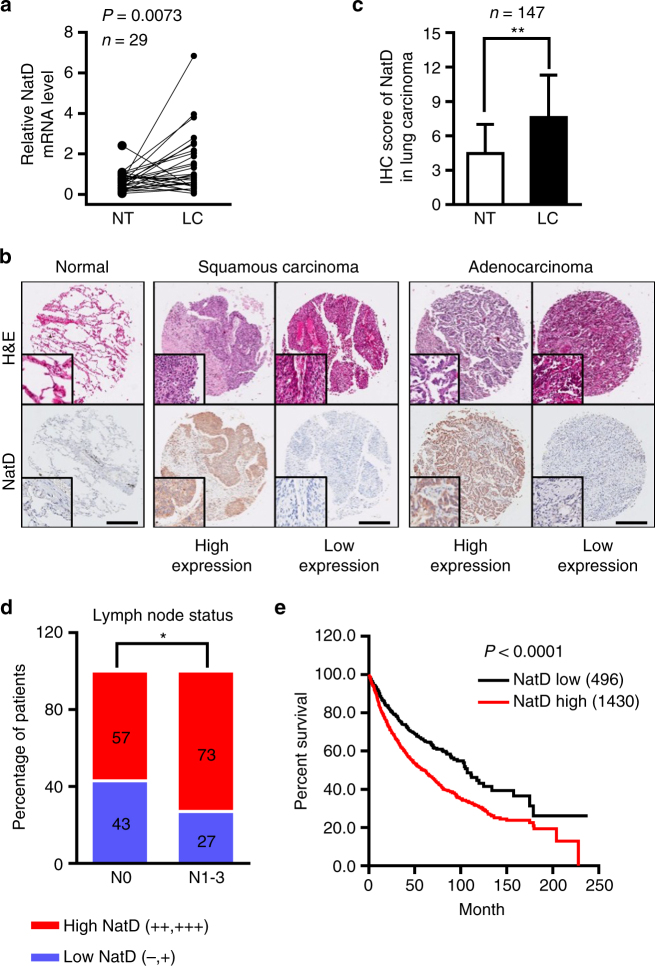
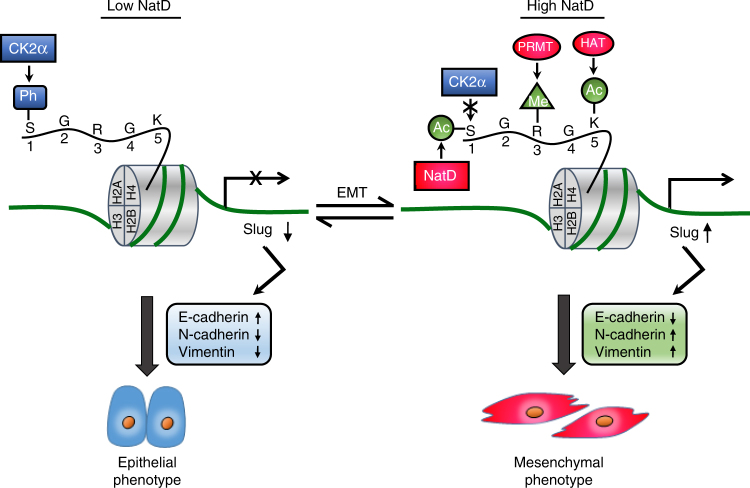
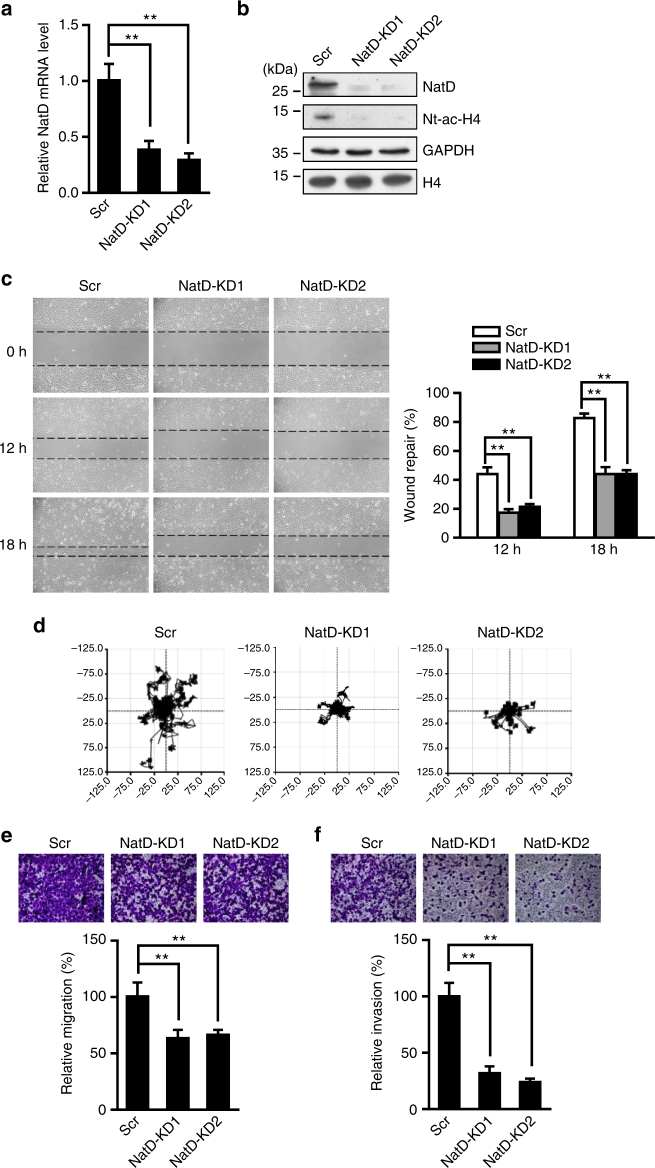
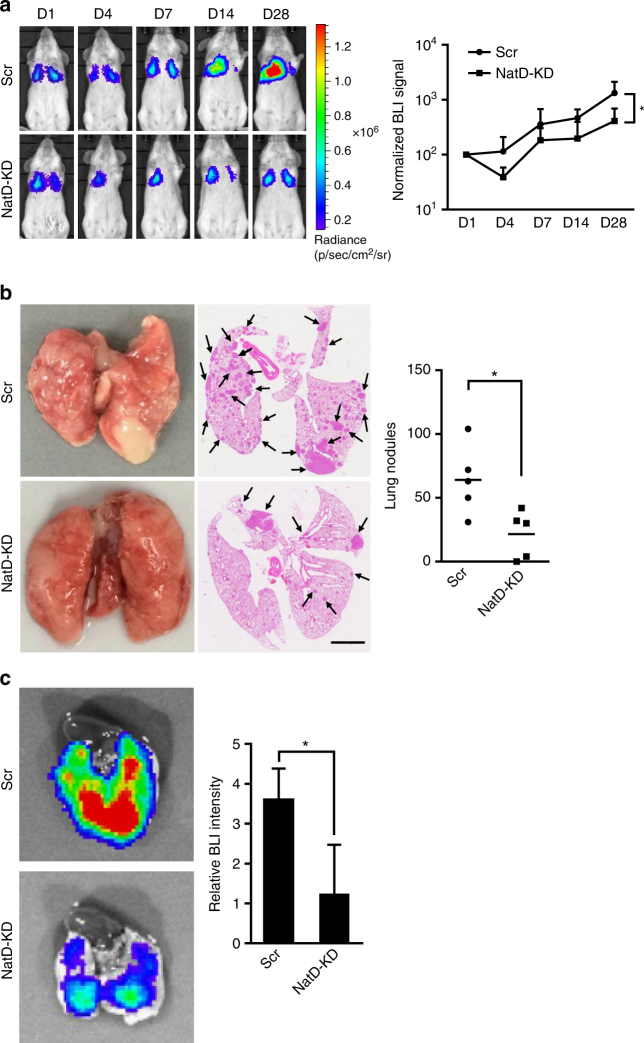
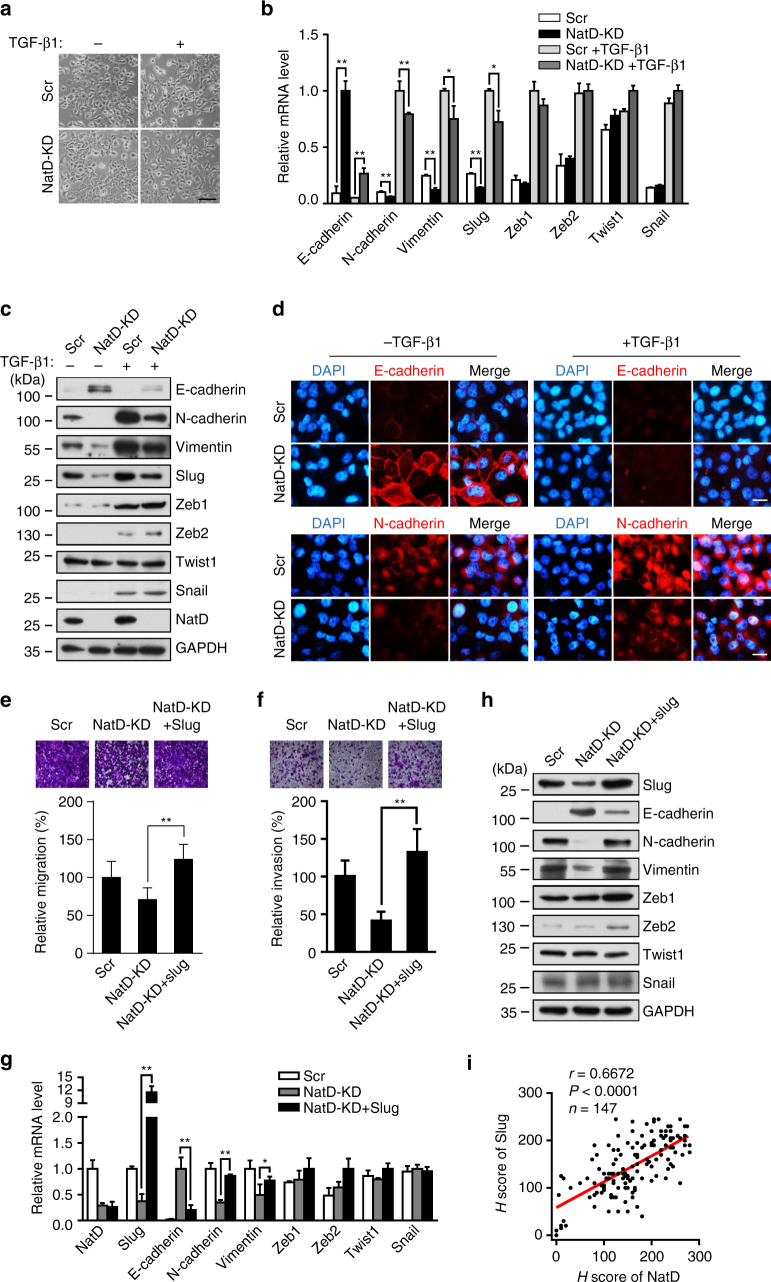
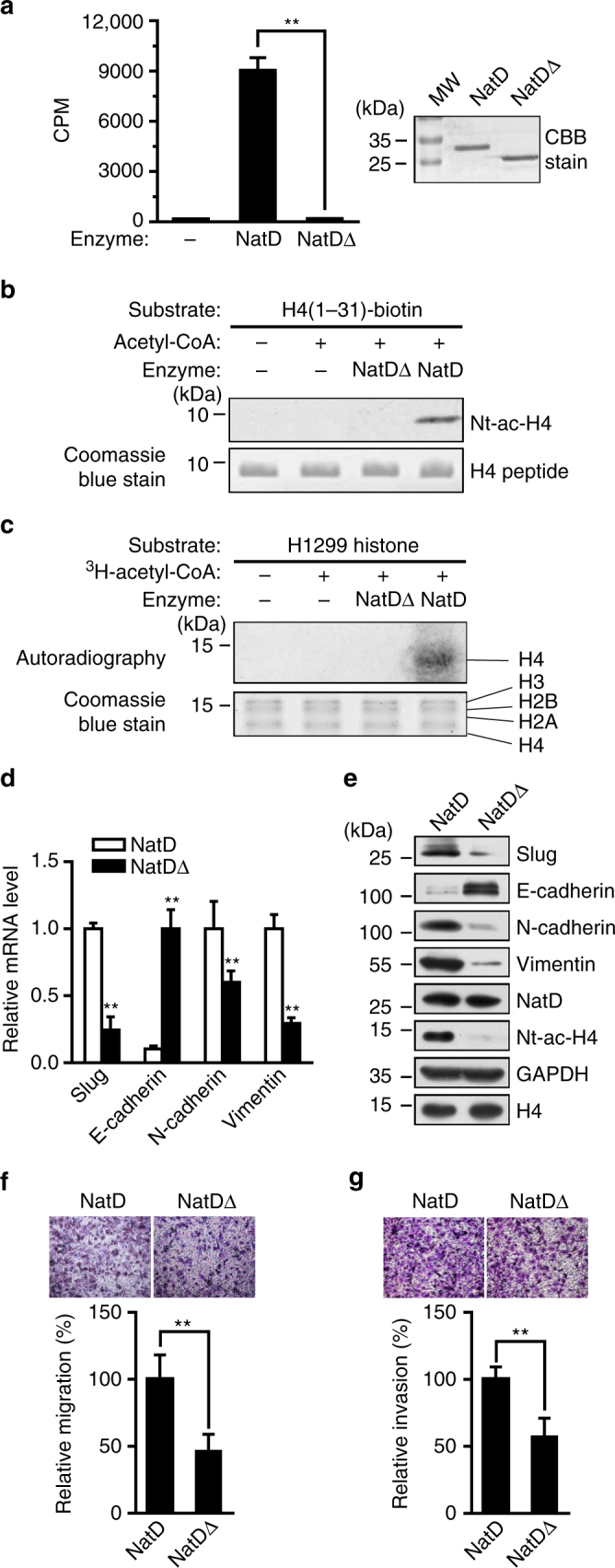
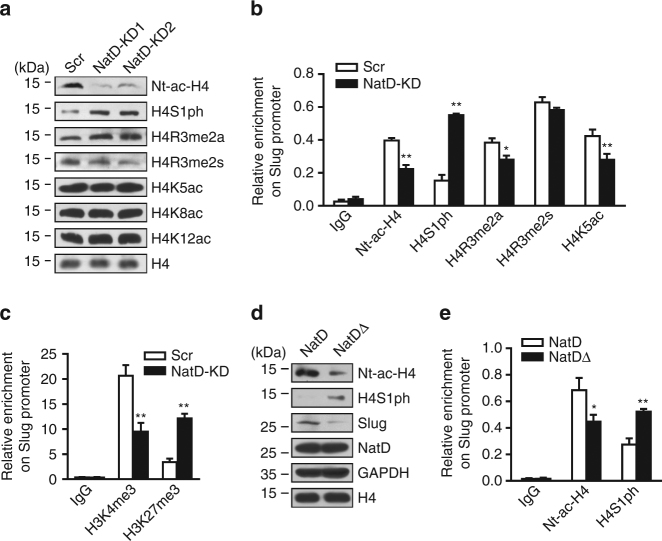
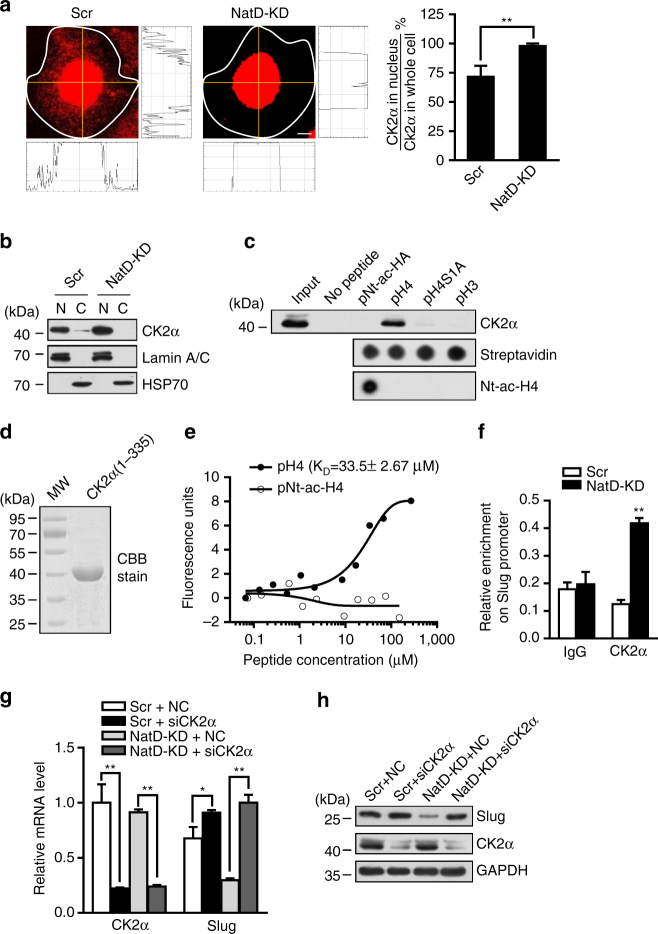
N-α-acetyltransferase D (NatD) mediates N-α-terminal acetylation (Nt-acetylation) of histone H4 known to be involved in cell growth. Here we report that NatD promotes the migratory and invasive capabilities of lung cancer cells in vitro and in vivo. Depletion of NatD suppresses the epithelial-to-mesenchymal transition (EMT) of lung cancer cells by directly repressing the expression of transcription factor Slug, a key regulator of EMT. We found that Nt-acetylation of histone H4 antagonizes histone H4 serine 1 phosphorylation (H4S1ph), and that downregulation of Nt-acetylation of histone H4 facilitates CK2α binding to histone H4 in lung cancer cells, resulting in increased H4S1ph and epigenetic reprogramming to suppress Slug transcription to inhibit EMT. Importantly, NatD is commonly upregulated in primary human lung cancer tissues where its expression level correlates with Slug expression, enhanced invasiveness, and poor clinical outcomes. These findings indicate that NatD is a crucial epigenetic modulator of cell invasion during lung cancer progression.NatD is an acetyltransferase responsible for N-α-terminal acetylation of the histone H4 and H2A and has been linked to cell growth. Here the authors show that NatD-mediated acetylation of histone H4 serine 1 competes with the phosphorylation by CK2α at the same residue thus leading to the upregulation of Slug and tumor progression.
N-α-乙酰转移酶D(NatD)介导已知参与细胞生长的组蛋白H4的N-α-末端乙酰化(Nt-乙酰化)。在此,我们报告NatD在体外和体内均促进肺癌细胞的迁移和侵袭能力。NatD的缺失通过直接抑制转录因子Slug(上皮-间质转化(EMT)的关键调节因子)的表达来抑制肺癌细胞的上皮-间质转化。我们发现组蛋白H4的Nt-乙酰化拮抗组蛋白H4丝氨酸1磷酸化(H4S1ph),并且组蛋白H4的Nt-乙酰化下调促进肺癌细胞中CK2α与组蛋白H4结合,导致H4S1ph增加和表观遗传重编程,从而抑制Slug转录以抑制EMT。重要的是,NatD在原发性人肺癌组织中通常上调,其表达水平与Slug表达、侵袭性增强和不良临床结果相关。这些发现表明NatD是肺癌进展过程中细胞侵袭的关键表观遗传调节因子。NatD是一种负责组蛋白H4和H2A的N-α-末端乙酰化的乙酰转移酶,并且与细胞生长有关。在此,作者表明NatD介导的组蛋白H4丝氨酸1乙酰化与CK2α在同一残基处的磷酸化竞争,从而导致Slug上调和肿瘤进展。