Center of Emphasis in Infectious Diseases, Department of Biomedical Sciences, Paul L. Foster School of Medicine, Texas Tech University Health Sciences Center, El Paso, TX, United States.
Center of Emphasis in Infectious Diseases, Department of Biomedical Sciences, Paul L. Foster School of Medicine, Texas Tech University Health Sciences Center, El Paso, TX, United States.
EBioMedicine. 2017 Nov;25:87-94. doi: 10.1016/j.ebiom.2017.10.006. Epub 2017 Oct 6.
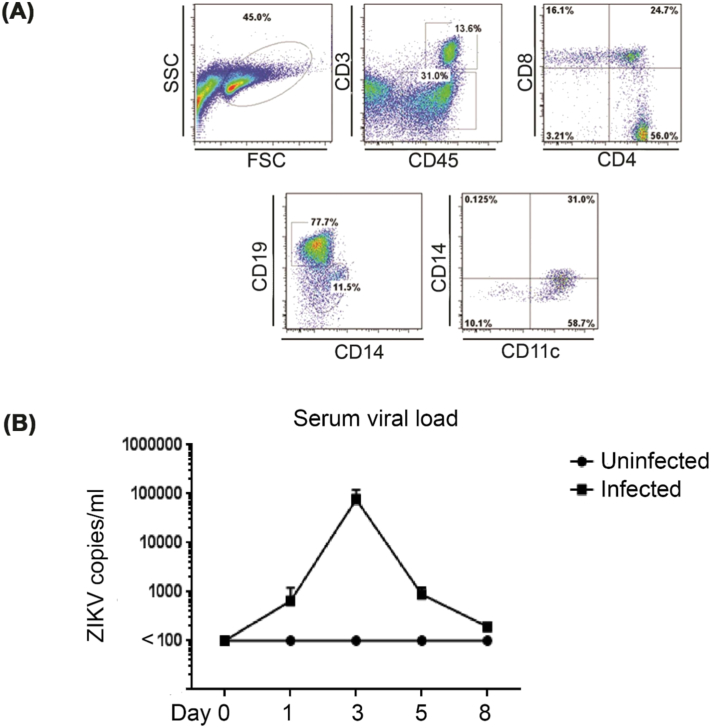
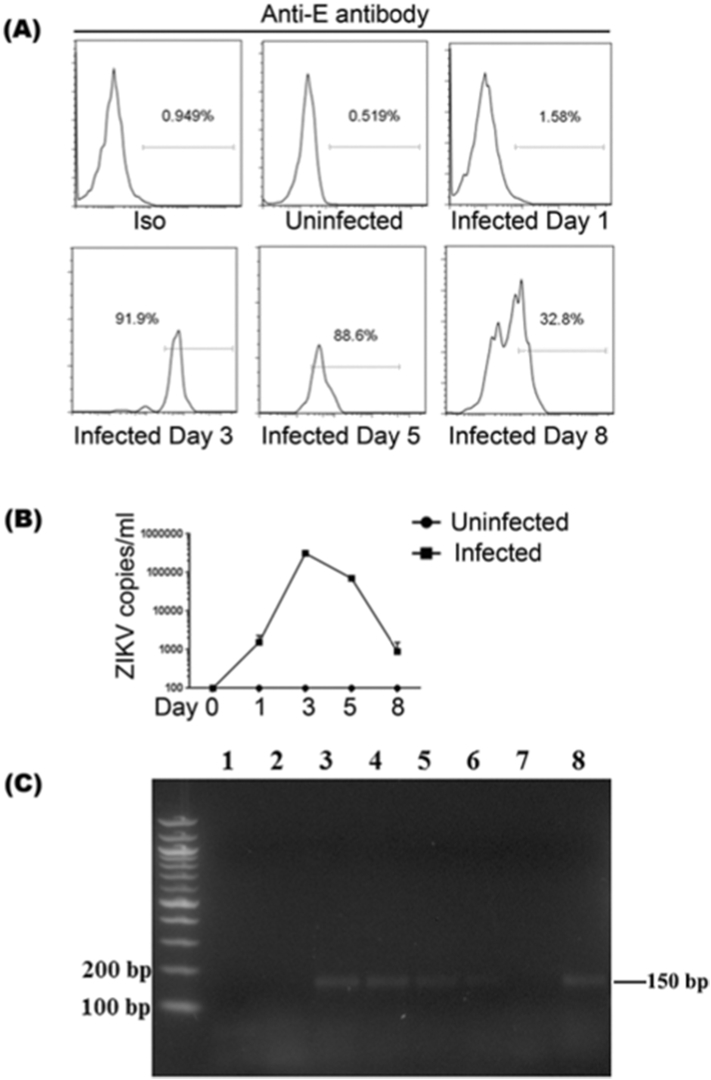
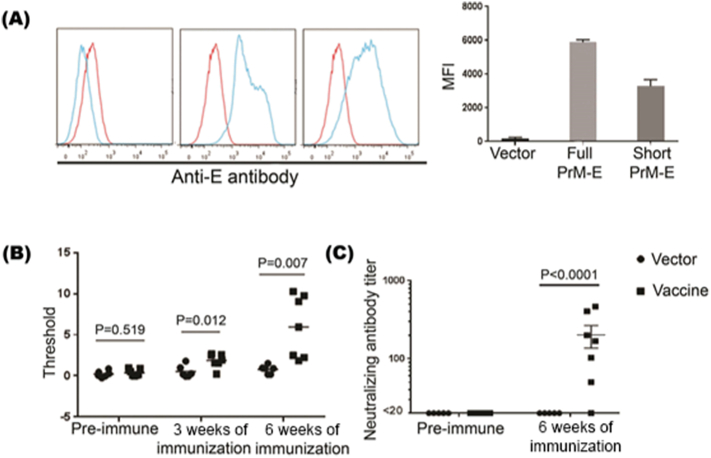
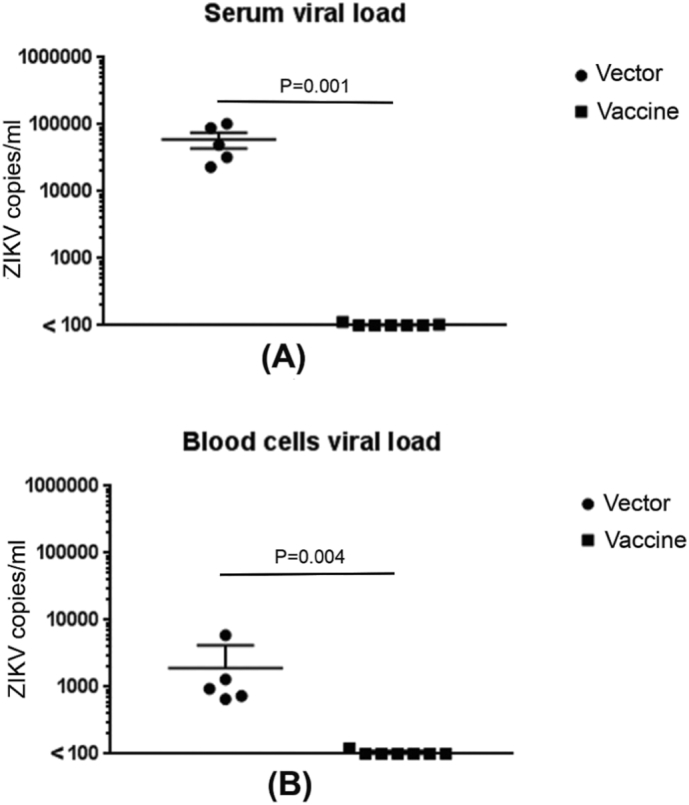
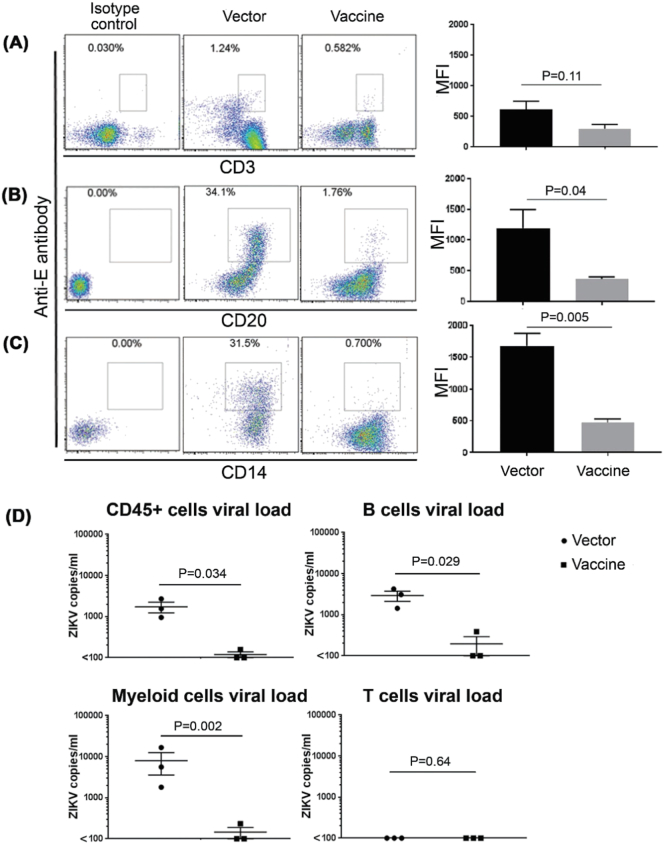
A DNA vaccine encoding prM and E protein has been shown to induce protection against Zika virus (ZIKV) infection in mice and monkeys. However, its effectiveness in humans remains undefined. Moreover, identification of which immune cell types are specifically infected in humans is unclear. We show that human myeloid cells and B cells are primary targets of ZIKV in humanized mice. We also show that a DNA vaccine encoding full length prM and E protein protects humanized mice from ZIKV infection. Following administration of the DNA vaccine, humanized DRAG mice developed antibodies targeting ZIKV as measured by ELISA and neutralization assays. Moreover, following ZIKV challenge, vaccinated animals presented virtually no detectable virus in human cells and in serum, whereas unvaccinated animals displayed robust infection, as measured by qRT-PCR. Our results utilizing humanized mice show potential efficacy for a targeted DNA vaccine against ZIKV in humans.
一种编码 prM 和 E 蛋白的 DNA 疫苗已被证明可在小鼠和猴子中诱导对寨卡病毒(ZIKV)感染的保护。然而,其在人类中的有效性尚不清楚。此外,哪种免疫细胞类型在人类中被特异性感染也不清楚。我们表明,人类髓样细胞和 B 细胞是人类化小鼠中寨卡病毒的主要靶标。我们还表明,一种编码全长 prM 和 E 蛋白的 DNA 疫苗可保护人类化小鼠免受寨卡病毒感染。在给予 DNA 疫苗后,通过 ELISA 和中和测定,人类化 DRAG 小鼠产生了针对寨卡病毒的抗体。此外,在寨卡病毒挑战后,接种疫苗的动物在人细胞和血清中几乎检测不到可检测的病毒,而未接种疫苗的动物则表现出强烈的感染,如 qRT-PCR 所示。我们利用人类化小鼠的结果表明,针对寨卡病毒的靶向 DNA 疫苗在人类中具有潜在的疗效。