Steindl Johannes, Koch Thomas, Moszner Norbert, Gorsche Christian
Institute of Applied Synthetic Chemistry, Technische Universität Wien, Getreidemarkt 9/163 MC, 1060 Vienna, Austria.
Christian-Doppler-Laboratory for Photopolymers in Digital and Restorative Dentistry, Getreidemarkt 9, 1060 Vienna, Austria.
Macromolecules. 2017 Oct 10;50(19):7448-7457. doi: 10.1021/acs.macromol.7b01399. Epub 2017 Sep 18.
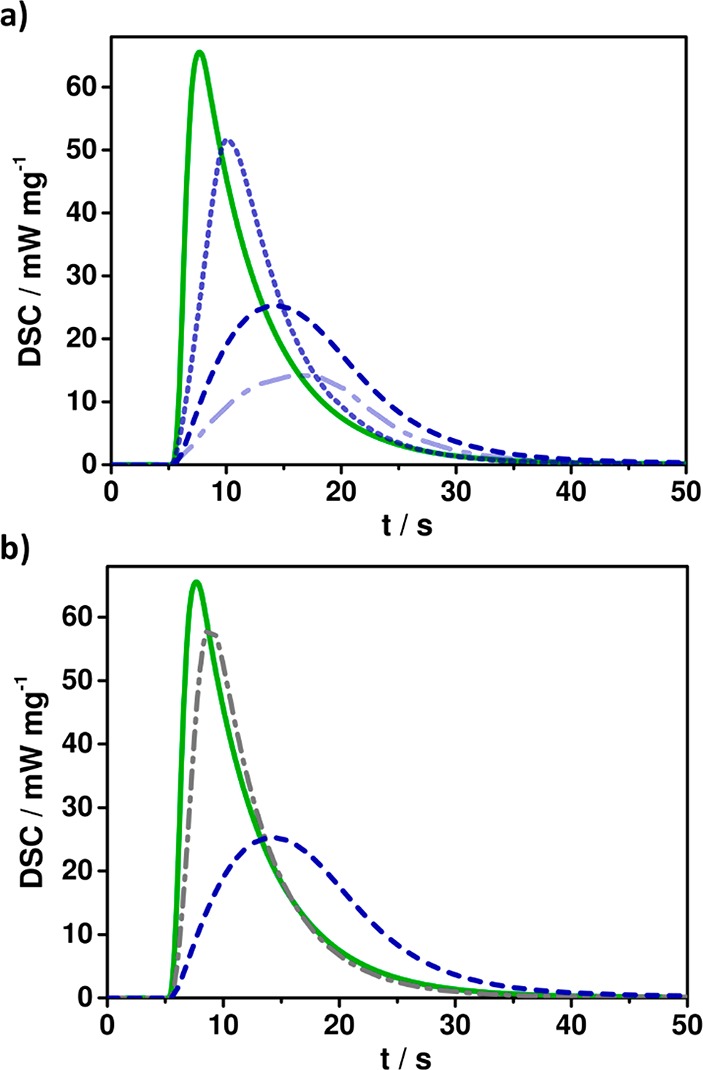
Photoinitiated silane-ene chemistry has the potential to pave the way toward spatially resolved organosilicon compounds, which might find application in biomedicine, microelectronics, and other advanced fields. Moreover, this approach could serve as a viable alternative to the popular photoinitiated thiol-ene chemistry, which gives access to defined and functional photopolymer networks. A difunctional bis(trimethylsilyl)silane with abstractable hydrogens (DSiH) was successfully synthesized in a simple one-pot procedure. The radical reactivity of DSiH with various homopolymerizable monomers (i.e., (meth)acrylate, vinyl ester, acrylamide) was assessed via H NMR spectroscopic studies. DSiH shows good reactivity with acrylates and vinyl esters. The most promising silane-acrylate system was further investigated in cross-linking formulations toward its reactivity (e.g., heat of polymerization, curing time, occurrence of gelation, double-bond conversion) and compared to state-of-the-art thiol-acrylate resins. The storage stability of prepared resin formulations is greatly improved for silane-acrylate systems vs thiol-ene resins. Double-bond conversion at the gel point (DBC) and overall DBC were increased, and polymerization-induced shrinkage stress has been significantly reduced with the introduction of silane-acrylate chemistry. Resulting photopolymer networks exhibit a homogeneous network architecture (indicated by a narrow glass transition) that can be tuned by varying silane concentration, and this confirms the postulated regulation of radical network formation. Similar to thiol-acrylate networks, this leads to more flexible photopolymer networks with increased elongation at break and improved impact resistance. Additionally, swelling tests indicate a high gel fraction for silane-acrylate photopolymers.
光引发硅烷-烯化学有潜力为空间分辨有机硅化合物铺平道路,这类化合物可能在生物医学、微电子及其他先进领域得到应用。此外,这种方法可以作为广受欢迎的光引发硫醇-烯化学的可行替代方法,后者可用于制备特定的功能性光聚合物网络。通过简单的一锅法成功合成了一种具有可抽象氢的双官能双(三甲基硅基)硅烷(DSiH)。通过核磁共振氢谱研究评估了DSiH与各种可均聚单体(即(甲基)丙烯酸酯、乙烯基酯、丙烯酰胺)的自由基反应活性。DSiH与丙烯酸酯和乙烯基酯表现出良好的反应活性。对最有前景的硅烷-丙烯酸酯体系在交联配方中进一步研究其反应活性(如聚合热、固化时间、凝胶化的发生、双键转化率),并与现有硫醇-丙烯酸酯树脂进行比较。与硫醇-烯树脂相比,硅烷-丙烯酸酯体系制备的树脂配方的储存稳定性有了很大提高。引入硅烷-丙烯酸酯化学后,凝胶点处的双键转化率(DBC)和总体DBC增加,聚合诱导的收缩应力显著降低。所得光聚合物网络呈现出均匀的网络结构(由窄的玻璃化转变表明),可通过改变硅烷浓度进行调节,这证实了自由基网络形成的假定调控。与硫醇-丙烯酸酯网络类似,这导致形成更具柔韧性的光聚合物网络,断裂伸长率增加,抗冲击性提高。此外,溶胀试验表明硅烷-丙烯酸酯光聚合物具有较高的凝胶分数。