Dulebohn Daniel P, Richards Crystal L, Su Hua, Lawrence Kevin A, Gherardini Frank C
Laboratory of Zoonotic Pathogens, Gene Regulation Section, Division of Intramural Research, Rocky Mountain Laboratories, National Institute of Allergy and Infectious Diseases, National Institutes of Health, Hamilton, MT, United States.
Front Microbiol. 2017 Sep 29;8:1734. doi: 10.3389/fmicb.2017.01734. eCollection 2017.
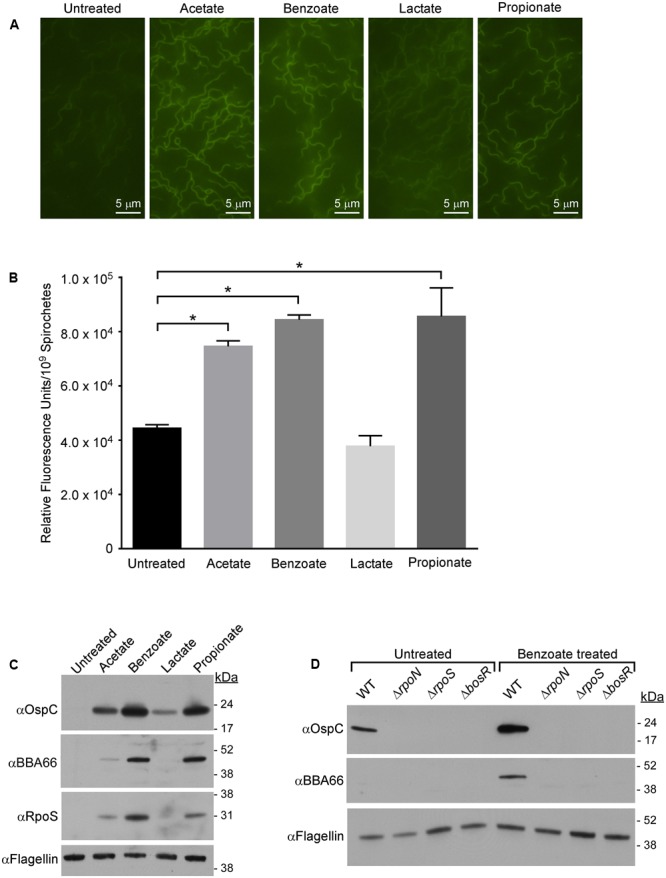
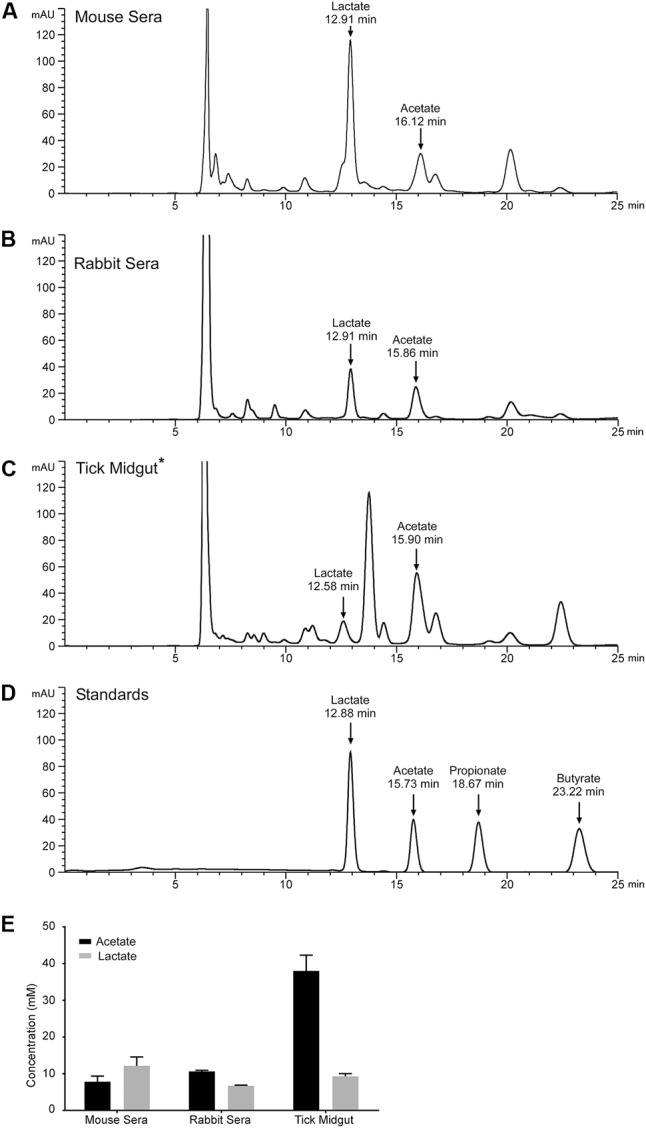
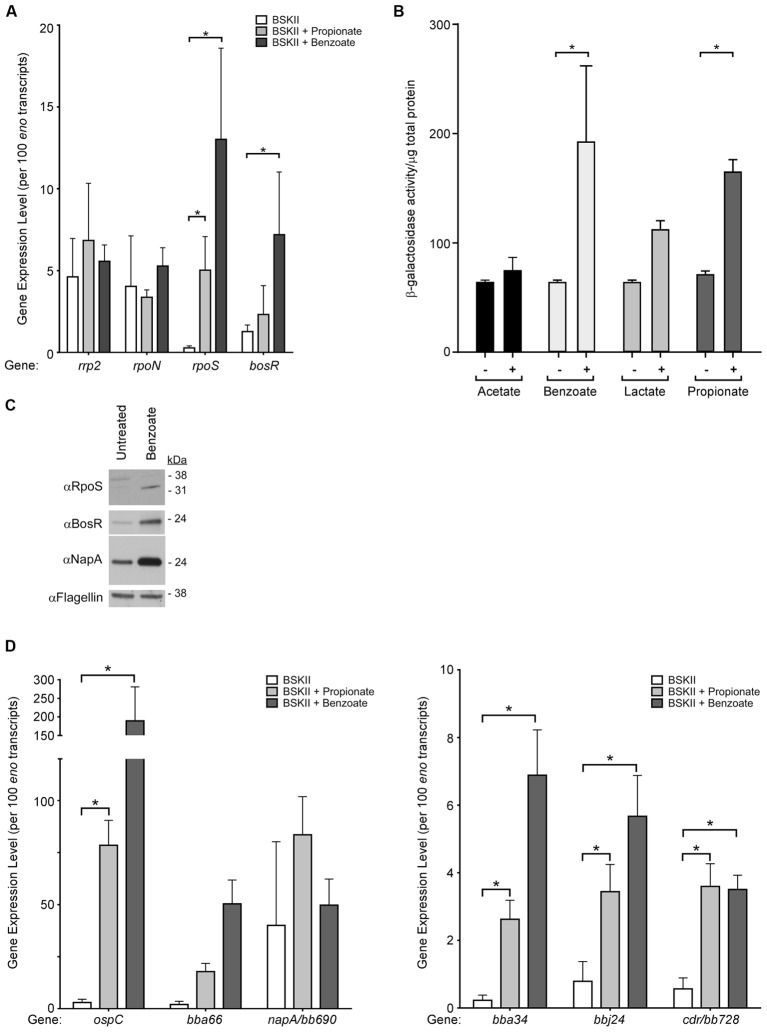
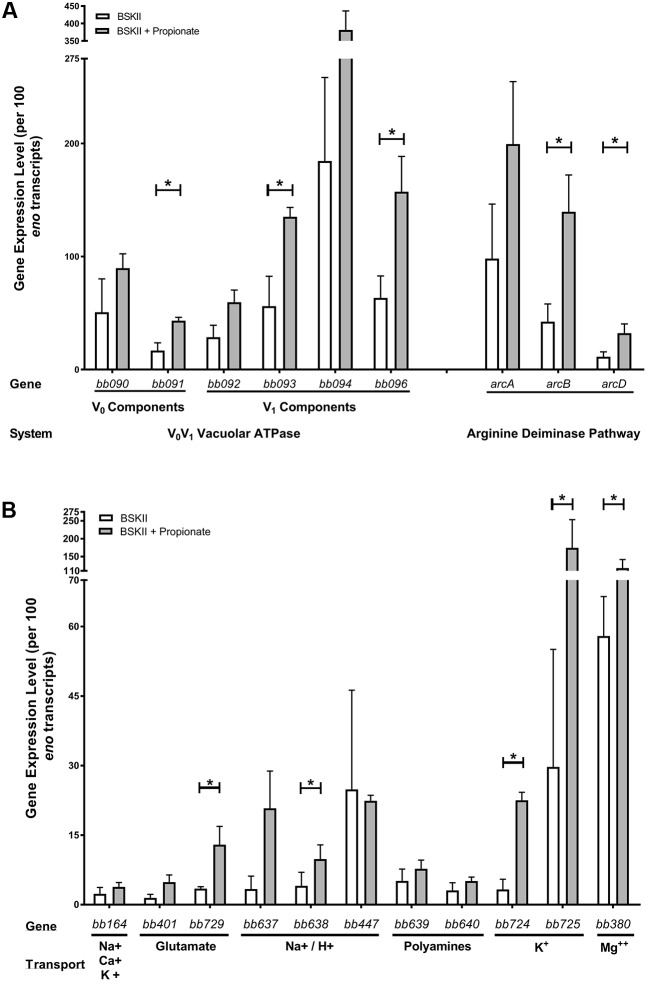
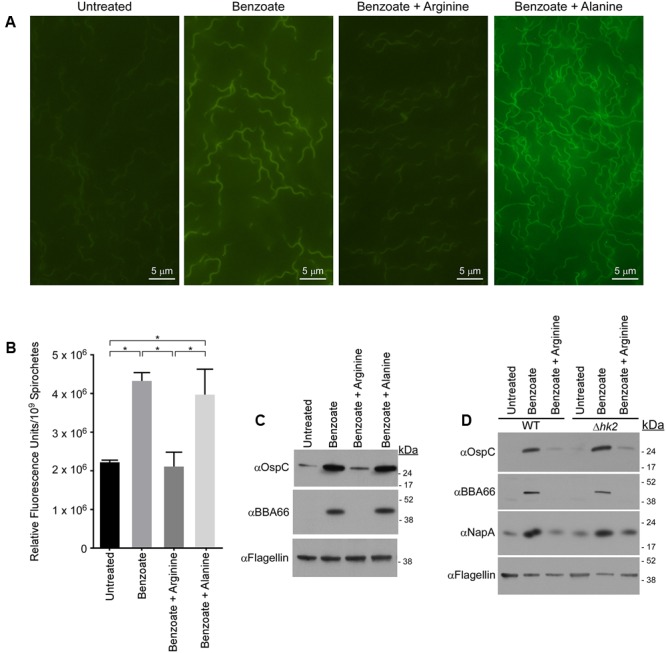
The spirochete survives in its tick vector, , or within various hosts. To transition between and survive in these distinct niches, changes its gene expression in response to environmental cues, both biochemical and physiological. Exposure of to weak monocarboxylic organic acids, including those detected in the blood meal of fed ticks, decreased the cytoplasmic pH of . A decrease in the cytoplasmic pH induced the expression of genes encoding enzymes that have been shown to restore pH homeostasis in other bacteria. These include putative coupled proton/cation exchangers, a putative Na/H antiporter, a neutralizing buffer transporter, an amino acid deaminase and a proton exporting vacuolar-type VV ATPase. Data presented in this report suggested that the acid stress response triggered the expression of RpoN- and RpoS-dependent genes including important virulence factors such as outer surface protein C (OspC), BBA66, and some BosR ( oxidative stress regulator)-dependent genes. Because the expression of virulence factors, like OspC, are so tightly connected by RpoS to general cellular stress responses and cell physiology, it is difficult to separate transmission-promoting conditions in what is clearly a multifactorial and complex regulatory web.
螺旋体在其蜱虫载体或各种宿主体内生存。为了在这些不同的生态位之间转换并生存,它会根据生化和生理等环境线索改变基因表达。将螺旋体暴露于弱单羧酸有机酸中,包括在饱血蜱虫血餐中检测到的那些酸,会降低螺旋体的细胞质pH值。细胞质pH值的降低会诱导编码已被证明能在其他细菌中恢复pH稳态的酶的基因表达。这些酶包括假定的偶联质子/阳离子交换体、一种假定的Na/H反向转运蛋白、一种中和缓冲液转运蛋白、一种氨基酸脱氨酶和一种质子输出液泡型V-ATP酶。本报告中的数据表明,酸应激反应触发了RpoN和RpoS依赖性基因的表达,包括重要的毒力因子,如外表面蛋白C(OspC)、BBA66以及一些BosR(氧化应激调节因子)依赖性基因。由于毒力因子(如OspC)的表达通过RpoS与一般细胞应激反应和细胞生理学紧密相连,在这个明显是多因素且复杂的调控网络中,很难区分促进传播的条件。