Babahosseini Hesam, Strobl Jeannine S, Agah Masoud
Department of Mechanical Engineering, Virginia Tech, Blacksburg, VA 24061, US.
The Bradley Department of Electrical and Computer Engineering, Virginia Tech, Blacksburg, VA 24061, US.
Anal Methods. 2017 Feb 7;9(5):847-855. doi: 10.1039/C6AY03342C. Epub 2017 Jan 4.
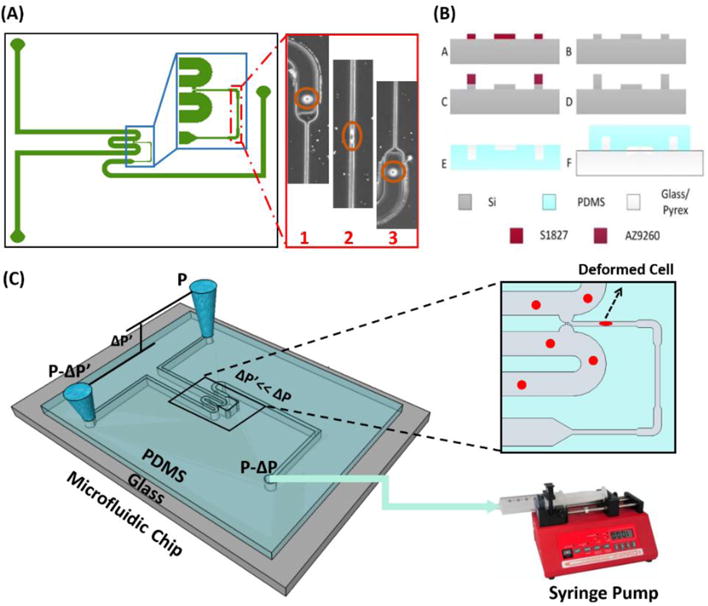
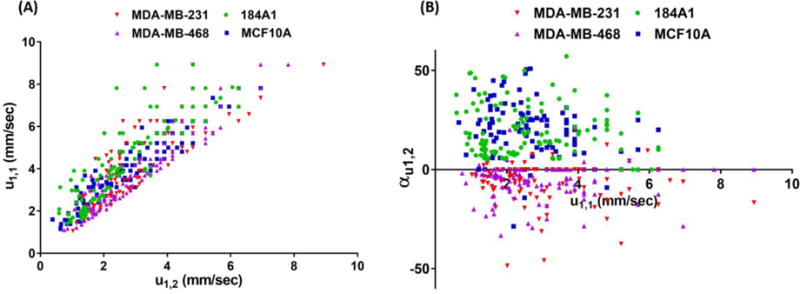
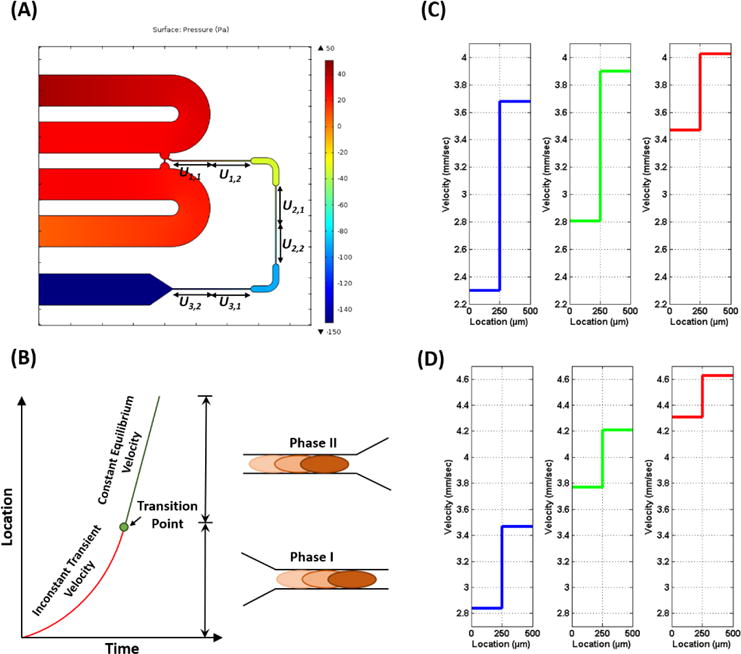
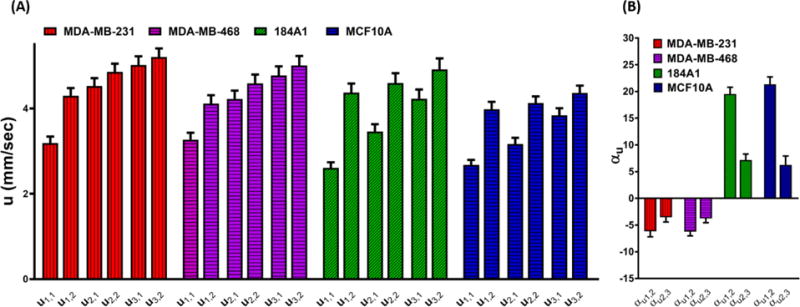
This study describes the development of a microfluidic biosensor called the iterative mechanical characteristics (iMECH) analyzer which enables label-free biomechanical profiling of individual cells for distinction between metastatic and non-metastatic human mammary cell lines. Previous results have demonstrated that pulsed mechanical nanoindentation can modulate the biomechanics of cells resulting in distinctly different biomechanical responses in metastatic and non-metastatic cell lines. The iMECH analyzer aims to move this concept into a microfluidic, clinically more relevant platform. The iMECH analyzer directs a cyclic deformation regimen by pulling cells through a test channel comprised of narrow deformation channels and interspersed with wider relaxation regions which together simulate a dynamic microenvironment. The results of the iMECH analysis of human breast cell lines revealed that cyclic deformations produce a resistance in non-metastatic 184A1 and MCF10A cells as determined by a drop in their average velocity in the iterative deformation channels after each relaxation. In contrast, metastatic MDA-MB-231 and MDA-MB-468 cells exhibit a loss of resistance as measured by a velocity raise after each relaxation. These distinctive modulatory mechanical responses of normal-like non-metastatic and metastatic cancer breast cells to the pulsed indentations paradigm provide a unique bio-signature. The iMECH analyzer represents a diagnostic microchip advance for discriminating metastatic cancer at the single-cell level.
本研究描述了一种名为迭代力学特性(iMECH)分析仪的微流控生物传感器的开发,该传感器能够对单个细胞进行无标记生物力学分析,以区分转移性和非转移性人乳腺细胞系。先前的结果表明,脉冲机械纳米压痕可以调节细胞的生物力学,从而在转移性和非转移性细胞系中产生明显不同的生物力学反应。iMECH分析仪旨在将这一概念引入一个更具临床相关性的微流控平台。iMECH分析仪通过将细胞拉过一个由狭窄变形通道和散布着较宽松弛区域的测试通道来引导循环变形方案,这些通道共同模拟了一个动态微环境。对人乳腺癌细胞系的iMECH分析结果显示,循环变形会在非转移性184A1和MCF10A细胞中产生阻力,这可通过每次松弛后它们在迭代变形通道中的平均速度下降来确定。相比之下,转移性MDA-MB-231和MDA-MB-468细胞在每次松弛后速度上升,表现出阻力丧失。正常样非转移性和转移性乳腺癌细胞对脉冲压痕模式的这些独特的调节性机械反应提供了一种独特的生物特征。iMECH分析仪代表了一种在单细胞水平上鉴别转移性癌症的诊断微芯片进展。