Balak Chris D, Hunter Jesse M, Ahearn Mary E, Wiley David, D'urso Gennaro, Baumbach-Reardon Lisa
Translational Genomics Research Institute (TGen), Phoenix, Arizona, 85004, USA.
Clinical Genomics, Ambry Genetics, 15 Argonaut, Aliso Viejo, California , 92656, USA.
F1000Res. 2017 Sep 4;6:1636. doi: 10.12688/f1000research.11878.1. eCollection 2017.
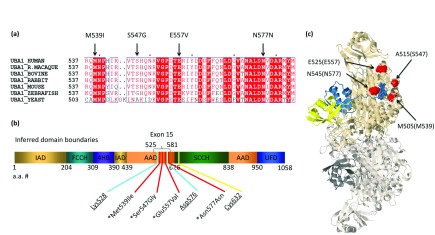
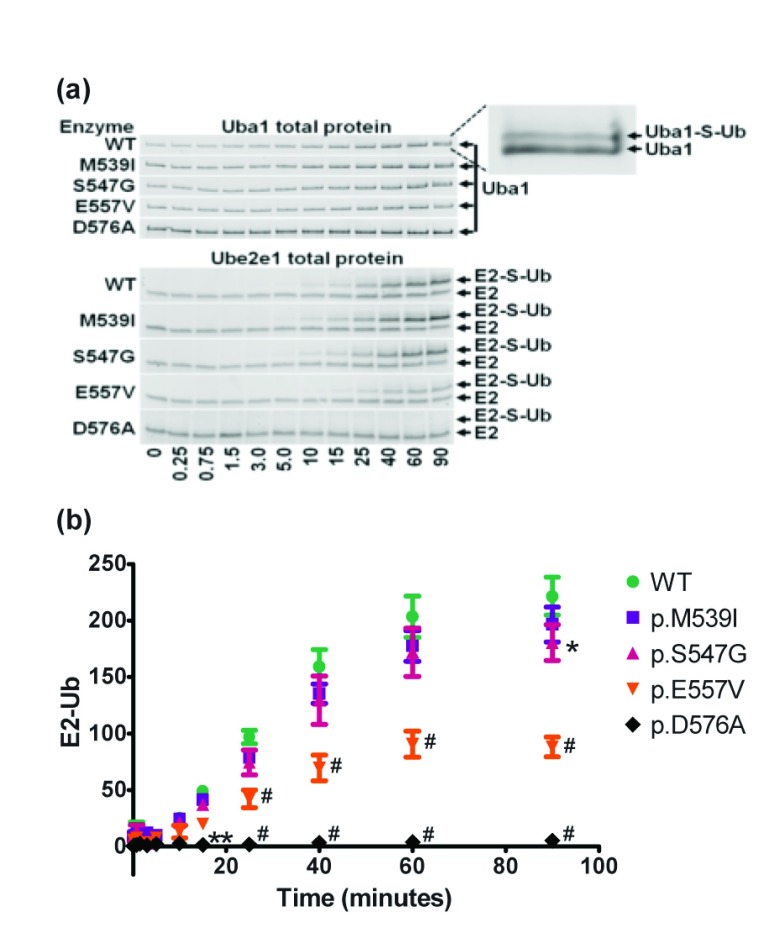
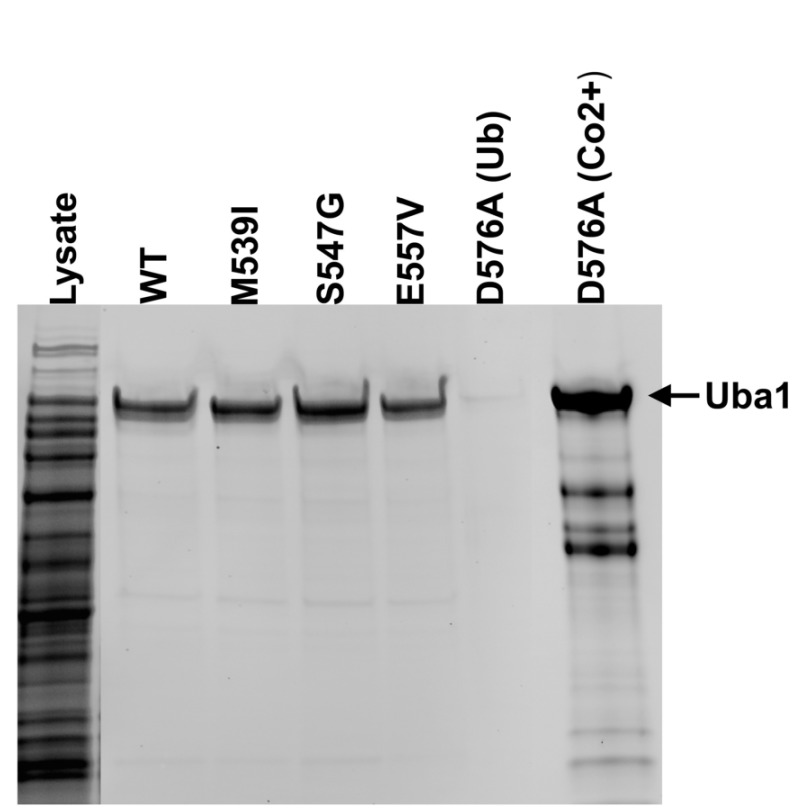
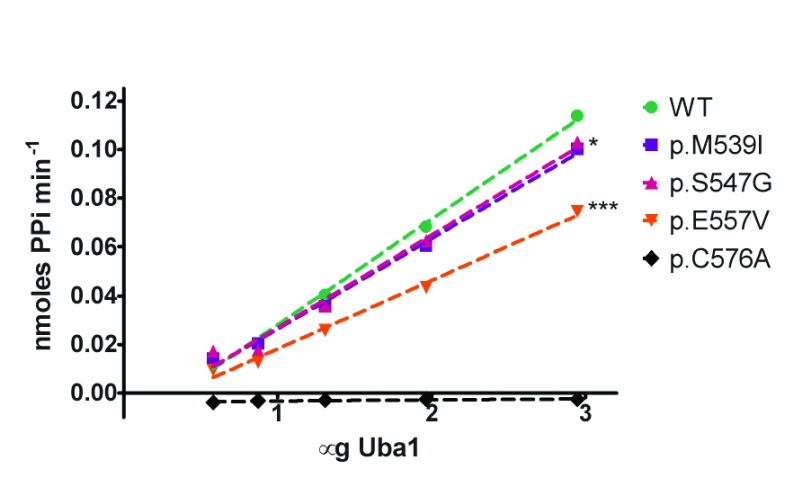
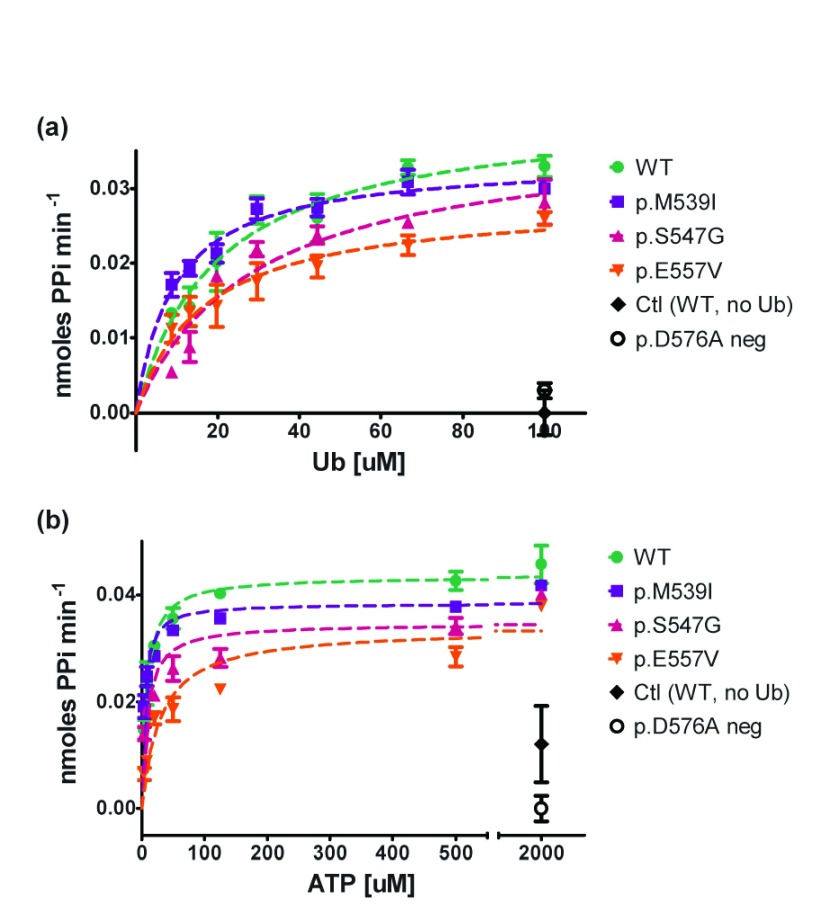
X-linked spinal muscular atrophy (XL-SMA) results from mutations in the Ubiquitin-Like Modifier Activating Enzyme 1 ( ). Previously, four novel closely clustered mutations have been shown to cause this fatal infantile disorder affecting only males. These mutations, three missense and one synonymous, all lie within Exon15 of the gene, which contains the active adenylation domain (AAD). In this study, our group characterized the three known missense variants . Using a novel Uba1 assay and other methods, we investigated Uba1 adenylation, thioester, and transthioesterification reactions to determine possible biochemical effects of the missense variants. Our data revealed that only one of the three XL-SMA missense variants impairs the Ubiquitin-adenylating ability of Uba1. Additionally, these missense variants retained Ubiquitin thioester bond formation and transthioesterification rates equal to that found in the wild type. Our results demonstrate a surprising shift from the likelihood of these XL-SMA mutations playing a damaging role in Uba1's enzymatic activity with Ubiquitin, to other roles such as altering mRNA splicing via the disruption of splicing factor binding sites, similar to a mechanism in traditional SMA, or disrupting binding to other important binding partners. These findings help to narrow the search for the areas of possible dysfunction in the Ubiquitin-proteasome pathway that ultimately result in XL-SMA. Moreover, this investigation provides additional critical understanding of the mutations' biochemical mechanisms, vital for the development of future effective diagnostic assays and therapeutics.
X连锁脊髓性肌萎缩症(XL-SMA)是由泛素样修饰激活酶1(Uba1)的突变引起的。此前,已发现四个紧密聚集的新突变会导致这种仅影响男性的致命婴儿疾病。这些突变,三个为错义突变,一个为同义突变,均位于Uba1基因的第15外显子内,该外显子包含活性腺苷酸化结构域(AAD)。在本研究中,我们团队对三个已知的错义变体进行了特征分析。我们使用一种新的Uba1检测方法和其他方法,研究了Uba1的腺苷酸化、硫酯形成和转硫酯反应,以确定这些错义变体可能产生的生化影响。我们的数据显示,三个XL-SMA错义变体中只有一个会损害Uba1的泛素腺苷酸化能力。此外,这些错义变体保留了与野生型相当的泛素硫酯键形成和转硫酯反应速率。我们的结果表明,这些XL-SMA突变在Uba1与泛素的酶活性中发挥破坏作用的可能性发生了惊人的转变,转向了其他作用,例如通过破坏剪接因子结合位点来改变mRNA剪接,这类似于传统脊髓性肌萎缩症中的一种机制,或者破坏与其他重要结合伙伴的结合。这些发现有助于缩小对泛素-蛋白酶体途径中最终导致XL-SMA的可能功能障碍区域的搜索范围。此外,这项研究提供了对这些突变生化机制的更多关键理解,这对于未来开发有效的诊断检测方法和治疗方法至关重要。