Braithwaite Jeffrey, Mannion Russell, Matsuyama Yukihiro, Shekelle Paul, Whittaker Stuart, Al-Adawi Samir, Ludlow Kristiana, James Wendy, Ting Hsuen P, Herkes Jessica, Ellis Louise A, Churruca Kate, Nicklin Wendy, Hughes Clifford
Centre for Healthcare Resilience and Implementation Science, Australian Institute of Health Innovation, Level 6, 75 Talavera Road, Macquarie University, Sydney, NSW 2109, Australia.
Health Services Management Centre, University of Birmingham, Edgbaston, Birmingham B15 2TT, England.
Int J Qual Health Care. 2017 Oct 1;29(6):880-886. doi: 10.1093/intqhc/mzx122.
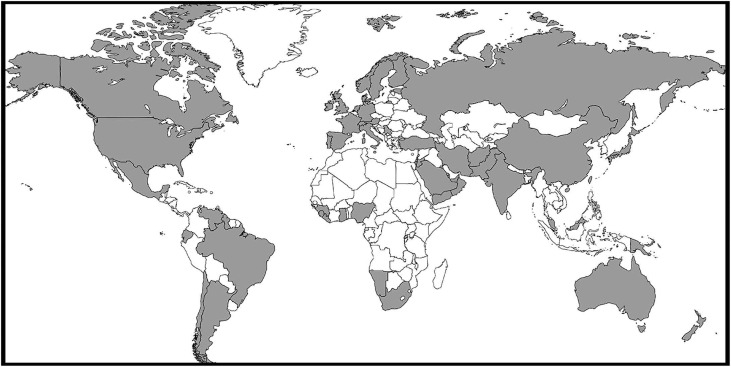
Healthcare reform typically involves orchestrating a policy change, mediated through some form of operational, systems, financial, process or practice intervention. The aim is to improve the ways in which care is delivered to patients. In our book 'Health Systems Improvement Across the Globe: Success Stories from 60 Countries', we gathered case-study accomplishments from 60 countries. A unique feature of the collection is the diversity of included countries, from the wealthiest and most politically stable such as Japan, Qatar and Canada, to some of the poorest, most densely populated or politically challenged, including Afghanistan, Guinea and Nigeria. Despite constraints faced by health reformers everywhere, every country was able to share a story of accomplishment-defining how their case example was managed, what services were affected and ultimately how patients, staff, or the system overall, benefited. The reform themes ranged from those relating to policy, care coverage and governance; to quality, standards, accreditation and regulation; to the organization of care; to safety, workforce and resources; to technology and IT; through to practical ways in which stakeholders forged collaborations and partnerships to achieve mutual aims. Common factors linked to success included the 'acorn-to-oak tree' principle (a small scale initiative can lead to system-wide reforms); the 'data-to-information-to-intelligence' principle (the role of IT and data are becoming more critical for delivering efficient and appropriate care, but must be converted into useful intelligence); the 'many-hands' principle (concerted action between stakeholders is key); and the 'patient-as-the-pre-eminent-player' principle (placing patients at the centre of reform designs is critical for success).
医疗改革通常涉及精心策划一项政策变革,通过某种形式的运营、系统、财务、流程或实践干预来实现。其目的是改善为患者提供护理的方式。在我们的《全球卫生系统改进:60个国家的成功故事》一书中,我们收集了60个国家的案例研究成果。该合集的一个独特之处在于所涵盖国家的多样性,从最富有且政治最稳定的国家,如日本、卡塔尔和加拿大,到一些最贫穷、人口最密集或政治上面临挑战的国家,包括阿富汗、几内亚和尼日利亚。尽管各地的医疗改革者都面临种种限制,但每个国家都能够分享一个成就故事——阐述其案例是如何管理的、哪些服务受到了影响以及最终患者、工作人员或整个系统是如何受益的。改革主题涵盖从政策、护理覆盖范围和治理;到质量、标准、认证和监管;到护理组织;到安全、劳动力和资源;到技术和信息技术;再到利益相关者建立合作与伙伴关系以实现共同目标的实际方式。与成功相关的共同因素包括“从橡子到橡树”原则(一项小规模倡议可引发全系统改革);“数据到信息再到情报”原则(信息技术和数据在提供高效且恰当的护理方面的作用愈发关键,但必须转化为有用的情报);“众人之手”原则(利益相关者之间的协同行动是关键);以及“患者作为首要参与者”原则(将患者置于改革设计的中心对成功至关重要)。