Department of Renewable Resources, University of Alberta, Edmonton, Canada.
Department of Environmental Sciences - Botany, University of Basel, Basel, Switzerland.
J Exp Bot. 2017 Nov 2;68(18):5221-5232. doi: 10.1093/jxb/erx342.
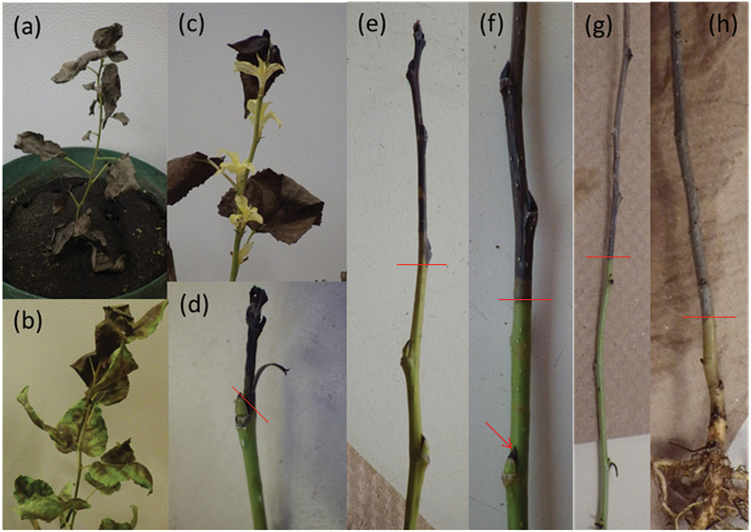
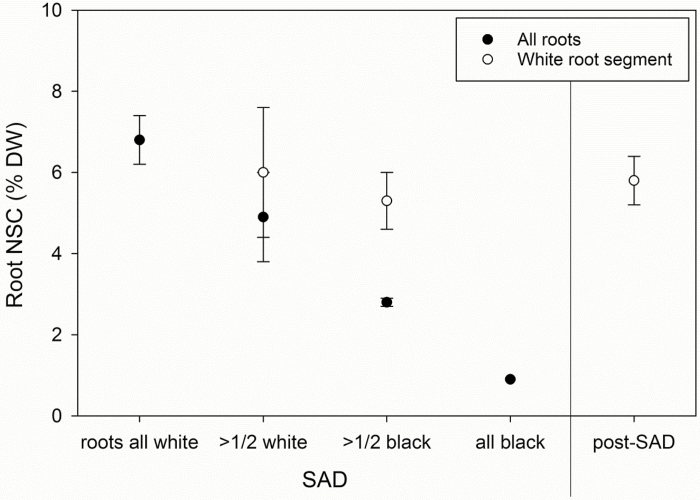
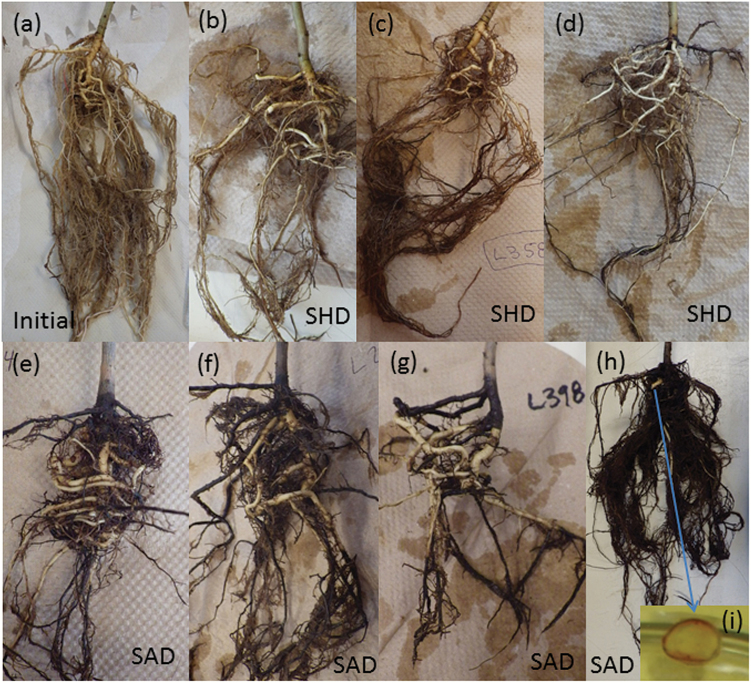
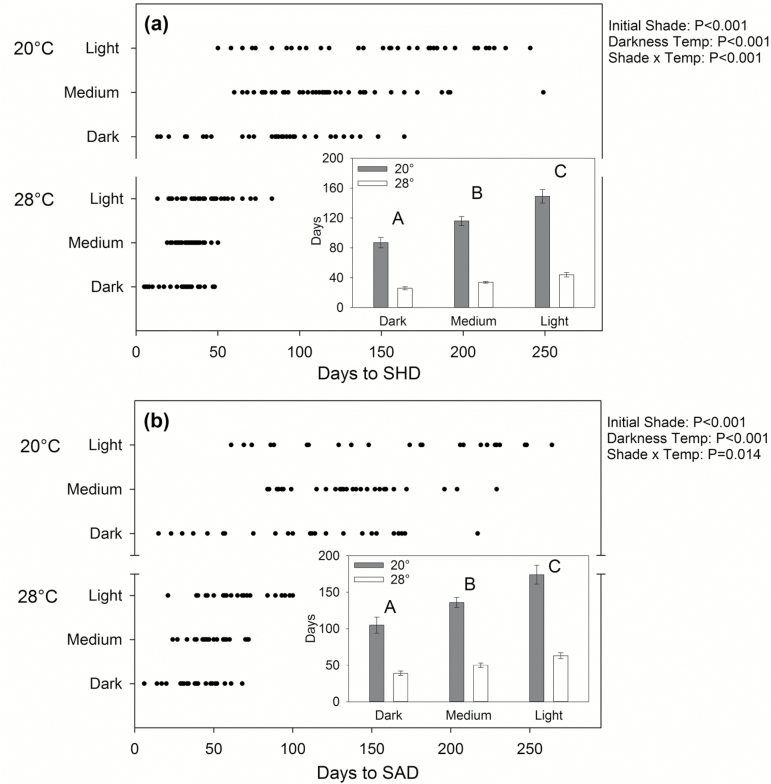
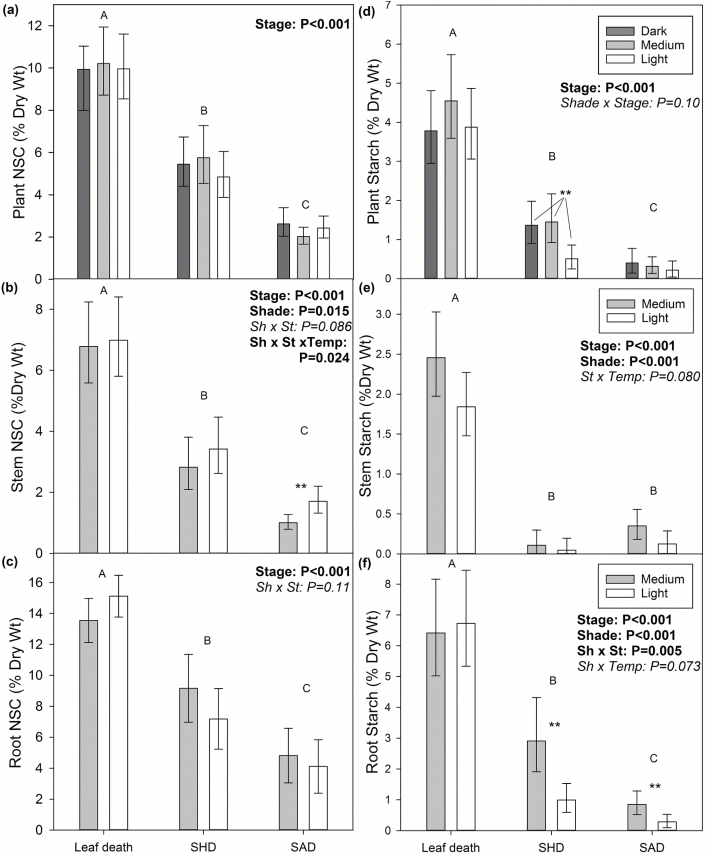
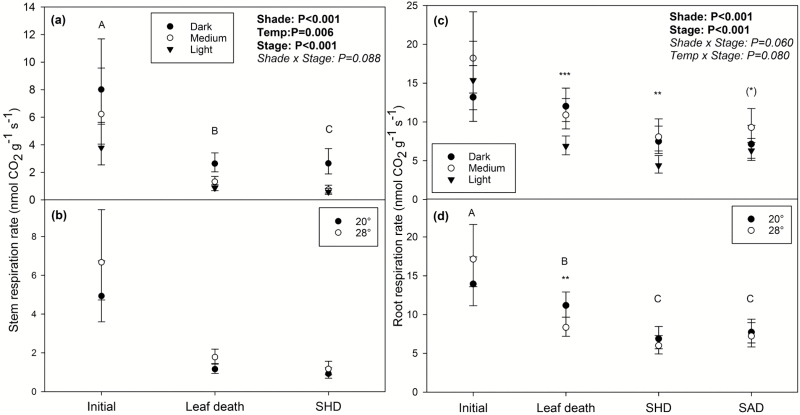
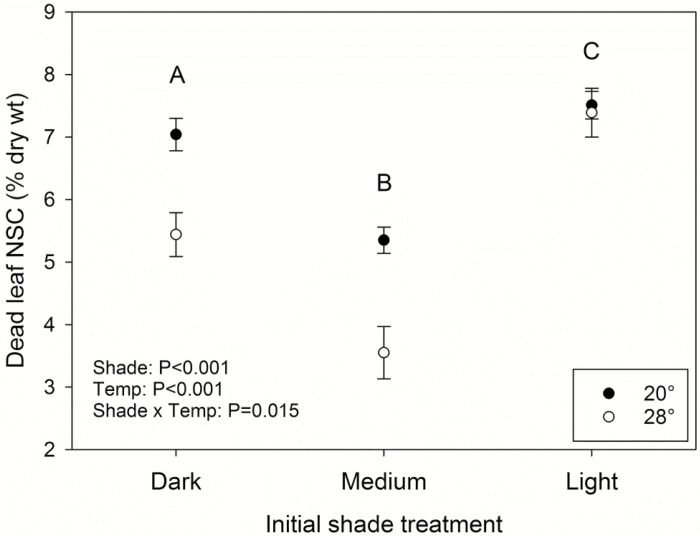
Carbon starvation as a mechanism of tree mortality is poorly understood. We exposed seedlings of aspen (Populus tremuloides) to complete darkness at 20 or 28 °C to identify minimum non-structural carbohydrate (NSC) concentrations at which trees die and to see if these levels vary between organs or with environmental conditions. We also first grew seedlings under different shade levels to determine if size affects survival time under darkness due to changes in initial NSC concentration and pool size and/or respiration rates. Darkness treatments caused a gradual dieback of tissues. Even after half the stem had died, substantial starch reserves were still present in the roots (1.3-3% dry weight), indicating limitations to carbohydrate remobilization and/or transport during starvation in the absence of water stress. Survival time decreased with increased temperature and with increasing initial shade level, which was associated with smaller biomass, higher respiration rates, and initially smaller NSC pool size. Dead tissues generally contained no starch, but sugar concentrations were substantially above zero and differed between organs (~2% in stems up to ~7.5% in leaves) and, at times, between temperature treatments and initial, pre-darkness shade treatments. Minimum root NSC concentrations were difficult to determine because dead roots quickly began to decompose, but we identify 5-6% sugar as a potential threshold for living roots. This variability may complicate efforts to identify critical NSC thresholds below which trees starve.
碳饥饿作为树木死亡的机制还没有被很好地理解。我们将白杨(Populus tremuloides)的幼苗暴露在 20 或 28°C 的完全黑暗中,以确定树木死亡的最低非结构性碳水化合物(NSC)浓度,并观察这些浓度是否在器官之间或环境条件下发生变化。我们还首先在不同的遮荫水平下生长幼苗,以确定大小是否会因初始 NSC 浓度和库大小以及/或呼吸速率的变化而影响在黑暗下的存活时间。黑暗处理导致组织逐渐凋萎。即使茎的一半已经死亡,根系中仍存在大量淀粉储备(干重的 1.3-3%),这表明在没有水分胁迫的情况下,饥饿期间碳水化合物的再移动和/或运输受到限制。存活时间随温度升高和初始遮荫水平增加而减少,这与较小的生物量、较高的呼吸速率以及最初较小的 NSC 库大小有关。死亡组织通常不含淀粉,但糖浓度远高于零,并且在器官之间(茎中约为 2%,叶中约为 7.5%)以及在某些情况下,在温度处理和初始黑暗遮荫处理之间存在差异。由于死亡的根很快开始分解,因此难以确定最小的根 NSC 浓度,但我们确定 5-6%的糖是活根的潜在阈值。这种可变性可能会使确定树木饥饿的临界 NSC 阈值的工作复杂化。