New Zealand Forest Research Institute (Scion), 49 Sala Street, Te Papa Tipu Innovation Park, Private Bag 3020, Rotorua, New Zealand.
Institute for Applied Ecology New Zealand, School of Sciences, Auckland University of Technology, 31-33 Symonds Street, Auckland, New Zealand.
Ann Bot. 2020 May 13;125(6):955-967. doi: 10.1093/aob/mcaa013.
Biotic and abiotic stressors can cause different defoliation patterns within trees. Foliar pathogens of conifers commonly prefer older needles and infection with defoliation that progresses from the bottom crown to the top. The functional role of the lower crown of trees is a key question to address the impact of defoliation caused by foliar pathogens.
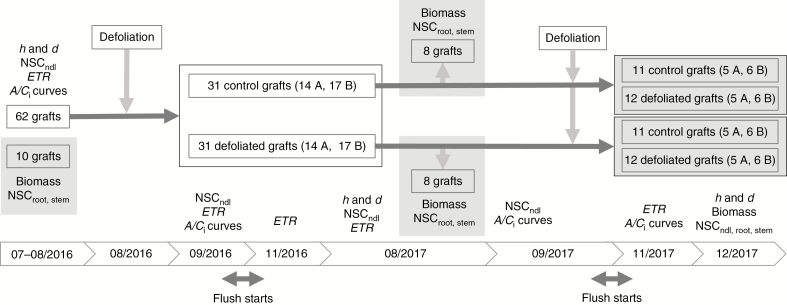
A 2 year artificial defoliation experiment was performed using two genotypes of grafted Pinus radiata to investigate the effects of lower-crown defoliation on carbon (C) assimilation and allocation. Grafts received one of the following treatments in consecutive years: control-control, control-defoliated, defoliated-control and defoliated-defoliated.
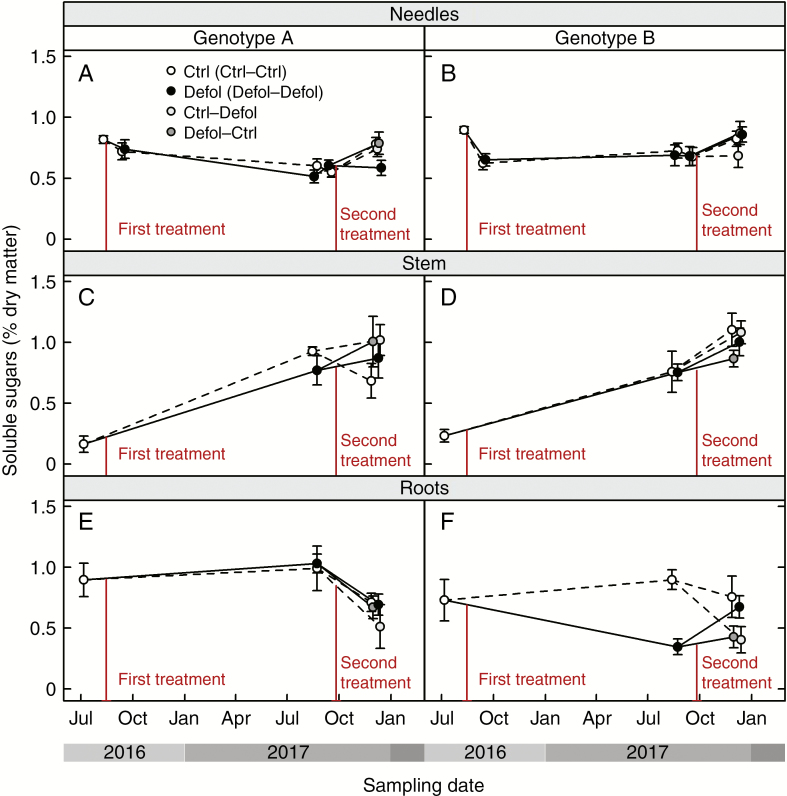
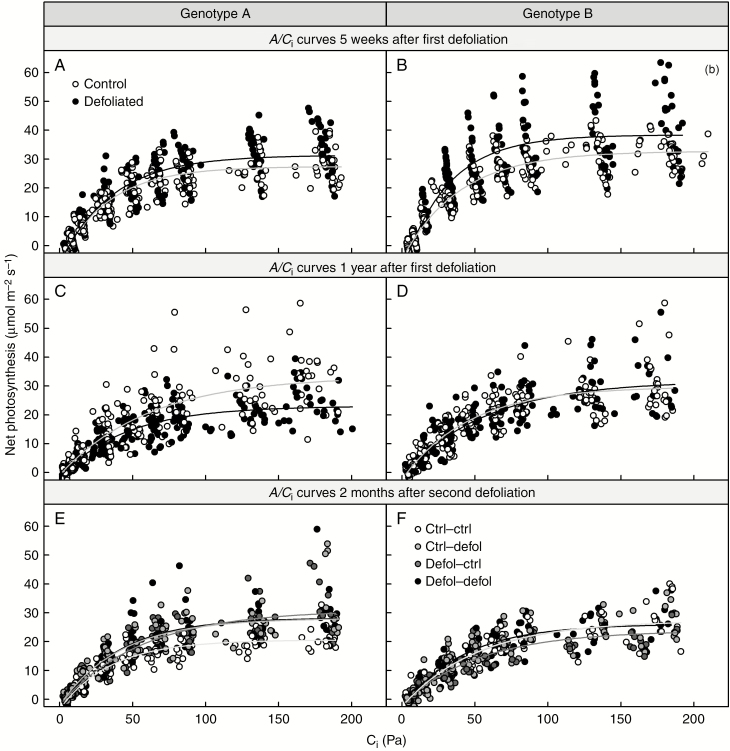
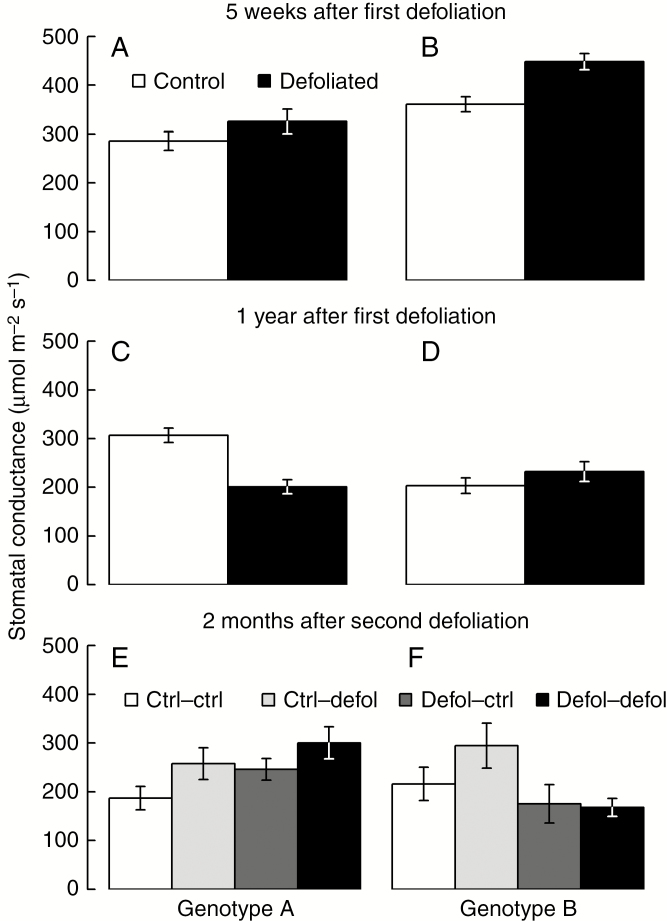
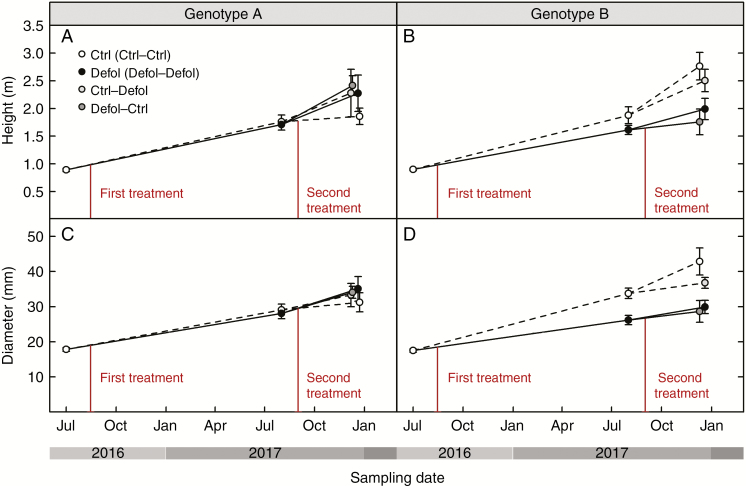
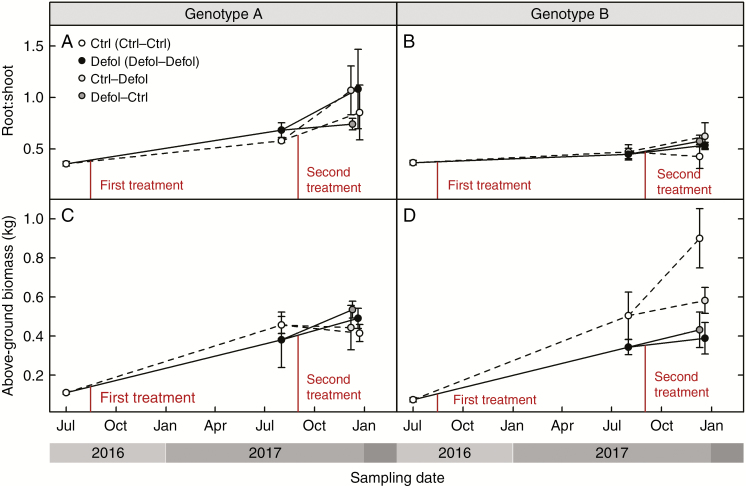
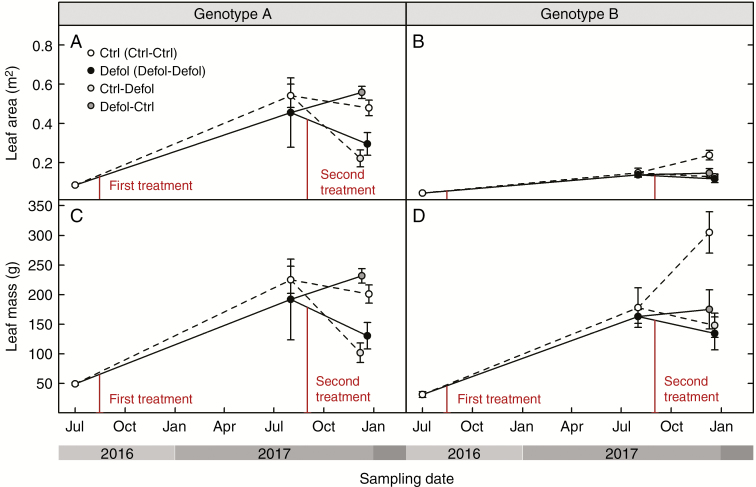
No upregulation of photosynthesis either biochemically or through stomatal control was observed in response to defoliation. The root:shoot ratio and leaf mass were not affected by any treatment, suggesting prioritization of crown regrowth following defoliation. In genotype B, defoliation appeared to impose C shortage and caused reduced above-ground growth and sugar storage in roots, while in genotype A, neither growth nor storage was altered. Root C storage in genotype B decreased only transiently and recovered over the second growing season.
In genotype A, the contribution of the lower crown to the whole-tree C uptake appears to be negligible, presumably conferring resilience to foliar pathogens affecting the lower crown. Our results suggest that there is no C limitation after lower-crown defoliation in P. radiata grafts. Further, our findings imply genotype-specific defoliation tolerance in P. radiata.
生物和非生物胁迫因素可能导致树木内出现不同的落叶模式。针叶树的叶病原体通常更喜欢较老的针叶,并且感染会从树冠底部向顶部逐渐扩散。树木下部树冠的功能作用是解决由叶病原体引起的落叶对树木影响的关键问题。
采用 2 年生的人工接种实验,对两个接穗品种的辐射松进行了研究,以研究下部树冠落叶对碳(C)同化和分配的影响。接穗在连续两年内接受以下处理之一:对照-对照、对照-落叶、落叶-对照和落叶-落叶。
没有观察到光合作用在生物化学或通过气孔控制方面对落叶的上调。根冠比和叶片质量不受任何处理的影响,表明落叶后优先进行树冠再生。在 B 基因型中,落叶似乎造成了 C 短缺,并导致地上部分生长和根系中的糖储存减少,而在 A 基因型中,生长和储存均未改变。B 基因型的根系 C 储存仅短暂下降,并在第二个生长季节内恢复。
在 A 基因型中,下部树冠对全树 C 吸收的贡献似乎可以忽略不计,可能赋予了对影响下部树冠的叶病原体的抗性。我们的结果表明,辐射松接穗下部树冠落叶后不存在 C 限制。此外,我们的研究结果表明,辐射松存在基因型特异性的落叶耐受性。