Texas Therapeutics Institute, Brown Foundation Institute of Molecular Medicine, University of Texas Health Science Center at Houston, Houston, Texas, USA.
Merck Research Laboratories, Merck & Co., Inc., Kenilworth, New Jersey, USA.
Antimicrob Agents Chemother. 2017 Dec 21;62(1). doi: 10.1128/AAC.01719-17. Print 2018 Jan.
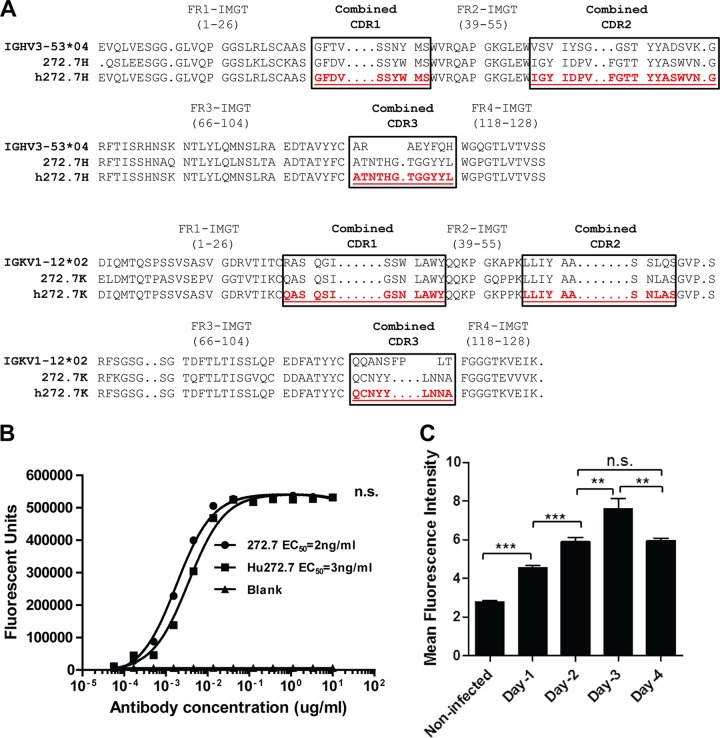
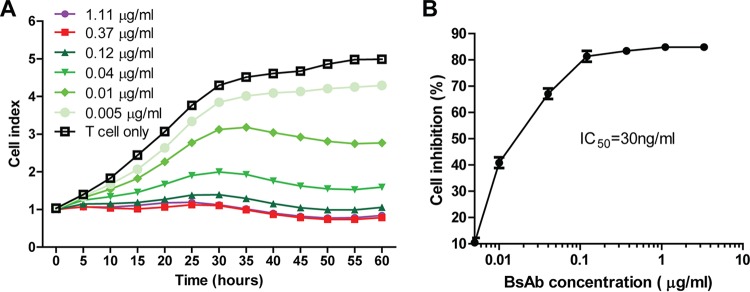
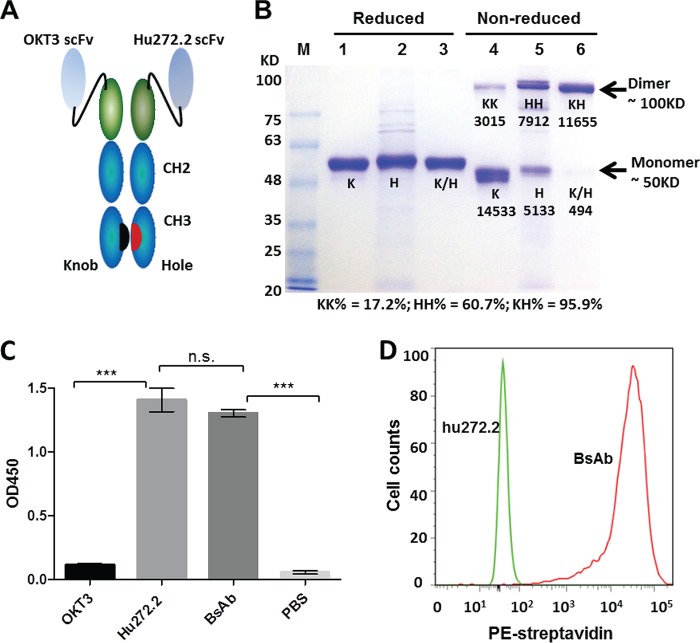
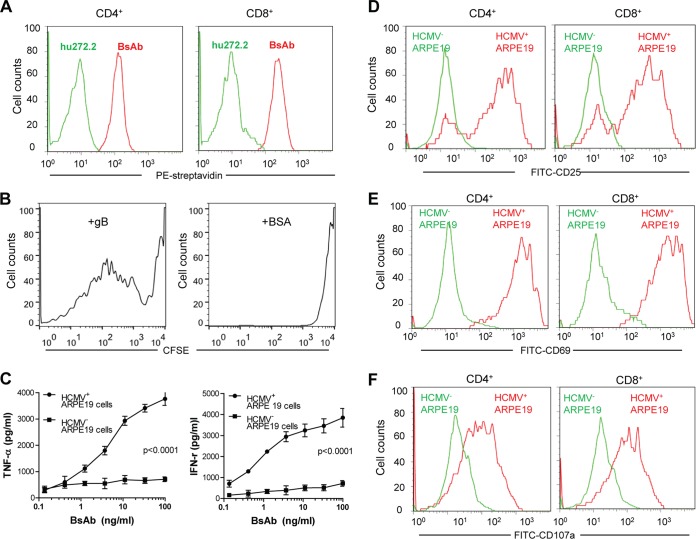
The host immune response to human cytomegalovirus (HCMV) is effective against HCMV reactivation from latency, though not sufficient to clear the virus. T cells are primarily responsible for the control of viral reactivation. When the host immune system is compromised, as in transplant recipients with immunosuppression, HCMV reactivation and progressive infection can cause serious morbidity and mortality. Adoptive T cell therapy is effective for the control of HCMV infection in transplant recipients. However, it is a highly personalized therapeutic regimen and is difficult to implement in routine clinical practice. In this study, we explored a bispecific-antibody strategy to direct non-HCMV-specific T cells to recognize and exert effector functions against HCMV-infected cells. Using a knobs-into-holes strategy, we constructed a bispecific antibody in which one arm is specific for CD3 and can trigger T cell activation, while the other arm, specific for HCMV glycoprotein B (gB), recognizes and marks HCMV-infected cells based on the expression of viral gB on their surfaces. We showed that this bispecific antibody was able to redirect T cells with specificity for HCMV-infected cells In the presence of HCMV infection, the engineered antibody was able to activate T cells with no HCMV specificity for cytokine production, proliferation, and the expression of phenotype markers unique to T cell activation. These results suggested the potential of engineered bispecific antibodies, such as the construct described here, as prophylactic or therapeutic agents against HCMV reactivation and infection.
宿主对人巨细胞病毒 (HCMV) 的免疫反应可有效抑制潜伏状态的 HCMV 再激活,但不足以清除病毒。T 细胞主要负责控制病毒的再激活。当宿主免疫系统受损时,如接受免疫抑制治疗的移植受者,HCMV 再激活和进行性感染可导致严重的发病率和死亡率。过继性 T 细胞疗法可有效控制移植受者的 HCMV 感染。然而,它是一种高度个性化的治疗方案,在常规临床实践中难以实施。在这项研究中,我们探索了一种双特异性抗体策略,以指导非 HCMV 特异性 T 细胞识别和发挥针对 HCMV 感染细胞的效应功能。我们使用旋钮入孔策略构建了一种双特异性抗体,其中一个臂特异性识别 CD3 并能触发 T 细胞激活,而另一个臂特异性识别 HCMV 糖蛋白 B (gB),基于其表面表达的病毒 gB 识别和标记 HCMV 感染细胞。我们表明,这种双特异性抗体能够重新定向针对 HCMV 感染细胞的 T 细胞。在 HCMV 感染存在的情况下,工程化抗体能够激活没有 HCMV 特异性的 T 细胞,使其产生细胞因子、增殖,并表达 T 细胞激活所特有的表型标志物。这些结果表明,工程化双特异性抗体(如本文所述的构建体)有潜力作为预防或治疗 HCMV 再激活和感染的药物。