Agarwal Rashmi A
Department of Chemistry, Indian Institute of Technology, Kanpur, 208016, India.
Sci Rep. 2017 Oct 16;7(1):13212. doi: 10.1038/s41598-017-12980-6.
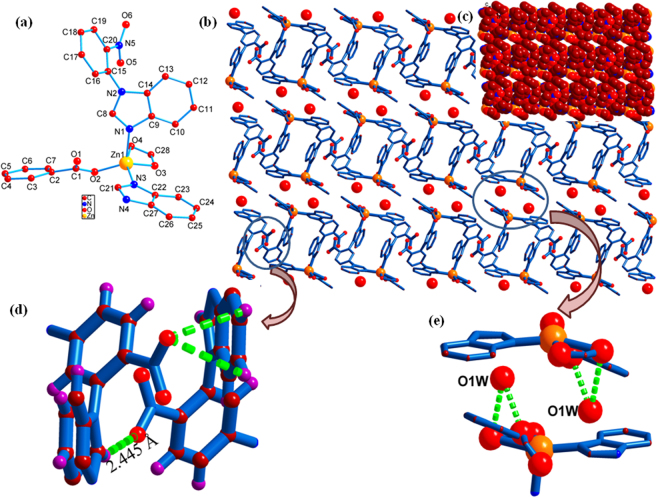
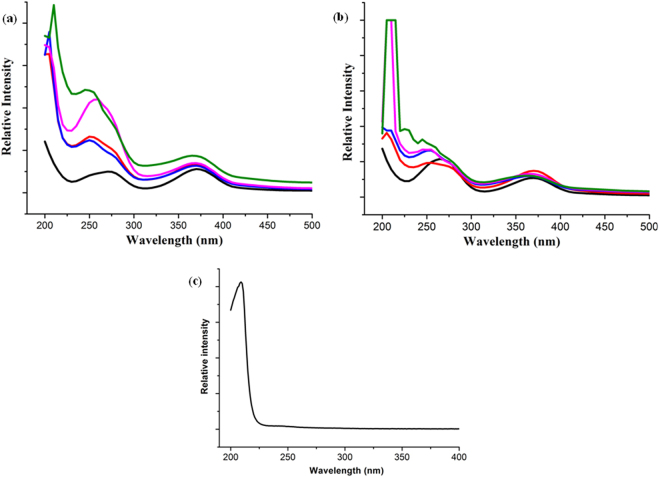
A variety of nanoparticles (NPs) including Ag, Au, Pd, Cr and mixed Cu/Fe have been synthesized in a non-activated (without solvent removal) one dimensional coordination polymer (CP) of Zn(II) via two different mechanisms, acid formation and redox activity of the framework. Main driving force to grow these NPs within the cavities of CP is the presence of free oxygens of one of the monodentate carboxylate groups of BDC ligand. These free oxygens act as anchoring sites for the metal ions of the metal precursors. Chemical and physical characteristics of the NPs within the framework have been evaluated by the high resolution transmission electron microscopic (HRTEM) images. Excluding Ag(0) and Pd(0) other NPs are present as combinations of their elemental as well as oxide forms (Au/AuO, Cr/CrO/CrO and Cu/CuO, Fe/FeO). Synthesized Ag NPs within the framework show remarkable antibacterial efficacy at extremely low concentrations. Ag, Au and Cu/Fe NPs show ferromagnetic properties within the framework at room temperature. This polymer has potential to sequester highly toxic Cr(VI) to non toxic Cr(0), Cr(III) and Cr(IV) species.
通过两种不同机制,即框架的酸形成和氧化还原活性,在锌(II)的非活化(无溶剂去除)一维配位聚合物(CP)中合成了包括银、金、钯、铬以及混合的铜/铁在内的多种纳米颗粒(NP)。在CP腔内生长这些NP的主要驱动力是BDC配体单齿羧酸盐基团之一的游离氧的存在。这些游离氧充当金属前驱体金属离子的锚定位点。通过高分辨率透射电子显微镜(HRTEM)图像评估了框架内NP的化学和物理特性。除了Ag(0)和Pd(0)之外,其他NP以其元素形式以及氧化物形式(Au/AuO、Cr/CrO/CrO以及Cu/CuO、Fe/FeO)的组合存在。框架内合成的Ag NP在极低浓度下显示出显著的抗菌功效。Ag、Au和Cu/Fe NP在室温下在框架内表现出铁磁性质。这种聚合物有潜力将剧毒的Cr(VI)螯合为无毒的Cr(0)、Cr(III)和Cr(IV)物种。