Almansa Raquel, Martínez-Orellana Pamela, Rico Lucía, Iglesias Verónica, Ortega Alicia, Vidaña Beatriz, Martínez Jorge, Expósito Ana, Montoya María, Bermejo-Martin Jesús F
Laboratory of Biomedical Research in Sepsis (BIOSEPSIS), Hospital Clínico Universitario de Valladolid, Instituto de Estudios de Ciencias de la Salud de Castilla y León (IECSCYL), Valladolid, Spain.
Centre de Recerca en Sanitat Animal (CReSA), Universitat Autónoma de Barcelona, IRTA, Barcelona, Spain.
PeerJ. 2017 Oct 11;5:e3915. doi: 10.7717/peerj.3915. eCollection 2017.
The interaction between influenza virus and the host response to infection clearly plays an important role in determining the outcome of infection. While much is known on the participation of inflammation on the pathogenesis of severe A (H1N1) pandemic 09-influenza virus, its role in the course of non-fatal pneumonia has not been fully addressed.
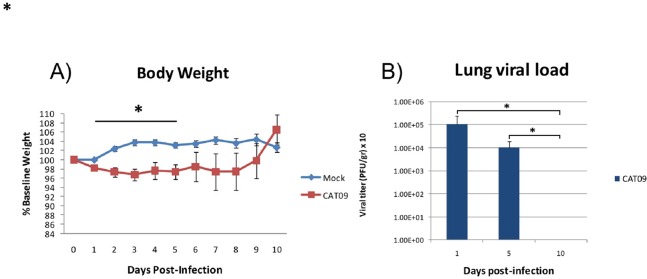
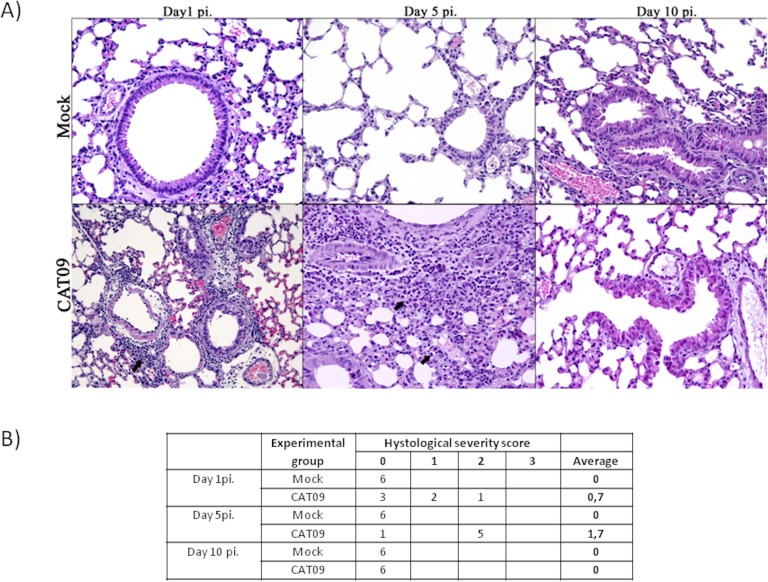
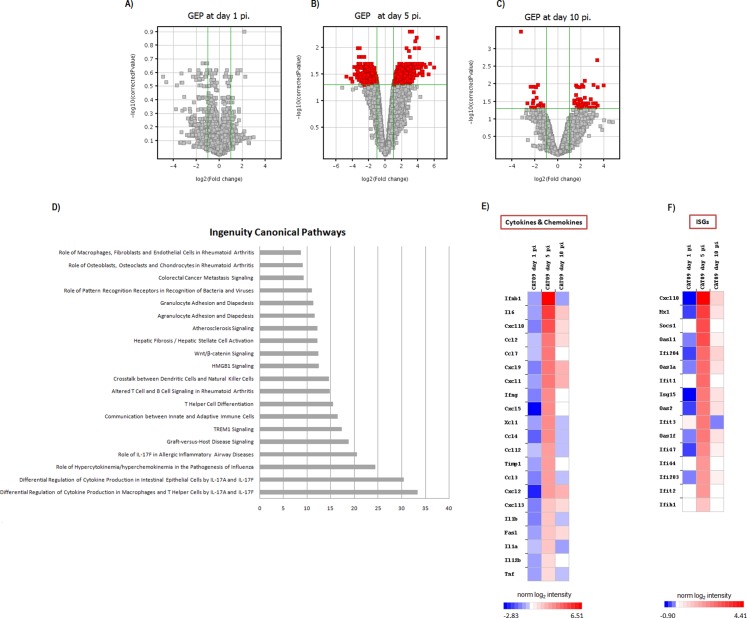
A systems biology approach was used to define gene expression profiles, histology and viral dynamics in the lungs of healthy immune-competent mice with pneumonia caused by a human influenza A (H1N1) pdm09 virus, which successfully resolved the infection.
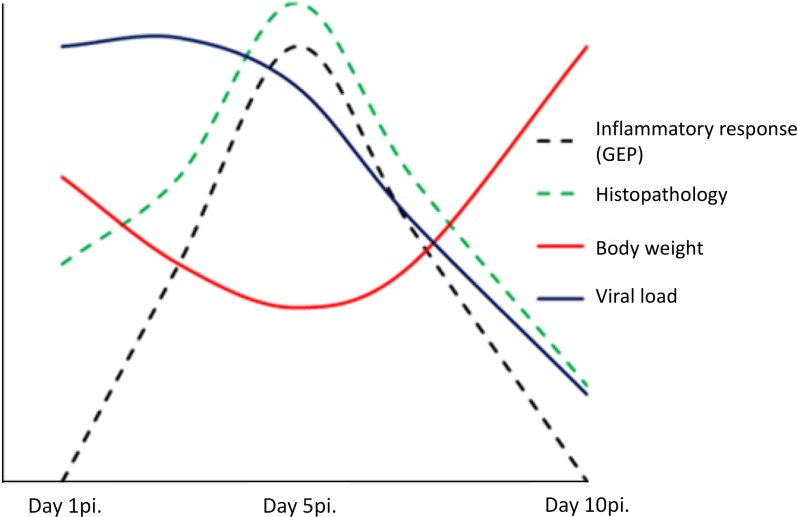
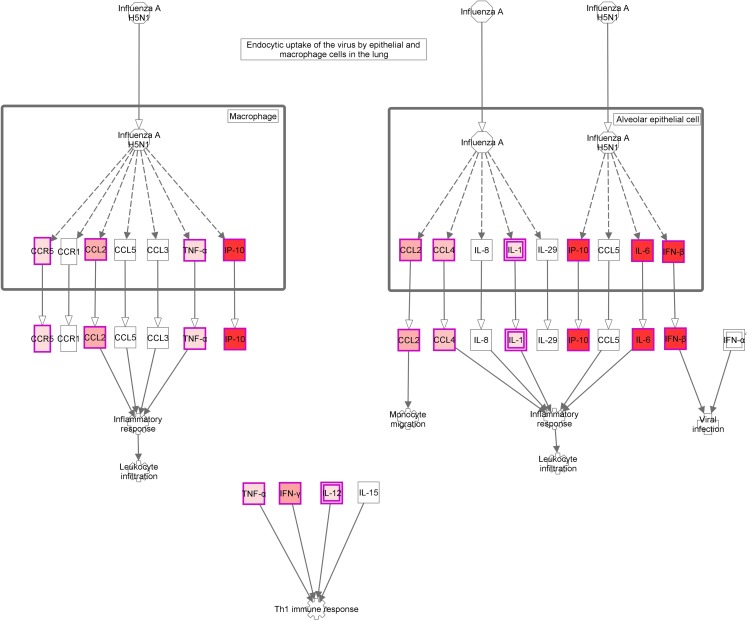
Viral infection activated a marked pro-inflammatory response at the lung level paralleling the emergence of histological changes. Cellular immune response and cytokine signaling were the two signaling pathway categories more representative of our analysis. This transcriptome response was associated to viral clearance, and its resolution was accompanied by resolution of histopathology.
These findings suggest a dual role of pulmonary inflammation in viral clearance and development of pneumonia during non-fatal infection caused by the 2009 pandemic influenza virus. Understanding the dynamics of the host's transcriptomic and virological changes over the course of the infection caused by A (H1N1) pdm09 virus may help identifying the immune response profiles associated with an effective response against influenza virus.
流感病毒与宿主感染反应之间的相互作用在决定感染结果方面显然起着重要作用。虽然关于炎症在2009年甲型H1N1流感大流行病毒发病机制中的参与情况已有很多了解,但其在非致命性肺炎病程中的作用尚未得到充分探讨。
采用系统生物学方法来定义由人类甲型H1N1 pdm09病毒引起肺炎的健康免疫健全小鼠肺部的基因表达谱、组织学和病毒动态,该病毒成功解决了感染问题。
病毒感染在肺部引发了明显的促炎反应,同时出现了组织学变化。细胞免疫反应和细胞因子信号传导是我们分析中最具代表性的两个信号通路类别。这种转录组反应与病毒清除相关,其消退伴随着组织病理学的消退。
这些发现表明肺部炎症在2009年大流行性流感病毒引起的非致命性感染期间的病毒清除和肺炎发展中具有双重作用。了解甲型H1N1 pdm09病毒感染过程中宿主转录组和病毒学变化的动态,可能有助于识别与针对流感病毒的有效反应相关的免疫反应谱。