Peking University Research Center on Aging, Beijing, China.
Department of Biochemistry and Molecular Biology Peking University Health Science Center, Beijing, China.
PLoS One. 2017 Oct 17;12(10):e0186592. doi: 10.1371/journal.pone.0186592. eCollection 2017.
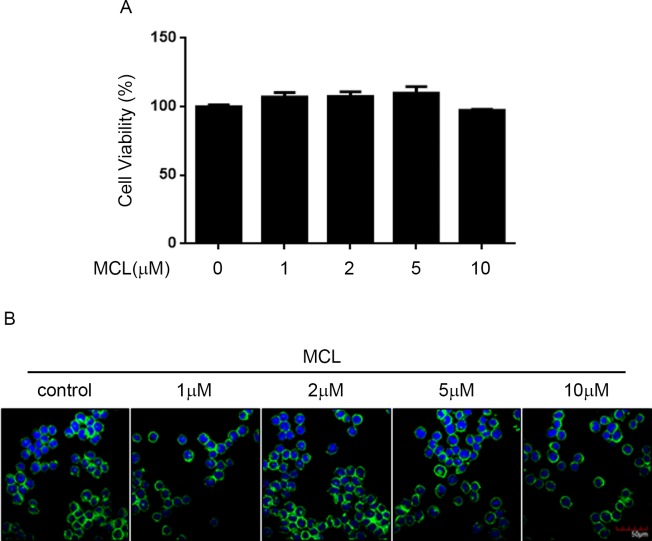
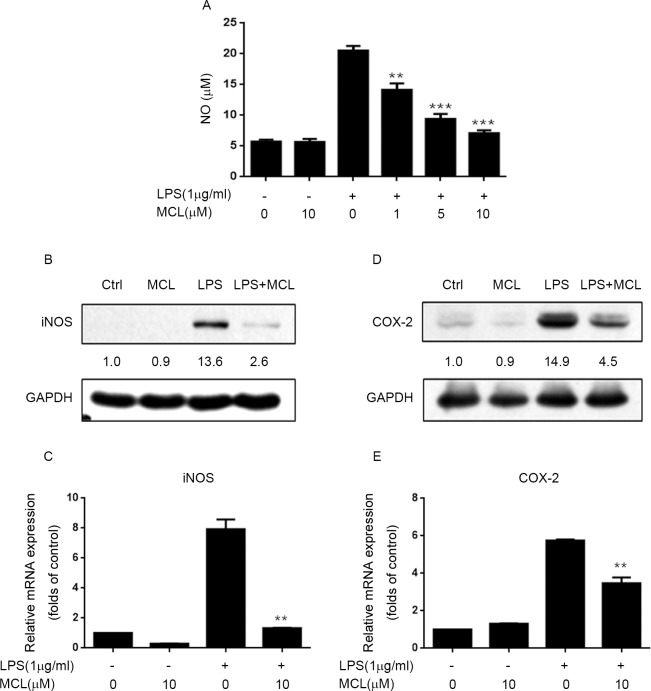
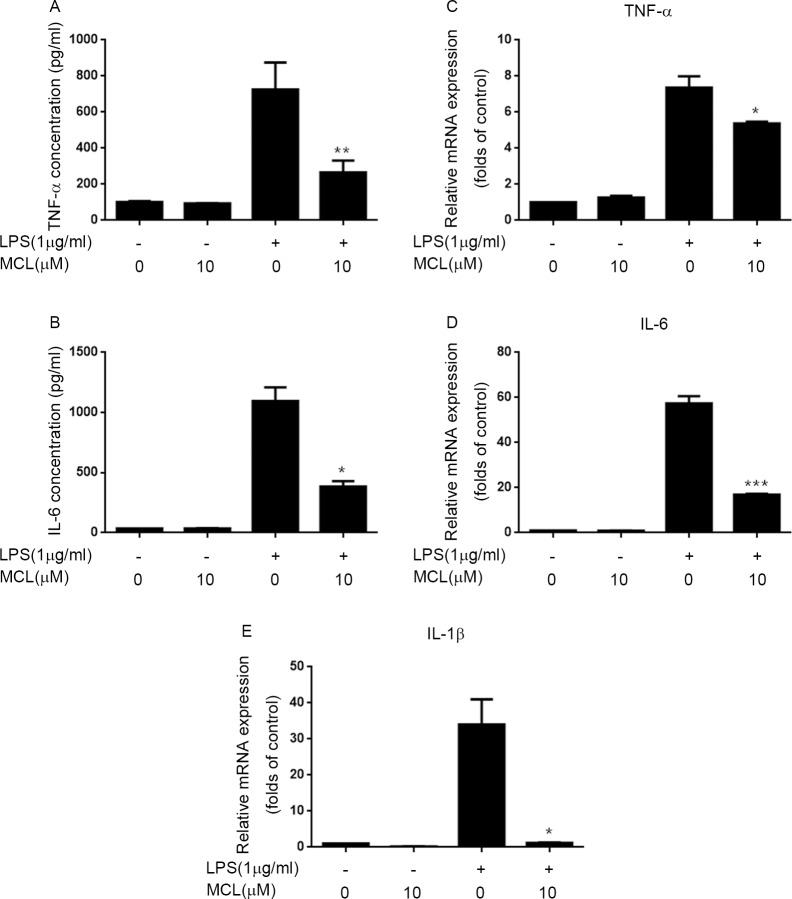
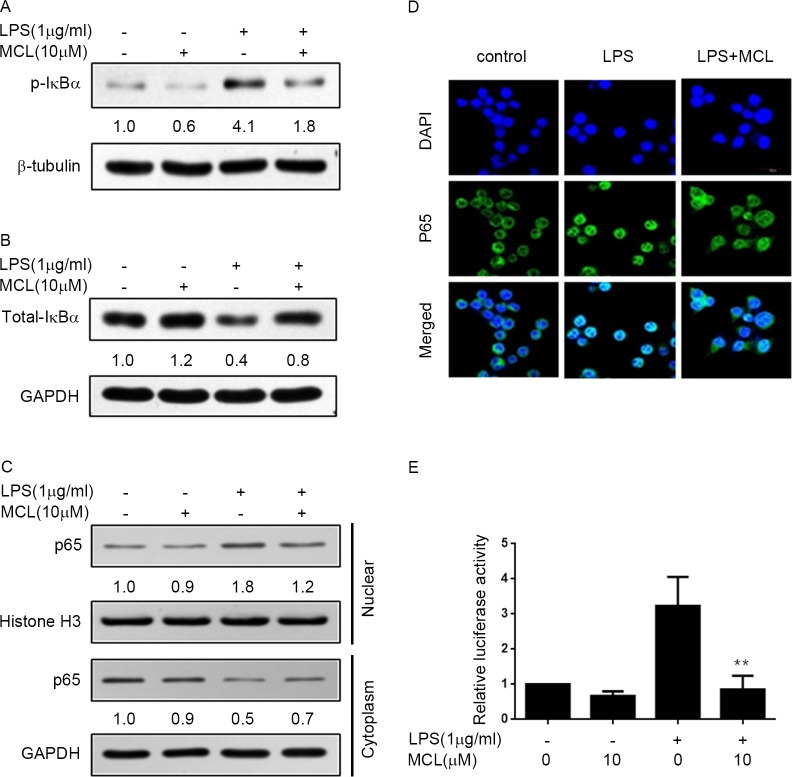
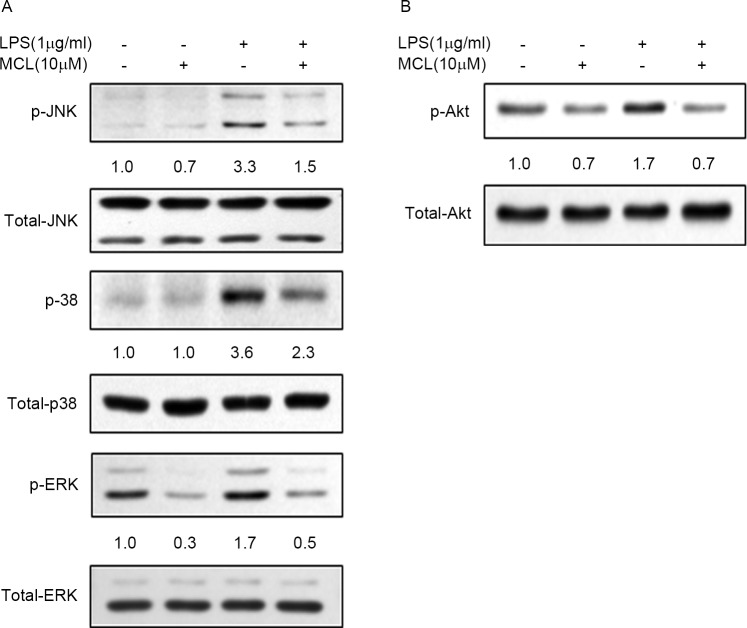
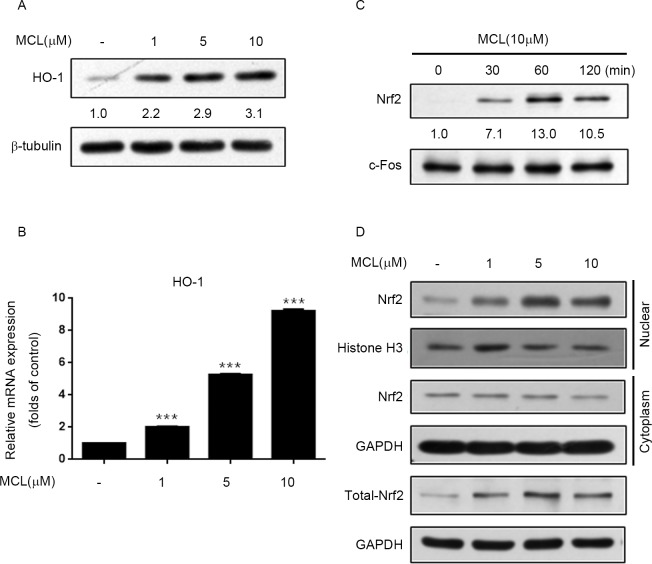
Microglia-involved neuroinflammation is thought to promote brain damage in various neurodegenerative disorders. Thus, inhibition of microglial over-activation may have a therapeutic benefit for the treatment of neurodegenerative disorders. Micheliolide (MCL) is a sesquiterpene lactone which inhibits various inflammatory response. However, whether MCL can inhibit neuroinflammation caused by LPS-activated BV2 microglia has not yet been explored. In this study, we demonstrated that treatment of BV2 cells with MCL significantly repressed LPS-stimulated nitric oxide synthase (iNOS) and cyclooxygenase-2 (COX-2) expression, as well as tumor necrosis factor-alpha (TNF-α), interleukin-6 (IL-6) and nitric oxide (NO) induction. MCL also attenuated mRNA levels of multiple pro-inflammatory cytokines and mediators such as iNOS, COX-2, TNF-α, IL-6 and IL-1β. Mechanistic studies revealed that MCL suppressed LPS-stimulated the activation of IκBα/NF-κB pathway and Akt pathway. Moreover, MCL inhibited LPS-induced the activition of c-Jun N-terminal kinase (JNK), p38 MAPK kinase, and extracellular signal-regulated kinases 1/2 (ERK1/2). Meanwhile, MCL markedly promoted antioxidant protein heme oxygenase-1 (HO-1) expression by enhancing NF-E2-related factor 2 (Nrf2) activity. Together, our results imply that MCL may serve as a neuroprotective agent in neuroinflammation-related neurodegenerative disorders.
小胶质细胞参与的神经炎症被认为会促进各种神经退行性疾病的脑损伤。因此,抑制小胶质细胞的过度激活可能对治疗神经退行性疾病具有治疗益处。Micheliole(MCL)是一种倍半萜内酯,可抑制各种炎症反应。然而,MCL 是否可以抑制 LPS 激活的 BV2 小胶质细胞引起的神经炎症尚未得到探索。在这项研究中,我们证明了 MCL 处理 BV2 细胞可显著抑制 LPS 刺激的一氧化氮合酶(iNOS)和环氧化酶-2(COX-2)表达,以及肿瘤坏死因子-α(TNF-α)、白细胞介素-6(IL-6)和一氧化氮(NO)诱导。MCL 还减弱了多个促炎细胞因子和介质的 mRNA 水平,如 iNOS、COX-2、TNF-α、IL-6 和 IL-1β。机制研究表明,MCL 抑制了 LPS 刺激的 IκBα/NF-κB 通路和 Akt 通路的激活。此外,MCL 抑制了 LPS 诱导的 c-Jun N 端激酶(JNK)、p38 MAPK 激酶和细胞外信号调节激酶 1/2(ERK1/2)的激活。同时,MCL 通过增强 NF-E2 相关因子 2(Nrf2)活性,显著促进抗氧化蛋白血红素加氧酶-1(HO-1)的表达。总之,我们的结果表明,MCL 可能作为神经炎症相关神经退行性疾病的神经保护剂。