Hazrati Maryam, Hamid Tengku Aizan, Ibrahim Rahimah, Hassan Siti Aishah, Sharif Farkhondeh, Bagheri Zahra
Department of Nursing Geriatric, Nursing and Midwifery School, Shiraz University of Medical Sciences, Shiraz Iran.
Malaysian Research Institute on Ageing, Faculty of Human Ecology, University Putra Malaysia, Malaysia.
Int J Community Based Nurs Midwifery. 2017 Oct;5(4):329-334.
This study examined the impacts of an Emotional Focused Intervention on emotional abuse behaviors and marital satisfaction among the elderly married couples.
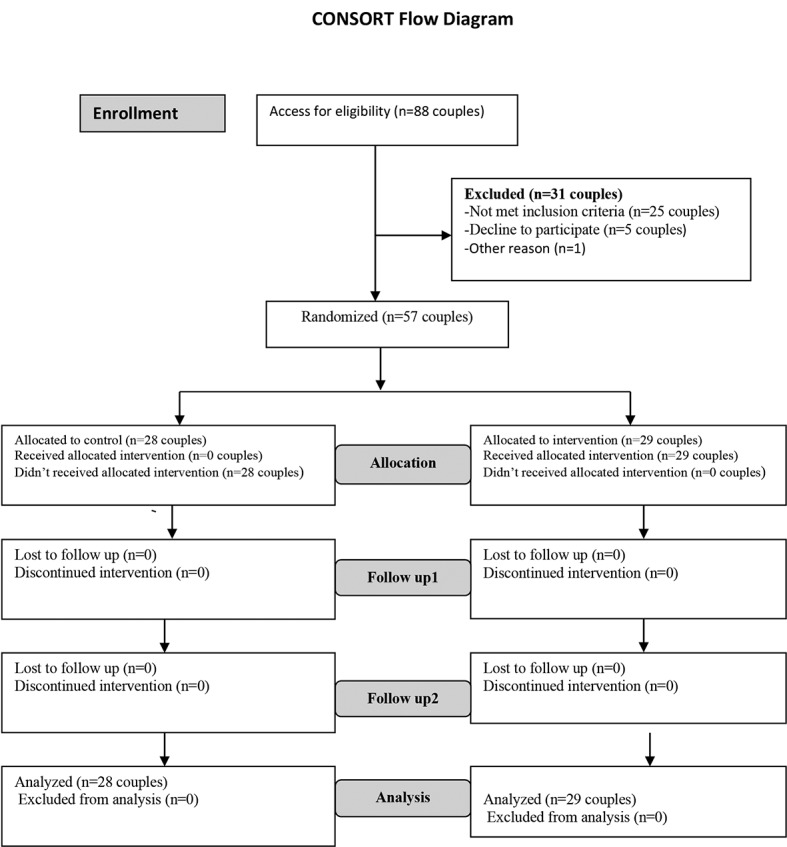
This randomized controlled trial study was carried out in Shiraz-Iran, during September 2013-2014. The elderly couples were invited to join an emotional focused intervention, following the advertisement and announcement on bulletin boards in the elderly day clinic centers and all governmental primary health care centers. Then, 57 couples (114 participants) who were eligible for study were assigned in two groups by block randomization (29 in the experimental and 28 in the control group(.The couples in the experimental group received intervention twice a week for four weeks. Each session lasted 90 minutes. The control group didn't receive any intervention and the subjects were put in the waiting list. The outcome measures were evaluated by Multidimensional Measure of Emotional Abuse Questionnaire (MMEAQ) and Marital Satisfaction Questionnaire for Older People (MSQFOP). Repeated measurement ANOVA was used to detect any significant changes between groups in their mean scores of emotional abuse behaviors and marital satisfaction from pre- to post-test, and 3 months after the intervention. Analysis of data was performed using SPSS, version 19, and P≤0.05 was measured as significant.
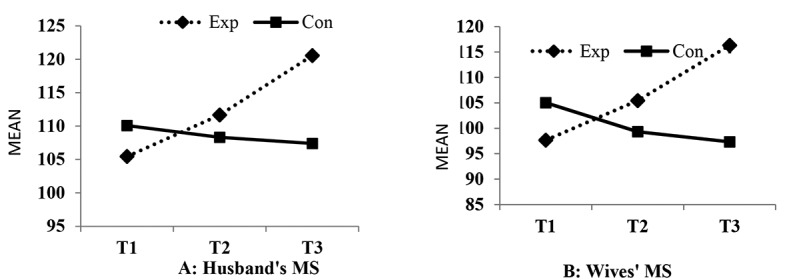
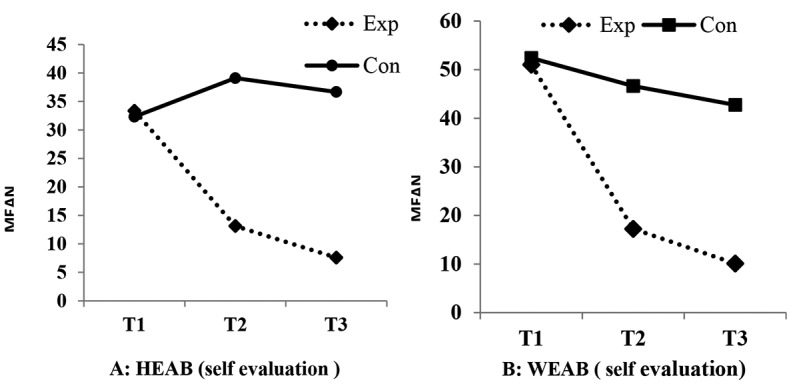
The mean duration of marriage was 39.56±9.64 years. In the experimental group, the abusive behaviors decreased significantly (P<0.001) at times 2 and 3 compared with time 1, and marital satisfaction improved significantly only at time 3 (P<0.001). These differences were not significant in the control group.
Emotion-focused couple-based interventions are helpful in reducing the spousal emotional abuse and improving marital satisfaction in among the elderly couples. Trial Registration Number: 2013111715426N1.
本研究探讨了聚焦情绪干预对老年已婚夫妇情绪虐待行为及婚姻满意度的影响。
本随机对照试验于2013年9月至2014年在伊朗设拉子进行。通过在老年日间诊所中心和所有政府基层医疗中心的公告栏上发布广告和通知,邀请老年夫妇参加聚焦情绪干预。然后,将57对符合研究条件的夫妇(114名参与者)通过区组随机化分为两组(实验组29对,对照组28对)。实验组的夫妇每周接受两次干预,共四周。每次干预持续90分钟。对照组未接受任何干预,受试者被列入等候名单。通过多维情绪虐待问卷(MMEAQ)和老年人婚姻满意度问卷(MSQFOP)评估结果指标。采用重复测量方差分析来检测两组在干预前、干预后及干预后3个月情绪虐待行为和婚姻满意度平均得分之间的任何显著变化。使用SPSS 19版进行数据分析,P≤0.05被视为具有统计学意义。
平均婚姻持续时间为39.56±9.64年。在实验组中,与时间1相比,在时间2和时间3时虐待行为显著减少(P<0.001),仅在时间3时婚姻满意度显著提高(P<0.001)。这些差异在对照组中不显著。
基于夫妻的聚焦情绪干预有助于减少老年夫妇间的配偶情绪虐待并提高婚姻满意度。试验注册号:2013111715426N1。