Department of Life Science and Biotechnology, Faculty of Life and Environmental Science, Shimane University, 1060 Nishikawatsu, Matsue, Shimane, 690-8504, Japan.
Core Research for Evolutional Science and Technology (CREST), Japan Science and Technology Agency (JST), Chiyoda-ku, Tokyo, 102-0076, Japan.
Sci Rep. 2017 Oct 18;7(1):13504. doi: 10.1038/s41598-017-14077-6.
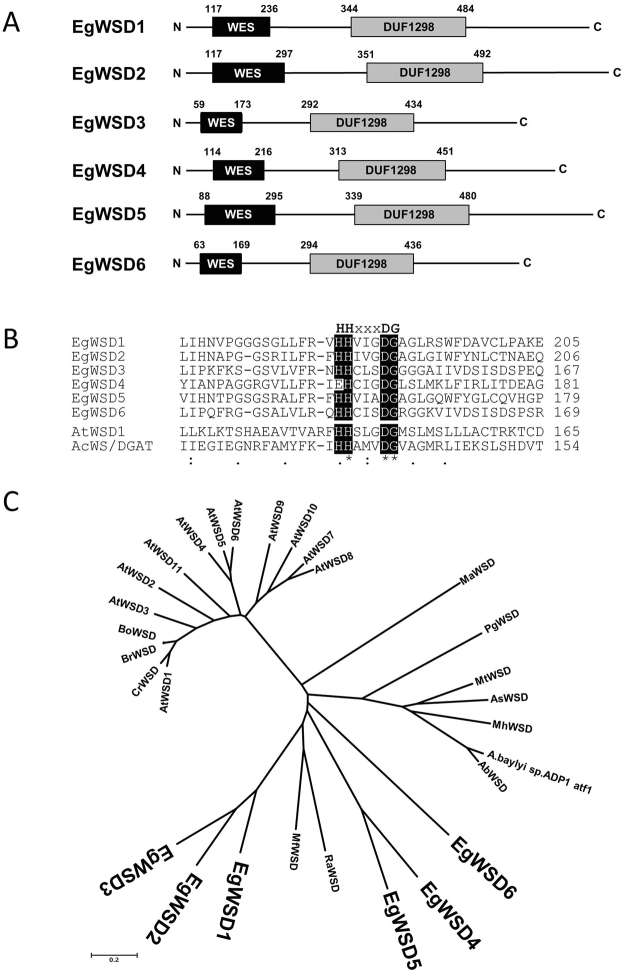
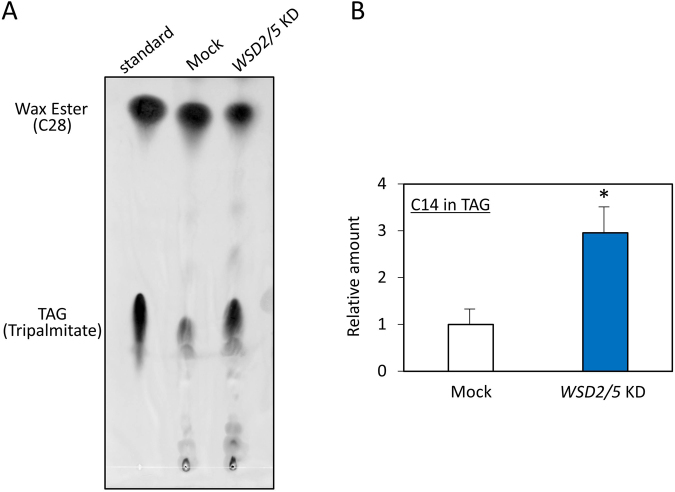
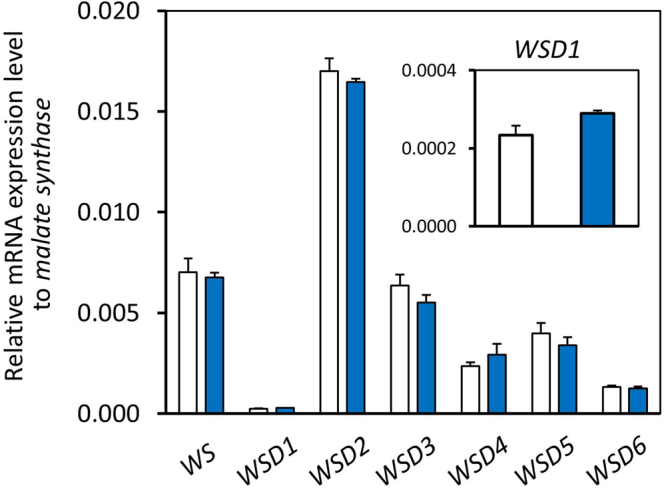
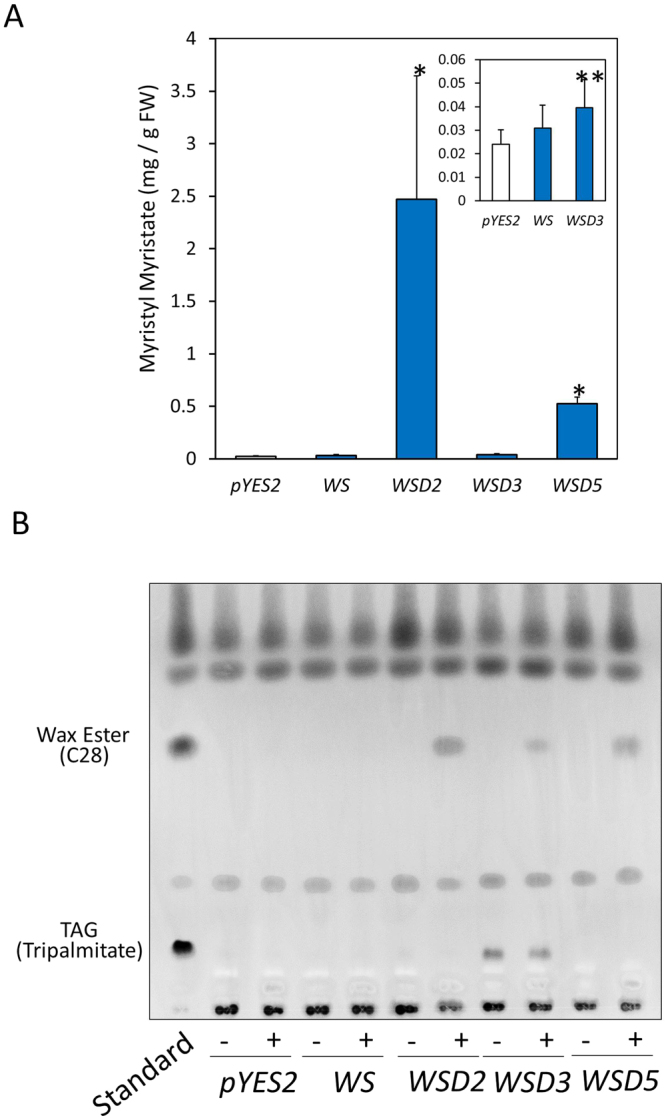
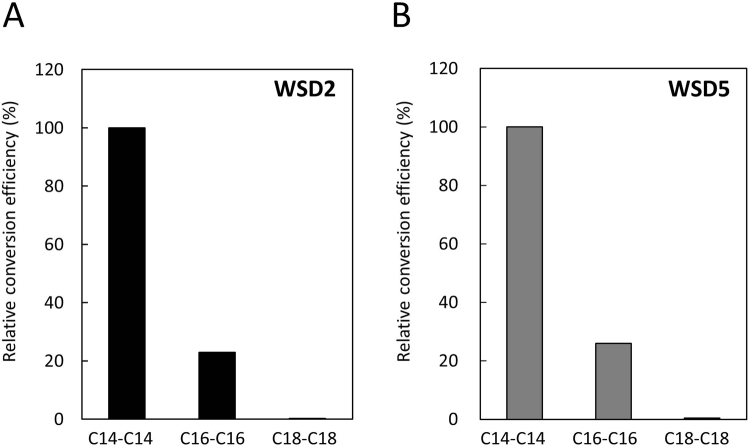
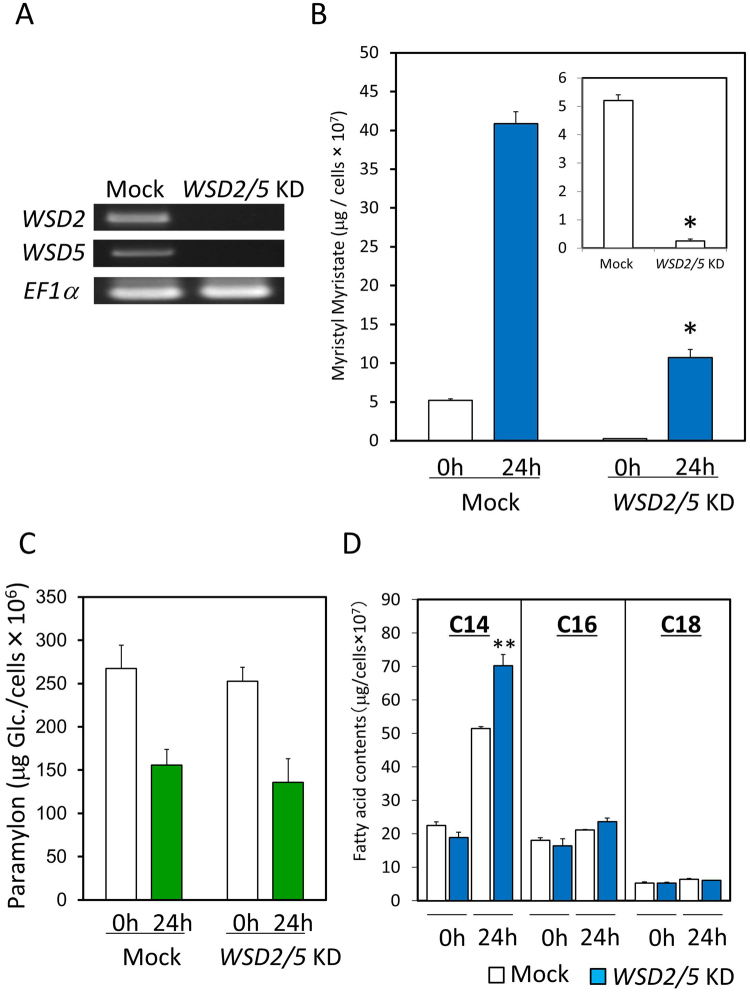
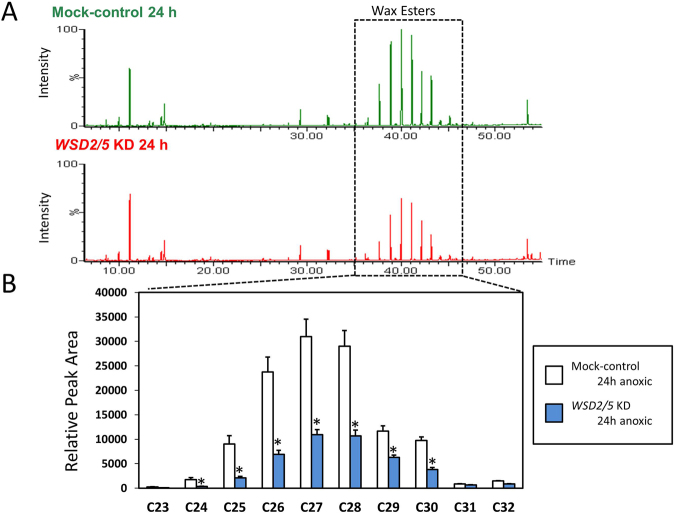
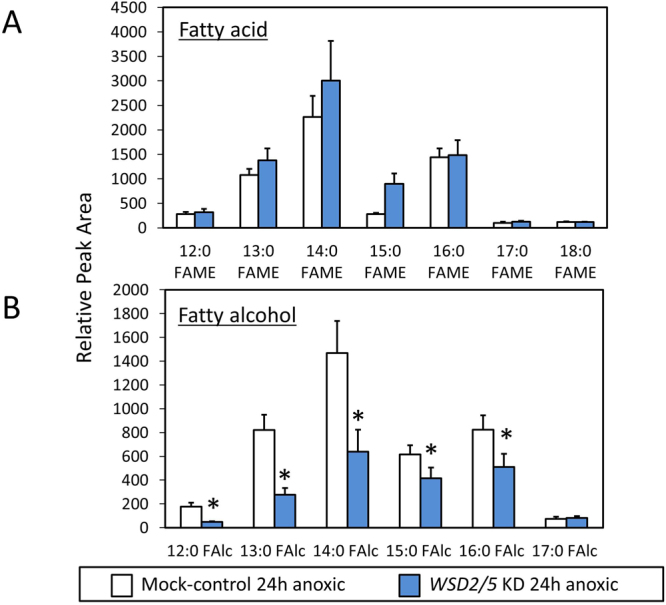
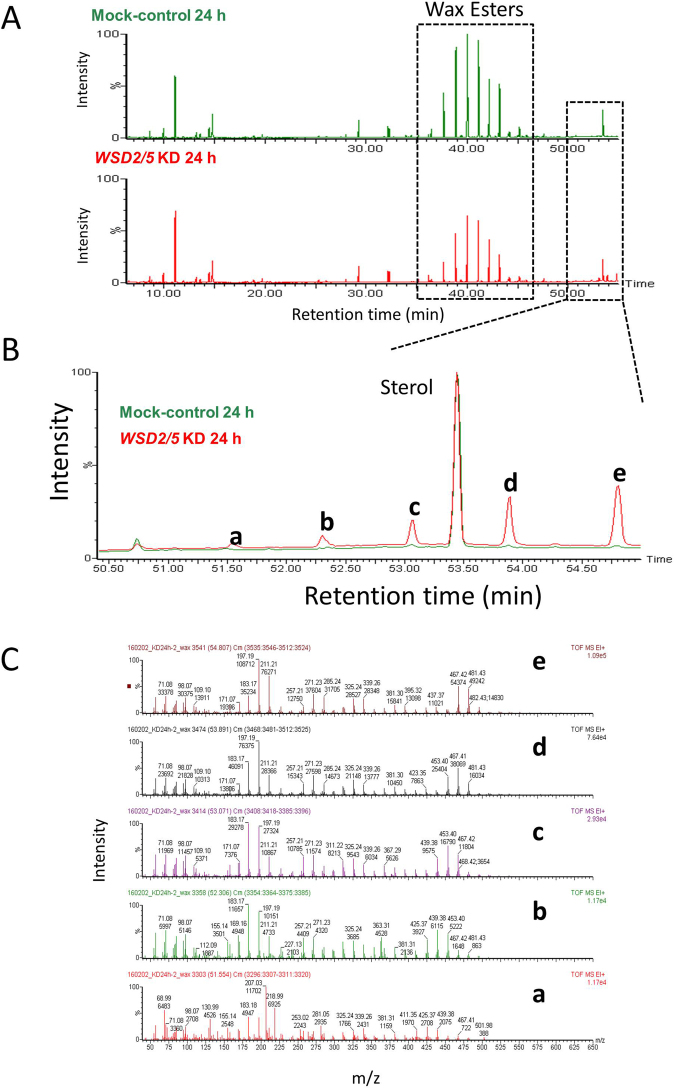
Wax ester fermentation is a unique energy gaining pathway for a unicellular phytoflagellated protozoan, Euglena gracilis, to survive under anaerobiosis. Wax esters produced in E. gracilis are composed of saturated fatty acids and alcohols, which are the major constituents of myristic acid and myristyl alcohol. Thus, wax esters can be promising alternative biofuels. Here, we report the identification and characterization of wax ester synthase/diacylglycerol acyltrasferase (WSD) isoenzymes as the terminal enzymes of wax ester production in E. gracilis. Among six possible Euglena WSD orthologs predicted by BLASTX search, gene expression analysis and in vivo evaluation for enzyme activity with yeast expressing individual recombinant WSDs indicated that two of them (EgWSD2 and EgWSD5) predominantly function as wax ester synthase. Furthermore, experiments with gene silencing demonstrated a pivotal role of both EgWSD2 and EgWSD5 in wax ester synthesis, as evidenced by remarkably reduced wax ester contents in EgWSD2/5-double knockdown E. gracilis cells treated with anaerobic conditions. Interestingly, the decreased ability to produce wax ester did not affect adaptation of E. gracilis to anaerobiosis. Lipid profile analysis suggested allocation of metabolites to other compounds including triacylglycerol instead of wax esters.
蜡酯发酵是一种独特的能量获取途径,可使单细胞植物性鞭毛虫眼虫在无氧条件下生存。眼虫产生的蜡酯由饱和脂肪酸和醇组成,主要成分是肉豆蔻酸和肉豆蔻醇。因此,蜡酯可以作为有前途的生物燃料。在这里,我们报告了蜡酯合酶/二酰基甘油酰基转移酶(WSD)同工酶的鉴定和表征,它们是眼虫中蜡酯生产的末端酶。通过 BLASTX 搜索预测的六个可能的眼虫 WSD 直系同源物中,基因表达分析和体内评估用酵母表达单个重组 WSD 的酶活性表明,其中两个(EgWSD2 和 EgWSD5)主要作为蜡酯合酶发挥作用。此外,基因沉默实验表明,EgWSD2 和 EgWSD5 在蜡酯合成中起着关键作用,这可以从在缺氧条件下处理的 EgWSD2/5 双敲低眼虫细胞中蜡酯含量明显降低得到证明。有趣的是,产生蜡酯的能力降低并没有影响眼虫对缺氧的适应。脂质谱分析表明代谢物分配到其他化合物,包括三酰基甘油而不是蜡酯。