Liao Yun, Su Rui, Zhang Ping, Yuan Bo, Li Ling
Department of Pharmacy, Tongren Hospital, Shanghai Jiao Tong University School of Medicine, Shanghai, 200336, China.
Department of Pharmacy, Shanghai Tenth People's Hospital, Tongji University, Shanghai, 200072, China.
J Orthop Surg Res. 2017 Oct 18;12(1):154. doi: 10.1186/s13018-017-0656-2.
ANFH is a major health problem, to which long lasting and definitive treatments are lacking. The aim of this study is to study RNA alterations attributed to cortisol-induced ANFH.
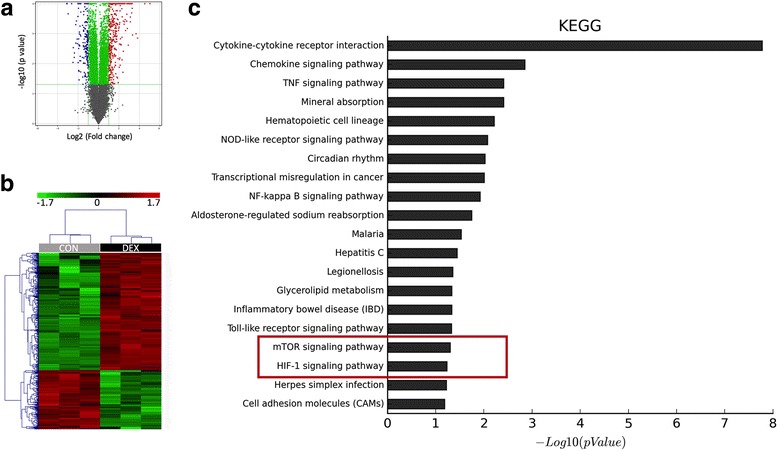
Rat models were stratified into three groups: in vitro group (n = 20) for molecular biological assays, control group (n = 3), and ANFH group induced using lipopolysaccharide and dexamethasone (n = 3). Bone marrow-derived endothelial progenitor cells (BM-EPCs) were extracted from the rats. An RNA expression array was performed on BM-EPCs, and enriched genes were subject to pathway analysis. In vitro studies following findings of array results were also performed using the isolated BM-EPCs.
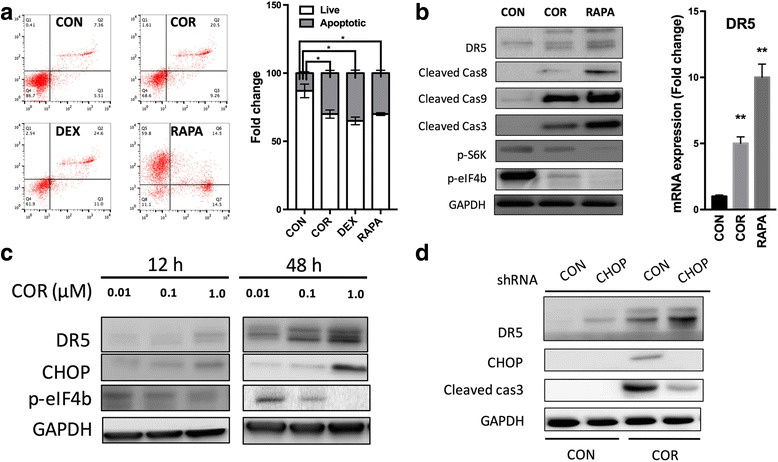
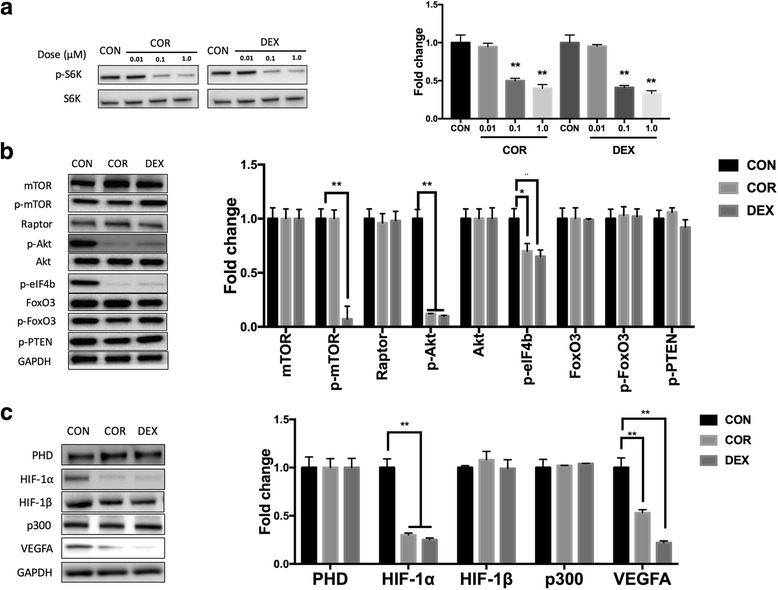
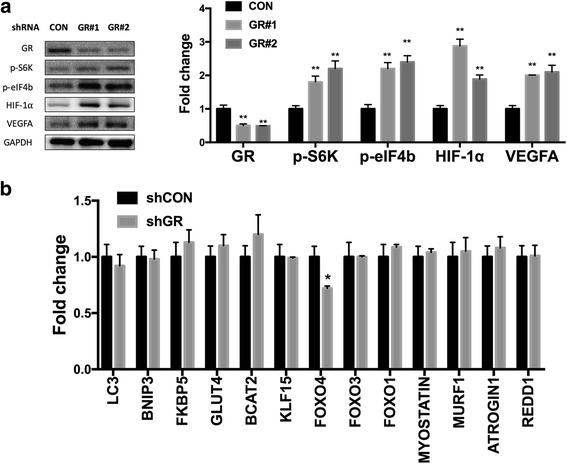
Significant alterations in mammalian target of rapamycin (mTOR) and HIF signaling pathways were identified in BM-EPCs of ANFH. By applying cortisol and dexamethasone to BM-EPCs, significant changes in mTOR and HIF elements were identified. The alteration of HIF pathways appeared to be downstream of mTOR signaling. Glucocorticoid receptor (GR) expression was related to glucocorticoid-dependent mRNA expression of mTOR/HIF genes. mTOR-dependent angiogenesis but not anabolism was the target of GR in ANFH. Inhibition of mTOR signaling also induced apoptosis of BM-EPCs via CHOP-dependent DR5 induction in response to GR stimulation.
Decreased mTOR signaling in response to GR stimulation leading to downregulated HIF pathway as well as increased apoptosis could be the pathophysiology.
股骨头缺血性坏死(ANFH)是一个重大的健康问题,目前缺乏持久且有效的治疗方法。本研究旨在探讨皮质醇诱导的ANFH相关的RNA改变。
将大鼠模型分为三组:用于分子生物学检测的体外组(n = 20)、对照组(n = 3)和使用脂多糖和地塞米松诱导的ANFH组(n = 3)。从大鼠中提取骨髓来源的内皮祖细胞(BM-EPCs)。对BM-EPCs进行RNA表达阵列分析,并对富集的基因进行通路分析。根据阵列结果,还使用分离的BM-EPCs进行了体外研究。
在ANFH的BM-EPCs中发现雷帕霉素哺乳动物靶点(mTOR)和低氧诱导因子(HIF)信号通路有显著改变。将皮质醇和地塞米松应用于BM-EPCs后,发现mTOR和HIF元件有显著变化。HIF通路的改变似乎位于mTOR信号的下游。糖皮质激素受体(GR)表达与mTOR/HIF基因的糖皮质激素依赖性mRNA表达有关。在ANFH中,GR的靶点是mTOR依赖性血管生成而非合成代谢。抑制mTOR信号也会通过CHOP依赖性DR5诱导,在GR刺激下诱导BM-EPCs凋亡。
GR刺激导致mTOR信号降低,进而导致HIF通路下调以及凋亡增加,这可能是其病理生理学机制。