Wang Ying, Zhang You, Herman James G, Linghu Enqiang, Guo Mingzhou
Department of Gastroenterology & Hepatology, Chinese PLA General Hospital, Beijing 100853, China.
Department of Gastroenterology, The Affiliated Fu Xing Hospital of Capital Medical University, Beijing 100038, China.
Oncotarget. 2017 Jul 25;8(41):70035-70048. doi: 10.18632/oncotarget.19550. eCollection 2017 Sep 19.
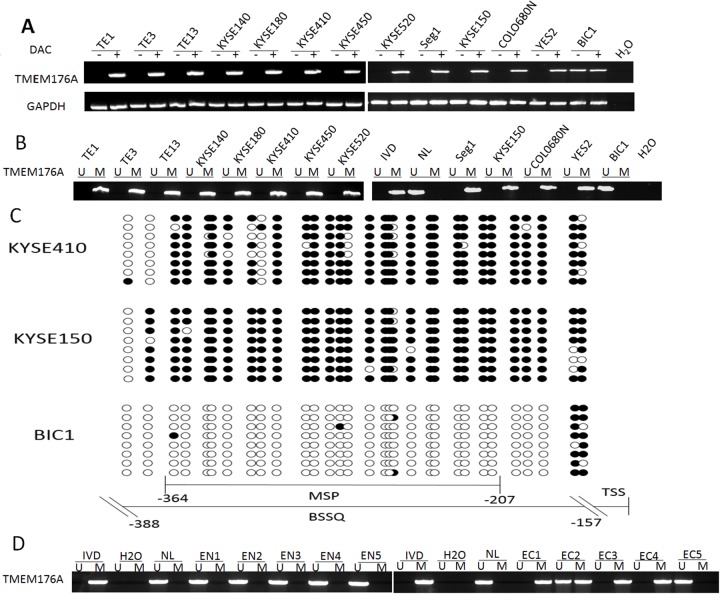
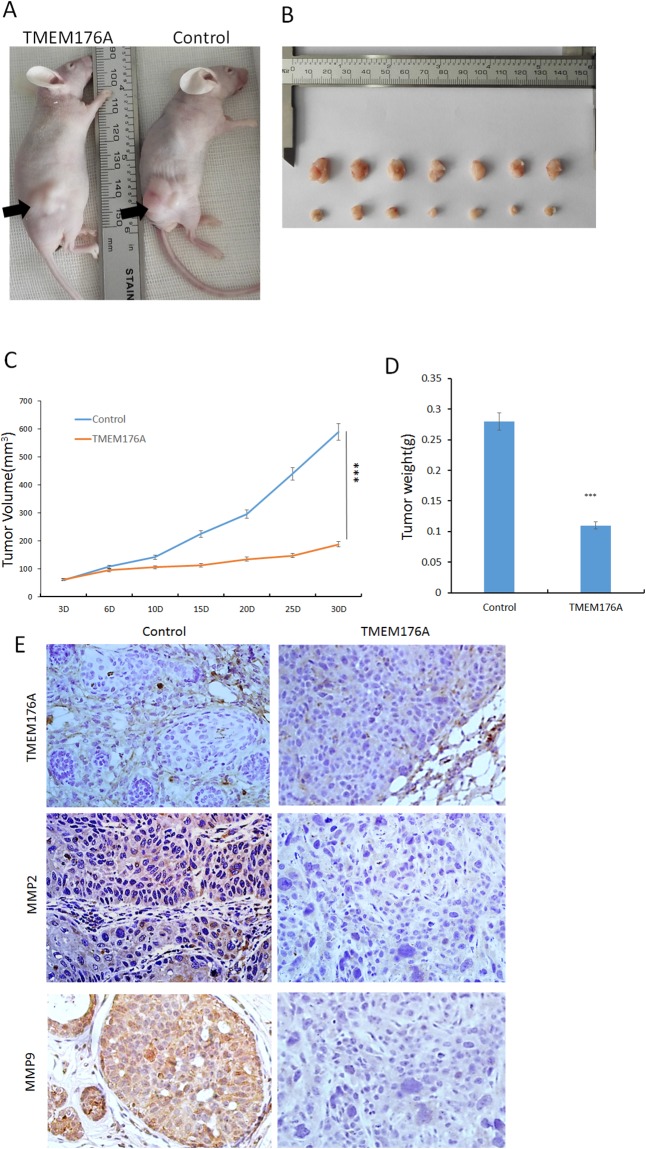
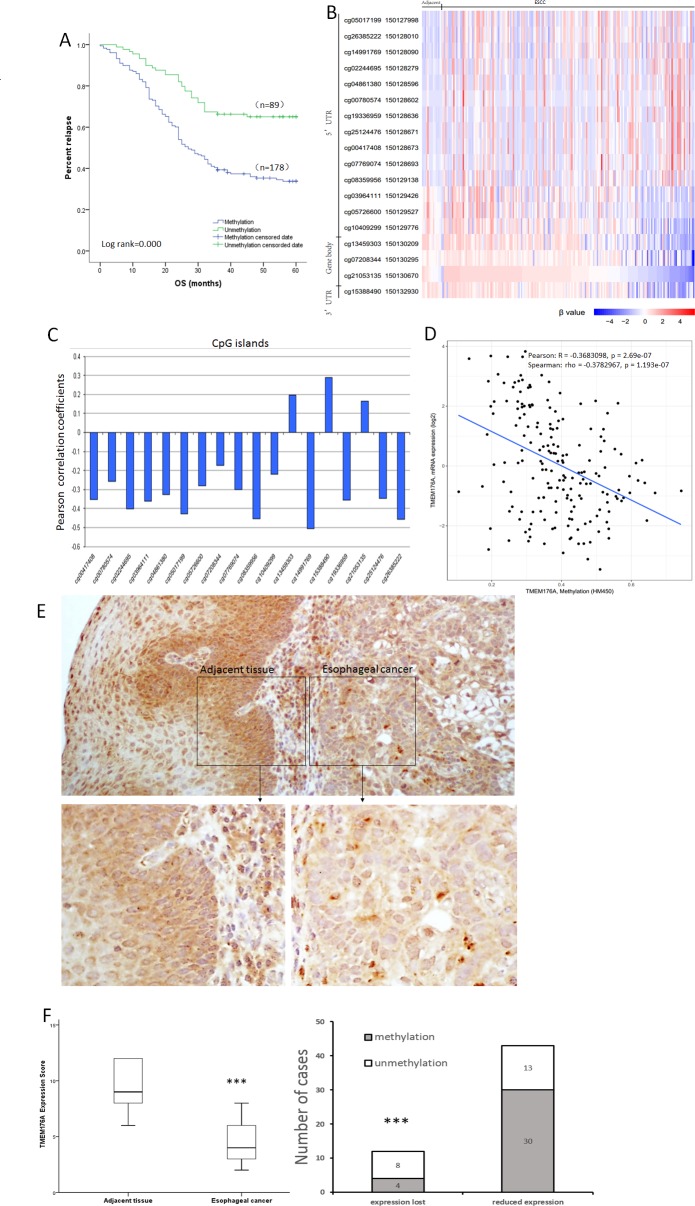
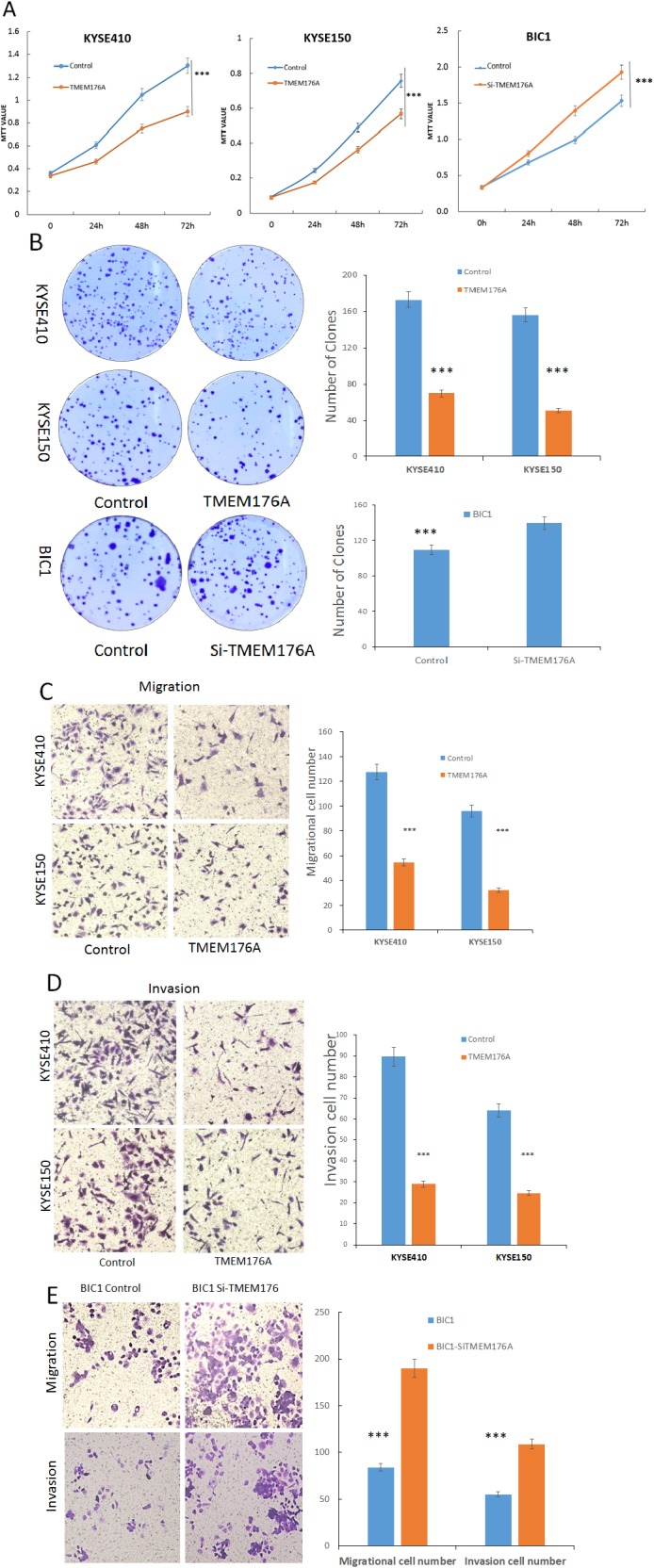
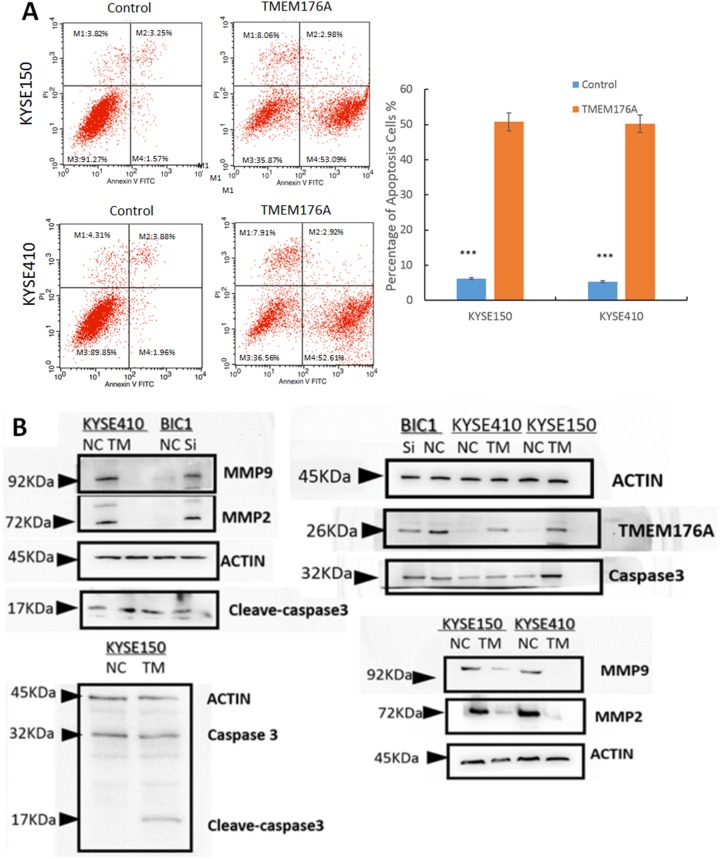
The function of human transmembrane protein 176A (TMEM176A) in cancer remains unclear. To understand the function and mechanism of TMEM176A in human esophageal cancer development, 13 esophageal cancer cell lines and 267 cases of primary esophageal squamous cell cancer (ESCC) samples were analyzed by methylation specific PCR (MSP), flow cytometry, immunohistochemistry and transfection assays. TMEM176A was highly expressed in BIC1 cells and loss of TMEM176A expression was found in TE1, TE3, TE13, KYSE140, KYSE180, KYSE410, KYSE450, KYSE520, Segl, KYSE150, YES2 and COLO680N cells. Complete methylation was detected in TE1, TE3, TE13, KYSE140, KYSE180, KYSE410, KYSE450, KYSE520, Segl, KYSE150, YES2 and COLO680N cells, while unmethylation was detected in BIC1 cells. Restoration of TMEM176A expression was induced by 5-aza-2'-deoxycytidine treatment in methylated cell lines. TMEM176A was methylated in 66.7% (178/267) of primary esophageal cancer samples, and promoter region methylation was significantly associated with tumor differentiation (<0.001) and loss off/reduced expression of TMEM176A (<0.05). Methylation of TMEM176A was significantly associated with poor 5-year overall survival ( < 0.05). Cox proportional hazards model analysis suggest that TMEM176A methylation is an independent prognostic factor for poor 5-years OS. TMEM176A inhibited cell invasion and migration, and induced apoptosis in esophageal cancer cells. TMEM176A suppressed esophageal cancer cell growth both and . In conclusion, TMEM176A is frequently methylated in human ESCC and the expression of TMEM176A is regulated by promoter region methylation. TMEM176A methylation may serve as a diagnostic and prognostic marker in ESCC. TMEM176A is a potential tumor suppressor in human ESCC.
人类跨膜蛋白176A(TMEM176A)在癌症中的作用尚不清楚。为了解TMEM176A在人类食管癌发生发展中的功能及机制,采用甲基化特异性PCR(MSP)、流式细胞术、免疫组化及转染实验对13种食管癌细胞系和267例原发性食管鳞状细胞癌(ESCC)样本进行了分析。TMEM176A在BIC1细胞中高表达,而在TE1、TE3、TE13、KYSE140、KYSE180、KYSE410、KYSE450、KYSE520、Segl、KYSE150、YES2和COLO680N细胞中发现TMEM176A表达缺失。在TE1、TE3、TE13、KYSE140、KYSE180、KYSE410、KYSE450、KYSE520、Segl、KYSE150、YES2和COLO680N细胞中检测到完全甲基化,而在BIC1细胞中检测到未甲基化。经5-氮杂-2'-脱氧胞苷处理后,甲基化细胞系中TMEM176A的表达得以恢复。在66.7%(178/267)的原发性食管癌样本中检测到TMEM176A甲基化,且启动子区域甲基化与肿瘤分化(<0.001)及TMEM176A表达缺失/降低(<0.05)显著相关。TMEM176A甲基化与5年总生存率低显著相关(<0.05)。Cox比例风险模型分析表明,TMEM176A甲基化是5年总生存期差的独立预后因素。TMEM176A抑制食管癌细胞的侵袭和迁移,并诱导其凋亡。TMEM176A在体内和体外均抑制食管癌细胞生长。总之,TMEM176A在人类ESCC中频繁发生甲基化,其表达受启动子区域甲基化调控。TMEM176A甲基化可能作为ESCC的诊断和预后标志物。TMEM176A是人类ESCC中一种潜在的肿瘤抑制因子。