Wang Jianfeng, Liu Yang, Zhang Naiwen, Li Xuejie, Xin Peng, Bi Jianbin, Kong Chuize
Department of Urology, The First Hospital of China Medical University, Shenyang 110001, P.R. China.
Oncotarget. 2017 Aug 10;8(41):70874-70882. doi: 10.18632/oncotarget.20147. eCollection 2017 Sep 19.
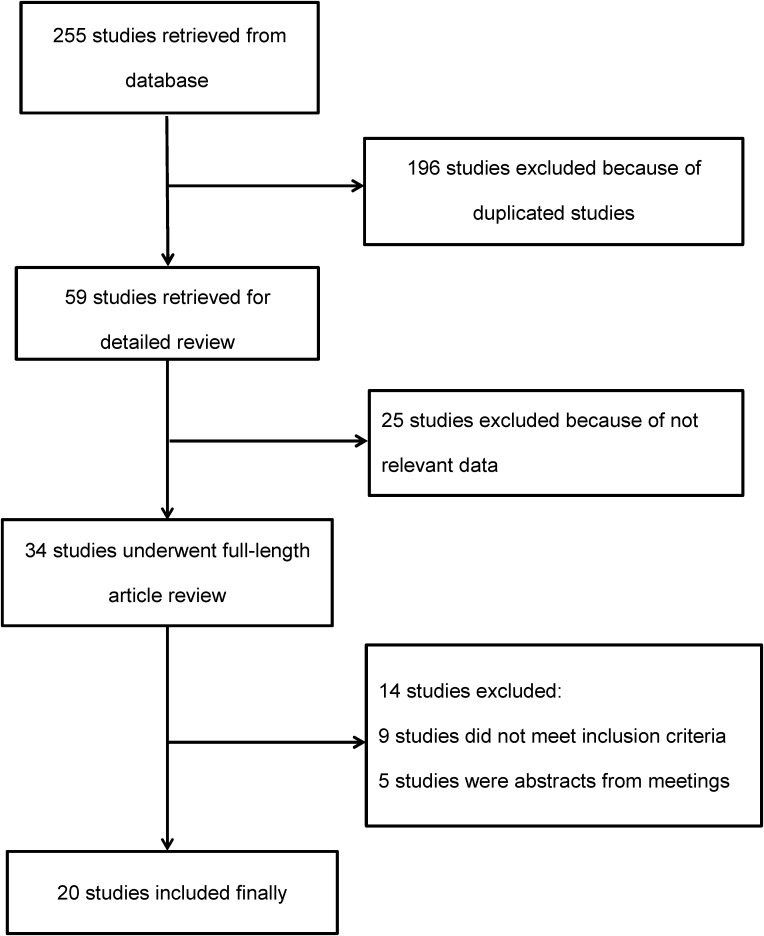
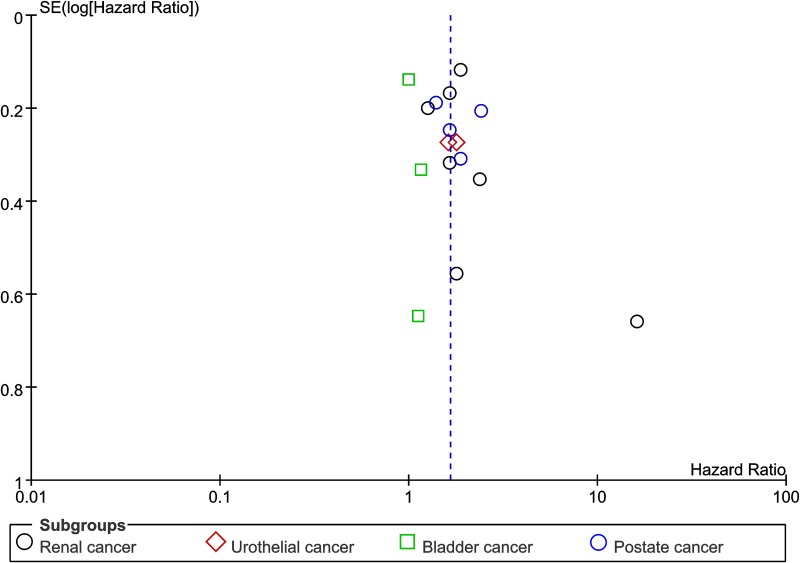
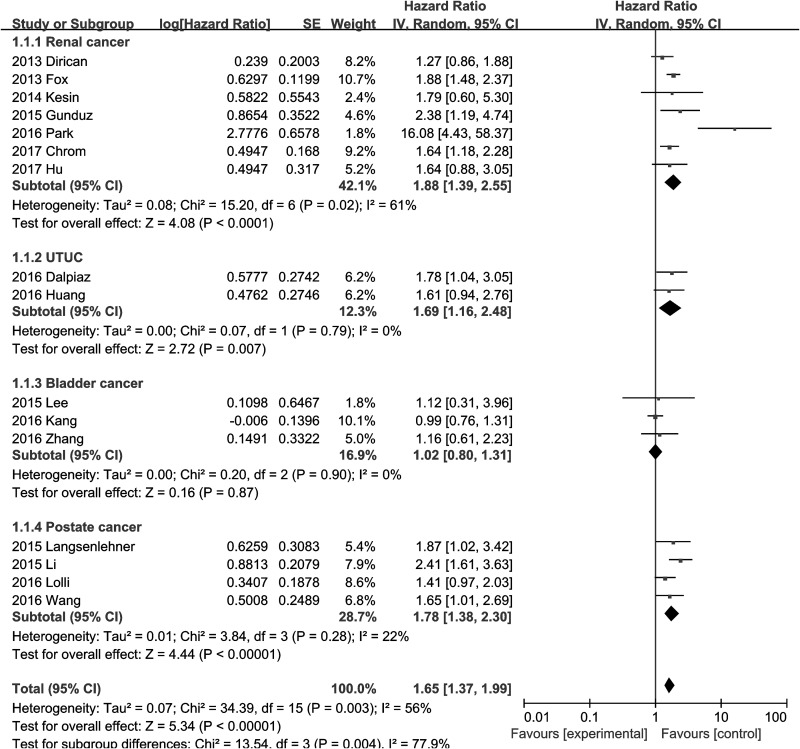
The prognostic value of platelet to lymphocyte ratio (PLR) in urologic cancer does not reach a consensus. Herein, we performed the meta-analysis to determine the prognostic role of PLR in patients with urologic cancer. A literature search was performed in the PubMed, Embase, and Web of Science databases. Hazard ratios (HRs) were extracted to estimate the association between PLR and prognosis. A total of 20 articles comprising 6079 patients were included in this study. The pooled results showed that a high PLR was significantly associated with worse prognosis of overall survival (OS) in urologic cancer [HR=1.65, 95% confidence interval (CI) =1.37-1.99, P<0.01]. The result also indicated that an elevated PLR was significantly associated with poor OS in renal cancer (HR=1.88, 95% CI=1.39-2.55, P<0.01). In addition, the significant association between poor OS and elevated PLR in renal cancer was consistent regardless of treatment, cut-off value, sample size and study quality. Our result also indicated that an elevated PLR predicted shorter OS (HR=1.78, 95% CI=1.38-2.30, P<0.01) and cancer-specific survival (HR=2.02, 95% CI=1.24-3.29, P<0.01) in prostate cancer. In conclusion, an elevated PLR was a predictive indicator of poor survival in renal cancer and prostate cancer.
血小板与淋巴细胞比值(PLR)在泌尿系统癌症中的预后价值尚未达成共识。在此,我们进行了荟萃分析以确定PLR在泌尿系统癌症患者中的预后作用。在PubMed、Embase和Web of Science数据库中进行了文献检索。提取风险比(HRs)以评估PLR与预后之间的关联。本研究共纳入20篇文章,涉及6079例患者。汇总结果显示,高PLR与泌尿系统癌症总生存期(OS)较差显著相关[HR=1.65,95%置信区间(CI)=1.37-1.99,P<0.01]。结果还表明,PLR升高与肾癌患者OS较差显著相关(HR=1.88,95%CI=1.39-2.55,P<0.01)。此外,无论治疗、临界值、样本量和研究质量如何,肾癌患者OS较差与PLR升高之间的显著关联都是一致的。我们的结果还表明,PLR升高预示前列腺癌患者OS较短(HR=1.78,95%CI=1.38-2.30,P<0.01)和癌症特异性生存期较短(HR=2.02,95%CI=1.24-3.29,P<0.01)。总之,PLR升高是肾癌和前列腺癌患者生存预后不良的预测指标。