Park Seung Hyun, Kim Honsoul, Kim Eun Kyung, Kim Hogeun, Choi Dong Kyu, Chung Yong Eun, Kim Myeong-Jin, Choi Jin-Young
Department of Radiology and Research Institute of Radiological Science, Severance Hospital, Yonsei University College of Medicine, Seoul, Korea.
Department of Pathology, Severance Hospital, Yonsei University College of Medicine, Seoul, Korea.
Oncotarget. 2017 Aug 16;8(41):71012-71023. doi: 10.18632/oncotarget.20295. eCollection 2017 Sep 19.
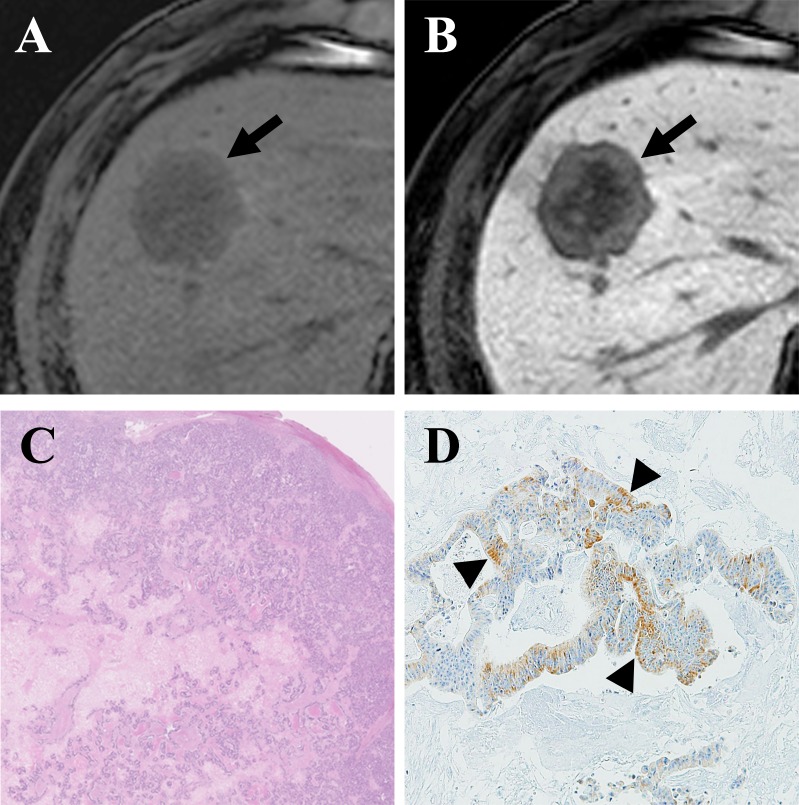
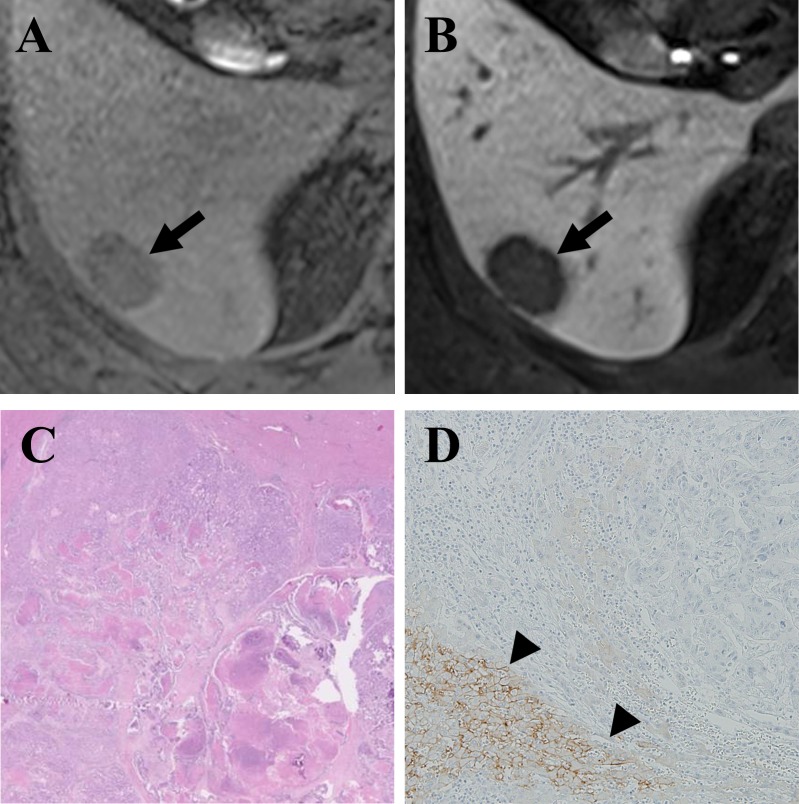
To investigate the factors associated with hepatobiliary phase (HBP) enhancement at gadoxetic acid-enhanced magnetic resonance imaging (MRI) and to determine whether HBP images could be used to predict prognosis in patients with colorectal cancer liver metastasis (CRLM).
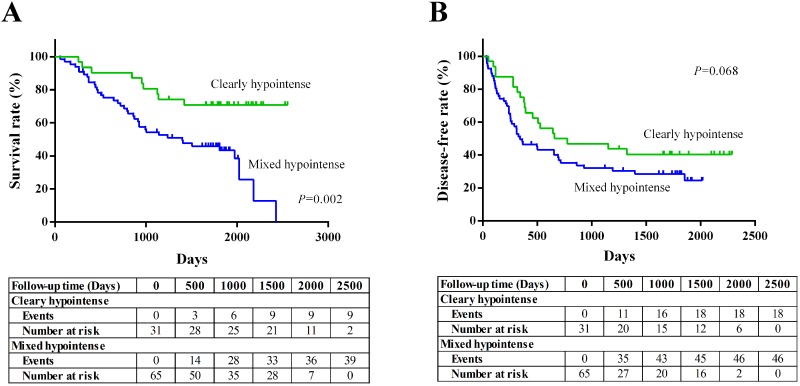
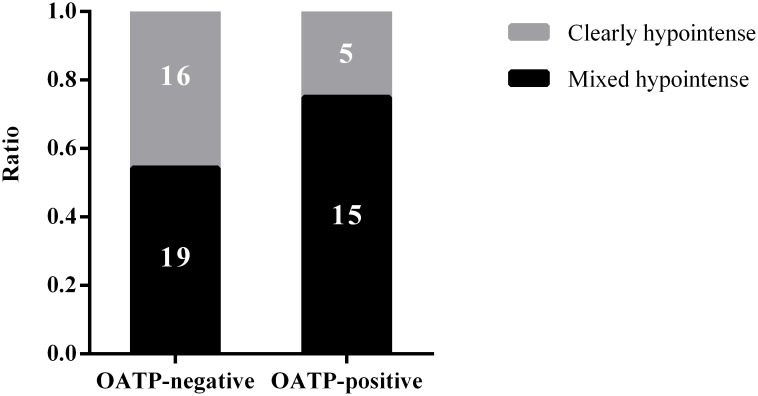
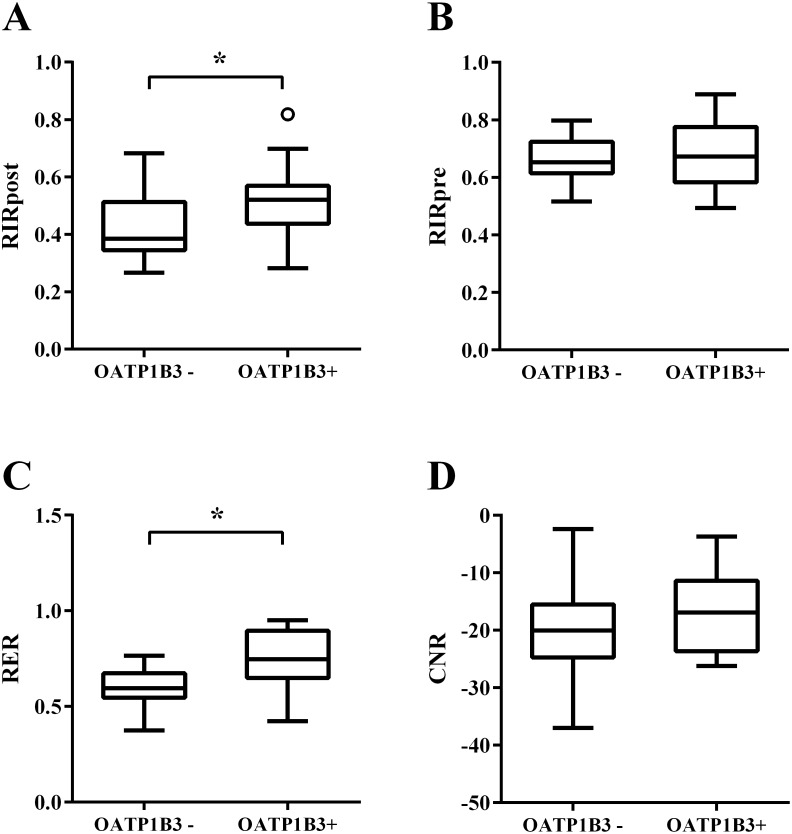
Of the 96 total nodules, 65 and 31 nodules were in the mixed and clearly hypointense groups, respectively. In the 55 nodules without preoperative chemotherapy, organic anionic transporting polypeptide 1B3 (OATP1B3) expression was a significant factor regarding the HBP enhancement (=0.042). In this subgroup, nodules with OATP1B3 expression displayed a significantly higher relative intensity ratio on the HBP image (RIR) and relative enhancement ratio (RER) than those lacking this marker (=0.024, 0.003, respectively). No significant factor was associated with the enhancement pattern in the chemotherapy group. The mixed hypointense group displayed worse survival rates (=0.002).
Ninety-six patients who underwent pre-operative liver MRI and surgical resection for CRLM from January 2010 to June 2012 were retrospectively analyzed. We qualitatively evaluated the HBP enhancement pattern of CRLMs and classified them into mixed and clearly hypointense groups. For quantitative measurement, the RIR and RER were analyzed. To investigate factors associated with HBP enhancement, tumor components (fibrosis, necrosis, and cellularity) and OATP1B3 expression were scored on a 4-point scale. Univariate and multivariate analyses were done to determine significant factors for visual enhancement and quantitative parameters.
OATP1B3 expression is associated with mixed hypointense CRLMs without chemotherapy. Signal intensity on HBP has potential usefulness to predict prognosis in CRLMs.
探讨钆塞酸二钠增强磁共振成像(MRI)中与肝胆期(HBP)强化相关的因素,并确定HBP图像是否可用于预测结直肠癌肝转移(CRLM)患者的预后。
在总共96个结节中,分别有65个和31个结节属于混合组和明显低信号组。在55个未接受术前化疗的结节中,有机阴离子转运多肽1B3(OATP1B3)表达是与HBP强化相关的一个显著因素(P=0.042)。在该亚组中,有OATP1B3表达的结节在HBP图像上的相对强度比(RIR)和相对强化率(RER)显著高于缺乏该标志物的结节(分别为P=0.024,P=0.003)。化疗组中没有显著因素与强化模式相关。混合低信号组的生存率较差(P=0.002)。
回顾性分析了2010年1月至2012年6月期间接受术前肝脏MRI检查并因CRLM接受手术切除的96例患者。我们定性评估了CRLMs的HBP强化模式,并将其分为混合组和明显低信号组。为进行定量测量,分析了RIR和RER。为研究与HBP强化相关的因素,对肿瘤成分(纤维化、坏死和细胞密度)和OATP1B3表达进行4分制评分。进行单因素和多因素分析以确定视觉强化和定量参数的显著因素。
OATP1B3表达与未化疗的混合低信号CRLMs相关。HBP上的信号强度对预测CRLMs的预后具有潜在作用。