Department of Experimental Medicine, Systems Biology Group, Sapienza University of Rome, viale Regina Elena 324, 00161 Rome, Italy.
Department of Surgery "Pietro Valdoni", Sapienza University of Rome, Via Antonio Scarpa 14, 00161 Rome, Italy.
Int J Mol Sci. 2017 Oct 20;18(10):2187. doi: 10.3390/ijms18102187.
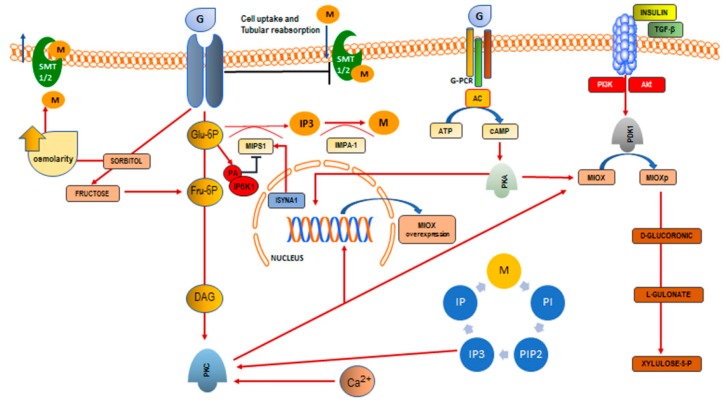
Communities eating a western-like diet, rich in fat, sugar and significantly deprived of fibers, share a relevant increased risk of both metabolic and cancerous diseases. Even more remarkable is that a low-fiber diet lacks some key components-as phytates and inositols-for which a mechanistic link has been clearly established in the pathogenesis of both cancer and metabolic illness. Reduced bioavailability of inositol in living organisms could arise from reduced food supply or from metabolism deregulation. Inositol deregulation has been found in a number of conditions mechanistically and epidemiologically associated to high-glucose diets or altered glucose metabolism. Indeed, high glucose levels hinder inositol availability by increasing its degradation and by inhibiting both myo-Ins biosynthesis and absorption. These underappreciated mechanisms may likely account for acquired, metabolic deficiency in inositol bioavailability.
以高脂肪、高糖和严重缺乏纤维为特点的西式饮食的人群,其代谢性疾病和癌症的风险明显增加。更值得注意的是,低纤维饮食缺乏一些关键成分,如植酸和肌醇,而这些成分在癌症和代谢性疾病的发病机制中已经有明确的关联。生物体内肌醇的生物利用度降低可能是由于食物供应减少或代谢失调引起的。在许多情况下都发现了肌醇失调,这些情况在机制上和流行病学上与高糖饮食或葡萄糖代谢改变有关。事实上,高葡萄糖水平通过增加其降解以及抑制肌醇的生物合成和吸收来阻碍肌醇的可用性。这些被低估的机制可能解释了获得性、代谢性肌醇生物利用度不足的原因。