Kingma Sjouke A
Behavioural & Physiological Ecology, Groningen Institute for Evolutionary Life Sciences, University of Groningen, P. O. Box 11103, Groningen, 9700 CC, The Netherlands.
Nat Commun. 2017 Oct 23;8(1):1094. doi: 10.1038/s41467-017-01299-5.
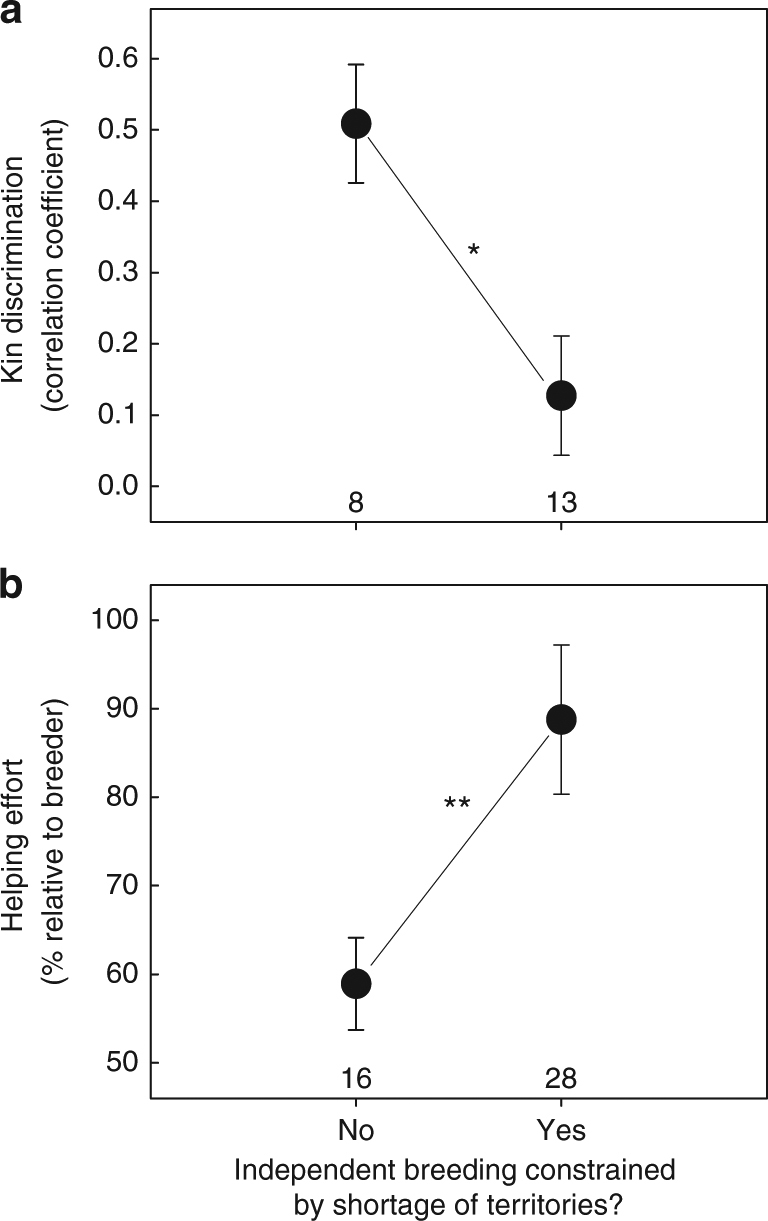
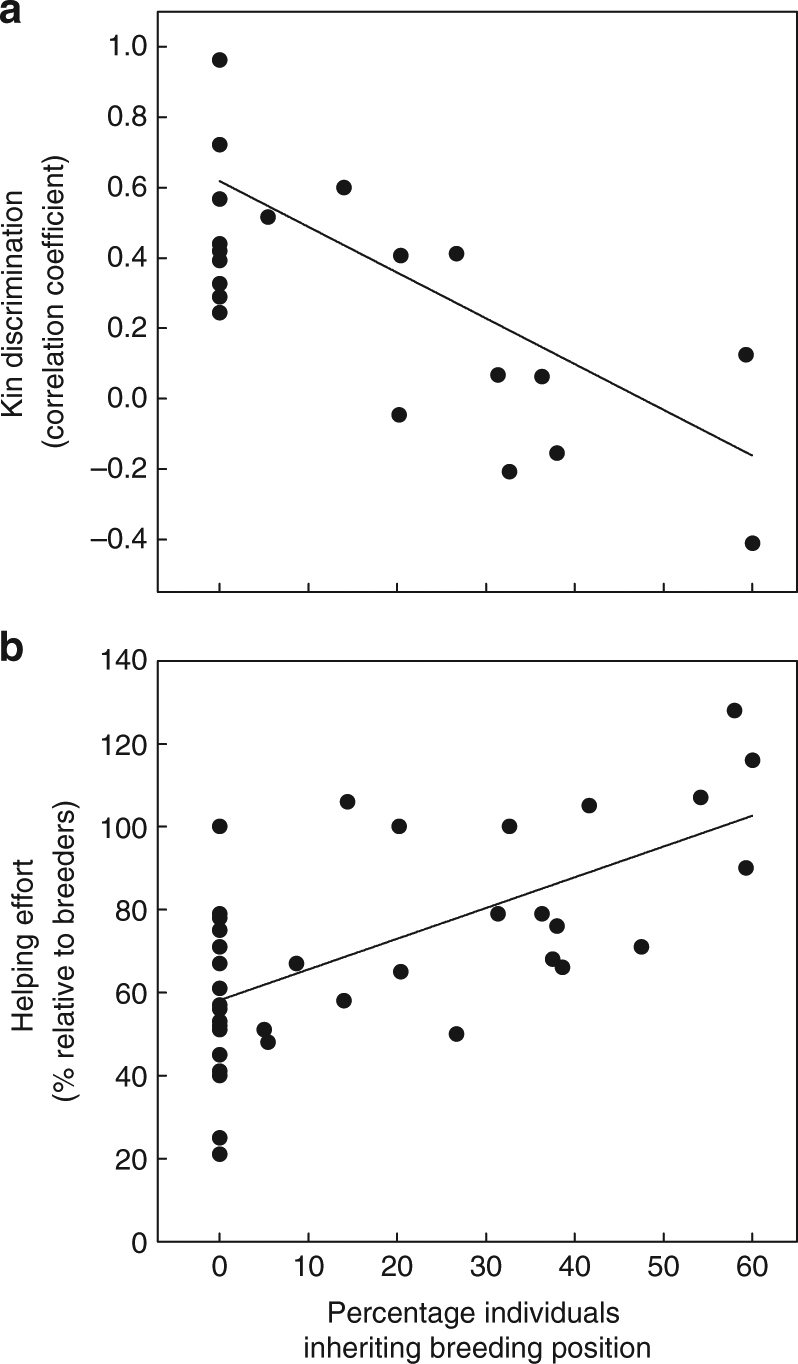
Kin selection theory provides one important explanation for seemingly altruistic helping behaviour by non-breeding subordinates in cooperative breeding animals. However, it cannot explain why helpers in many species provide energetically costly care to unrelated offspring. Here, I use comparative analyses to show that direct fitness benefits of helping others, associated with future opportunities to breed in the resident territory, are responsible for the widespread variation in helping effort (offspring food provisioning) and kin discrimination across cooperatively breeding birds. In species where prospects of territory inheritance are larger, subordinates provide more help, and, unlike subordinates that cannot inherit a territory, do not preferentially direct care towards related offspring. Thus, while kin selection can underlie helping behaviour in some species, direct benefits are much more important than currently recognised and explain why unrelated individuals provide substantial help in many bird species.
亲缘选择理论为合作繁殖动物中非繁殖从属个体看似利他的帮助行为提供了一个重要解释。然而,它无法解释为何许多物种中的帮助者会为无亲缘关系的后代提供代价高昂的照料。在此,我通过比较分析表明,帮助他人所带来的直接适应性益处,与未来在领地内繁殖的机会相关,这导致了合作繁殖鸟类在帮助行为(为后代提供食物)和亲缘识别方面存在广泛差异。在领地继承前景较大的物种中,从属个体提供更多帮助,并且与无法继承领地的从属个体不同,它们不会优先照料有亲缘关系的后代。因此,虽然亲缘选择可能是某些物种帮助行为的基础,但直接益处比目前所认识到的更为重要,这也解释了为何无亲缘关系的个体在许多鸟类物种中会提供大量帮助。