Achyut B R, Angara Kartik, Jain Meenu, Borin Thaiz F, Rashid Mohammad H, Iskander A S M, Ara Roxan, Kolhe Ravindra, Howard Shelby, Venugopal Natasha, Rodriguez Paulo C, Bradford Jennifer W, Arbab Ali S
Tumor Angiogenesis Laboratory, Biochemistry and Molecular Biology, Georgia Cancer Center, Augusta University, Augusta, GA, USA.
Department of Pathology, Georgia Cancer Center, Augusta University, Augusta, GA, USA.
Sci Rep. 2017 Oct 23;7(1):13754. doi: 10.1038/s41598-017-14079-4.
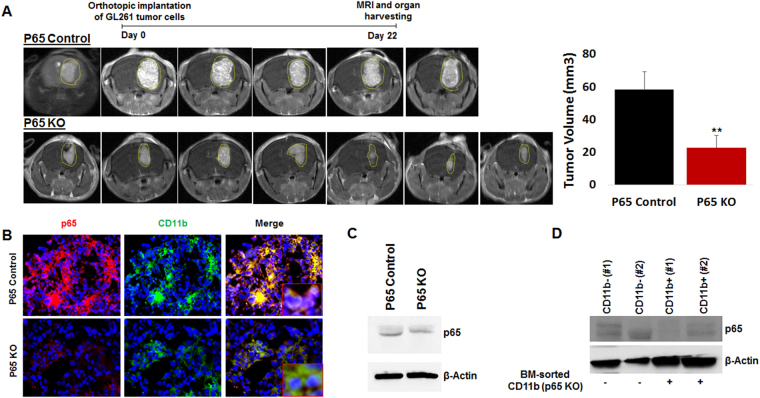
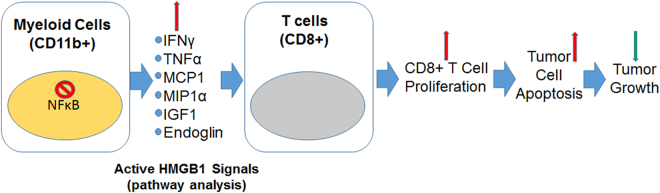
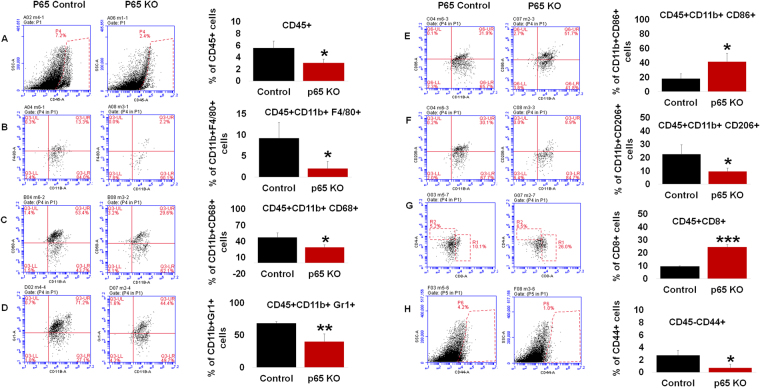
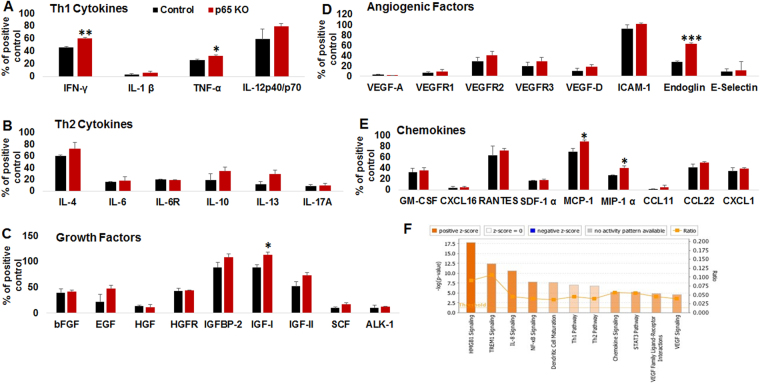
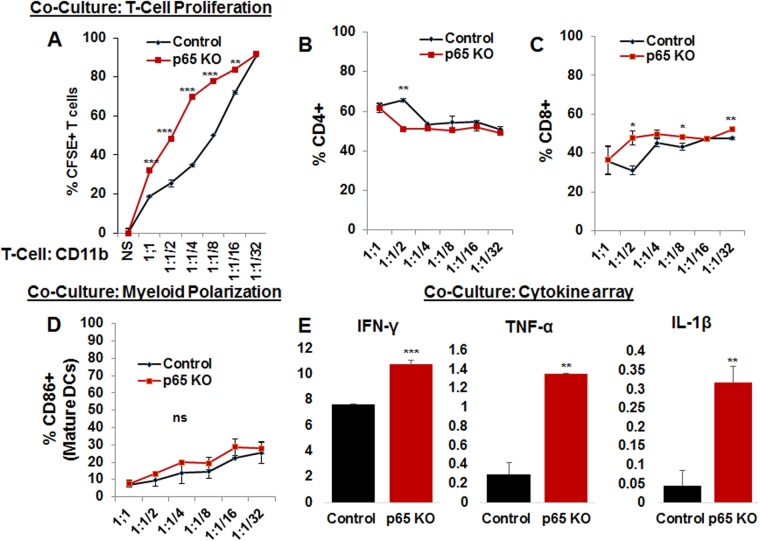
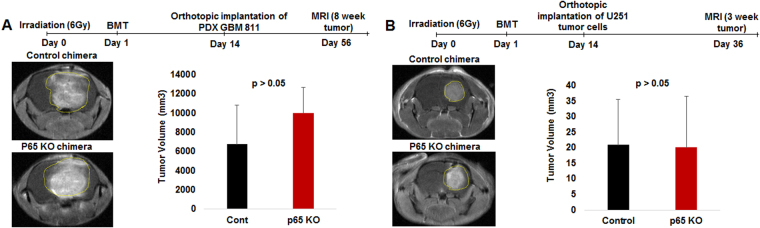
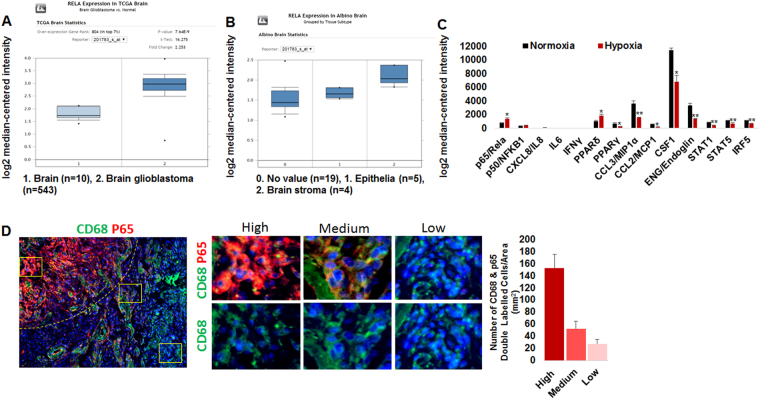
Tumor development and therapeutic resistance are linked with tumor-associated macrophage (TAM) and myeloid-derived suppressor cell (MDSC) infiltration in tumors via chemokine axis. Chemokine expression, which determines the pro or anti-inflammatory status of myeloid cells, are partly regulated by the nuclear factor-kappa B (NF-κB) pathway. Here, we identified that conditional deletion of canonical NF-κB signaling (p65) in myeloid cells inhibited syngeneic glioblastoma (GBM) through decreased CD45 infiltration in tumors, as characterized by decreased TAMs (CD206+) and MDSCs (Gr1+ CD11b+), increased dendritic cells (CD86+) and cytotoxic T cells (CD8+) in the p65 knockout (KO) mice. Proinflammatory cytokines (IFNγ, MCP1, MIP1α, and TNFα) and myeloid differentiation factor (Endoglin) were increased in myeloid cells from p65 KO tumor, which demonstrated an influence on CD8+T cell proliferation. In contrast, p65KO athymic chimeric mice with human GBM, failed to inhibit tumor growth, confirming the contribution of T cells in an immune competent model. The analysis of human datasets and GBM tumors revealed higher expression of p65 in GBM-associated CD68+ macrophages compared to neighboring stroma. Thus, canonical NF-κB signaling has an anti-inflammatory role and is required for macrophage polarization, immune suppression, and GBM growth. Combining an NF-κB inhibitor with standard therapy could improve antitumor immunity in GBM.
肿瘤的发生发展及治疗耐药性与肿瘤相关巨噬细胞(TAM)和髓源性抑制细胞(MDSC)通过趋化因子轴浸润肿瘤有关。趋化因子的表达决定了髓系细胞的促炎或抗炎状态,其部分受核因子-κB(NF-κB)信号通路调控。在此,我们发现髓系细胞中经典NF-κB信号(p65)的条件性缺失通过减少肿瘤中CD45浸润来抑制同基因胶质母细胞瘤(GBM),其特征为p65基因敲除(KO)小鼠中TAM(CD206+)和MDSC(Gr1+ CD11b+)减少,树突状细胞(CD86+)和细胞毒性T细胞(CD8+)增加。p65基因敲除肿瘤的髓系细胞中促炎细胞因子(IFNγ、MCP1、MIP1α和TNFα)及髓系分化因子(内皮糖蛋白)增加,这表明其对CD8+T细胞增殖有影响。相反,携带人GBM的p65基因敲除无胸腺嵌合小鼠未能抑制肿瘤生长,这证实了T细胞在免疫健全模型中的作用。对人类数据集和GBM肿瘤的分析显示,与邻近基质相比,GBM相关CD68+巨噬细胞中p65表达更高。因此,经典NF-κB信号具有抗炎作用,是巨噬细胞极化、免疫抑制及GBM生长所必需的。将NF-κB抑制剂与标准疗法联合应用可提高GBM的抗肿瘤免疫力。